About the state
About Rajasthan
The land of the desert, from its history to today.
Rajasthan is the largest Indian state by area and the seventh largest by population, located in northwestern India. It was formed on 30 March 1949 from the merger of the former Rajputana Agency states.
Overview
Rajasthan is a state in northwestern India, known as the "Land of Kings" and covering 342,239 square kilometres, which is about 10.4 per cent of the country's total geographical area. It lies between 23°3' and 30°12' North latitude and 69°30' to 78°17' East longitude, with the Tropic of Cancer crossing its southern tip. The state borders Pakistan’s Punjab and Sindh provinces along the Sutlej‑Indus River valley and is bounded by the Indian states of Punjab, Haryana, Uttar Pradesh, Madhya Pradesh and Gujarat.
The geography of Rajasthan is dominated by the Thar Desert, also called the Great Indian Desert, and includes the ancient Aravalli mountain range, where the hill station of Mount Abu hosts the Dilwara Jain temples. Notable natural sites include the Keoladeo National Park in Bharatpur, a World Heritage Site celebrated for its avian diversity, and five national tiger reserves such as Ranthambore and Sariska.
Historically, the region contains important archaeological sites like the Indus Valley civilisation ruins at Kalibangan and Balathal. The modern state was created on 30 March 1949 when the former Rajputana Agency princely states were merged into the Indian Union. Jaipur serves as the capital and largest city, with other major urban centres including Jodhpur, Kota, Bikaner, Ajmer, Bhilwara, Sawai Madhopur, Bharatpur and Udaipur.
Economically, Rajasthan ranks seventh among Indian states, with a gross domestic product of roughly ₹10.20 lakh crore (about US$110 billion) and a per‑capita GDP of around ₹118,000 (US$1,200). In terms of human development, the state is placed 22nd among its peers, reflecting a moderate level of social progress.
History
Rajasthan’s early history is rooted in the ancient civilizations of the Indian subcontinent. Archaeological sites such as Kalibangan in Hanumangarh district reveal that parts of the region were major provincial capitals of the Indus Valley Civilization, while excavations at Balathal in Udaipur district show settlements contemporary with the Harappan culture dating back to 3000–1500 BCE. Stone‑age tools ranging from 5,000 to 200,000 years have also been discovered in the Bundi and Bhilwara districts, indicating a long pre‑historic human presence.
In the Vedic period, the area roughly corresponded to the Matsya kingdom, whose capital was at Viratanagar (modern Bairat) and which encompassed much of present‑day Jaipur, Alwar and parts of Bharatpur. Scholars identify Jhunjhunu, Sikar and parts of Jaipur as belonging to the Vedic state of Brahmavarta, with the Sahibi River identified as the ancient Drishadwati. The region also hosted the ashrams of Vedic seers Bhrigu and his son Chyavan Rishi near Dhosi Hill.
During the early historic era, the Western Kshatrapas (405–35 BCE), successors to the Indo‑Scythians, ruled the western part of the area, while the Allahabad Pillar Inscription of Samudragupta (AD 360) records the Abhiras as a powerful tribe governing the whole of Rajasthan. The medieval period saw the rise of Rajput power; the Ghurids attempted an invasion through southern Rajasthan but were repelled at the Battle of Kasahrada in 1178. Prithviraj Chauhan defeated the Ghurids at the First Battle of Tarain in 1191, though he was later defeated at the Second Battle of Tarain in 1192, after which parts of Rajasthan fell under Muslim rule centered on Nagaur, Ajmer and Ranthambhore.
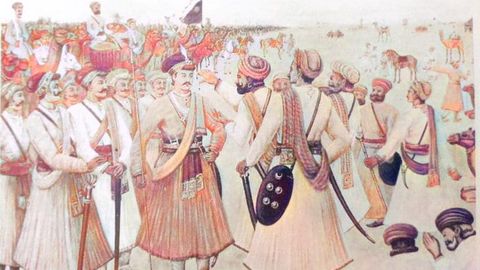
From the 13th century onward, the Rajputs, especially the Ranas of Mewar, mounted sustained resistance against Muslim incursions, preserving Hindu culture at their courts. Notable rulers such as Rana Hammir Singh reclaimed large territories from the Tughlaqs, while Rana Kumbha defeated the sultans of Malwa, Nagaur and Gujarat, making Mewar the most powerful Rajput kingdom. Rana Sanga later united various Rajput clans and defeated the Lodi Empire and the Sultanates of Malwa and Gujarat, but his ambition to create an Indian empire was halted by Babur’s victory at Khanwa.
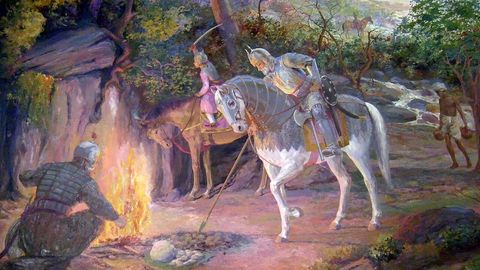
In the 16th century, Marwar under Rao Maldeo Rathore expanded its domain across Jaisalmer, Gujarat, and even approached the Delhi frontier. The period also witnessed the brief emergence of Hem Chandra Vikramaditya, a Hindu emperor from Alwar who won numerous battles against Afghans and defeated Akbar’s forces before his death at the Second Battle of Panipat in 1556. While many Rajput rulers accepted Mughal suzerainty during Akbar’s reign, the rulers of Mewar and Marwar resisted, leading to brutal confrontations such as the siege of Chittor, where tens of thousands of unarmed citizens were killed. Maharana Pratap of Mewar emerged as a celebrated symbol of Rajput valor, continuing guerrilla warfare against the Mughals until his death, thereby cementing his legacy as a paragon of resistance and self‑sacrifice.
Geography and climate
Rajasthan’s landscape is dominated by the Thar Desert in the northwest and the Aravalli Range that stretches from the southwest to the northeast for over 850 kilometres. The Aravalli’s highest point, Guru Shikhar on Mount Abu, rises to 1,722 metres and separates the desert from the more fertile lands to the east and southeast. About three‑fifths of the state lies northwest of the range, where the terrain is sandy, dry and lies in the rain shadow of the monsoon, while the remaining two‑fifths to the southeast are higher in elevation, more fertile and host a diversified topography that includes hills, tablelands and badlands along the Chambal River.
The eastern and southeastern parts of Rajasthan receive more rainfall and support the Khathiar‑Gir dry deciduous forests, featuring teak, Acacia and other tropical dry broadleaf species. This region includes the hilly Vagad area, the wettest part of the state apart from Mount Abu, and the Mewar, Hadoti, Dhundhar and Mewat regions, each drained by tributaries of the Ganges such as the Banas and Chambal rivers. In contrast, the northwestern thorn scrub forests form a narrow band around the Thar, receiving less than 400 mm of rain annually, with summer temperatures sometimes exceeding 45 °C and winter lows dropping below freezing.
The Luni River system drains the western slopes of the Aravallis, flowing southwest into the Rann of Kutch and becoming saline in its lower reaches. The intermittent Ghaggar River, originating in Haryana, disappears into the desert sands, reflecting the arid conditions of the northwest. Major desert districts such as Jodhpur, Jaisalmer, Barmer, Bikaner and Nagaur are sparsely populated, with Jodhpur serving as the largest urban centre and a strategic defence hub, hosting one of India’s largest airbases and several civil airports.
People, languages and religion
Rajasthan is home to a diverse population, with the native Rajasthani people forming the majority. The 2011 Census recorded a total population of 68,548,437, representing 5.66% of India’s population, and a density of 201 people per square kilometre. The sex ratio was 928 women per 1,000 men, lower than the national figure. In addition to the native groups, the state includes communities such as Sindhis who migrated from Sindh province after the 1947 India‑Pakistan separation, as well as various caste groups including Jats, Gurjars, Rajputs, Meenas, and Brahmins, each constituting notable percentages of the population according to different reports.
The linguistic landscape of Rajasthan is equally varied. Hindi serves as the official language, with English as an additional official language, while the everyday speech of most residents consists of languages from the Rajasthani group of Indo‑Aryan languages. In the north, Punjabi dialects and Bagri are spoken; the northeast features Shekhawati and Dhundari, which blend into Haryanvi. The east includes Mewati and Braj, the southeast has Haryanvi, and the heart of the Thar Desert is dominated by Marwari, which merges with Gujarati in the southwest. The southern Mewar region uses Mewari, and the hills of Wagad speak Wagdi, a Bhil language. Many speakers refer to their language as Hindi, and Standard Hindi is the medium of education, while Urdu is also common in urban areas. Sindhi is spoken in cities and along the border, with Dhatki bridging Marwari and Sindhi.
Religiously, Rajasthan is predominantly Hindu, accounting for 88.49% of the population. Muslims comprise 9.07%, Sikhs 1.27%, and Jains 0.91%. These figures reflect the state's religious composition as recorded in the 2011 Census.
Government and administration
Rajasthan operates under a parliamentary system of representative democracy, with the governor serving as the constitutional head of the state while the chief minister functions as both the head of government and the leader of the council of ministers. The Legislative Assembly comprises 200 members elected for five‑year terms, and the state sends 25 representatives to the Lok Sabha and 10 to the Rajya Sabha. The governor, appointed by the President of India for a five‑year term, appoints the chief minister—who must command a majority in the Assembly—and, on the chief minister’s advice, the council of ministers, which includes cabinet ministers, ministers of state and deputy ministers.
Day‑to‑day administration is managed by the Secretariat headed by the Chief Secretary, who is also the administrative head of the government. Each department is led by a minister assisted by an Additional Chief Secretary or Principal Secretary, typically an IAS officer, with further support from secretaries, special secretaries and joint secretaries. The council of ministers, the Secretariat and the Chief Secretary together ensure the implementation of policies across the state.
For administrative purposes Rajasthan is divided into seven divisions and 41 districts. A Divisional Commissioner heads each division, while a District Collector/District Magistrate—an IAS officer—administers each district, supported by officers from the Rajasthan Administrative Services. Law and order are overseen by the Director General of Police, an IPS officer, with each district supervised by a Superintendent of Police. Forest, environment and wildlife management in districts is the responsibility of the Divisional Forest Officer, an IFS officer, assisted by the Rajasthan Forest Service.
The judiciary is anchored by the High Court of Rajasthan, seated in Jodhpur with a bench at Jaipur, and includes district and session courts in each district and lower courts at the tehsil level. The President of India appoints the chief justice of the High Court on the advice of the Supreme Court chief justice and the state governor. The Subordinate Judicial Service comprises the Rajasthan Civil Judicial Services and the Rajasthan Higher Judicial Service, with the District Judge overseeing subordinate courts.
Political life in Rajasthan has been dominated by the Bharatiya Janata Party and the Indian National Congress, reflecting a competitive two‑party landscape within the state's democratic framework.
Economy and agriculture
Rajasthan's economy is dominated by agriculture and pastoral activities, with wheat, barley, pulses, sugarcane and oilseeds cultivated over extensive areas. Cotton and tobacco serve as the state's cash crops, while Rajasthan ranks among the largest producers of edible oils in India and is the second‑largest producer of oilseeds. The region also leads the nation in wool production and is the primary source of opium, reflecting the importance of livestock and specialized crops in the rural landscape. Irrigation relies mainly on wells and tanks, supplemented by the Indira Gandhi Canal that supplies water to northwestern parts of the state, supporting two main crop seasons.
The agricultural base underpins several related industries. Rajasthan is the second‑largest producer of polyester fibre in India, and its textile sector benefits from the abundant raw materials. Chemical and engineering firms are concentrated in Kota, while the state excels in quarrying and mining, providing raw stone for construction and monuments, such as the white marble from Makrana used in the Taj Mahal. Cement production is the second‑largest in the country, and the state holds significant salt, copper, zinc, and low‑silica limestone reserves, supporting a diversified industrial base.
Mining and mineral extraction complement the agricultural economy, with Rajasthan contributing a substantial share of India's cement, salt, copper, zinc, and silver output. The state produced over 600 tonnes of silver annually between 2018 and 2021, highlighting its role in precious metal extraction. Additionally, Rajasthan participates in the Mumbai‑Delhi Industrial Corridor, receiving 39% of the corridor's benefits, particularly in districts such as Jaipur, Alwar, Kota and Bhilwara, which further integrates its economy with national industrial networks.
Energy infrastructure has advanced markedly, with the state achieving 100% electricity connectivity for its population by 2019. Renewable energy, especially solar power, drives this growth; the Bhadla Solar Park, recognized in 2020 as the world's largest photovoltaic cluster in a single region, exceeds 2.2 GW of installed capacity, underscoring Rajasthan's leadership in clean energy generation.
Overall, Rajasthan's economic profile blends a strong agricultural foundation with robust mineral extraction, textile manufacturing, and emerging renewable energy sectors, creating a multifaceted economy that supports both traditional livelihoods and modern industrial development.
Culture, arts and festivals
Rajasthan’s cultural tapestry is richly woven with music and dance that reflect the everyday lives and historic narratives of its people. Folk music dominates the soundscape, with communities such as the Manganiyar, Meena and Langa renowned for their traditional performances. Songs often take the form of ballads celebrating heroic deeds and love stories, while devotional bhajans and banis accompany rituals, typically backed by instruments like the dholak, sitar and sarangi.
Among the state’s most celebrated dances are the Ghoomar of Jaipur and Jodhpur and the Kalbelia dance of the nomadic Kalbelia tribe, both of which have earned international recognition. Other traditional forms such as Kathputli, Bhopa, Chang, Teratali, Ghindr, Gair, Kachchhi Ghori and Tejaji are performed at festivals and communal gatherings, showcasing the region’s vibrant rhythmic heritage.
Rajasthan is equally famed for its colourful visual arts, where block printing, tie‑and‑dye, gota patti, Bagaru and Sanganer prints, as well as Zari embroidery, constitute major export crafts. Handicrafts ranging from intricately carved wooden furniture and carpets to the distinctive blue pottery are ubiquitous in markets, reflecting the state’s artistic ingenuity.
The attire of Rajasthan mirrors its artistic flair; women traditionally wear an ankle‑length skirt paired with a short top called a chaniya choli, often embellished with mirror work and bright embroidery in hues of blue, yellow and orange. A cloth is also draped over the head, serving both as protection from the desert heat and a modesty veil, completing the vivid visual identity of the region.
Education and transport
Rajasthan’s transport infrastructure links its chief cities by air, rail and road, supporting both inter‑city travel and local commuting. The state’s road network includes 33 national highways covering over 10,000 km, with the NH‑48 corridor – notably the Jaipur‑Kishangarh Expressway – forming part of the Golden Quadrilateral. The Department of Public Works maintains state highways and major district roads, while the Rajasthan State Road Transport Corporation, founded in 1964, offers economical passenger services across the state and to neighboring regions. Local travel is commonly provided by auto‑rickshaws and cycle‑rickshaws, with average speeds on state highways ranging from 50 to 60 km/h and lower speeds in villages and towns.
Air connectivity is centred on Jaipur International Airport, the only international gateway in the state, offering flights to Dubai, Bangkok, Sharjah and Muscat. Five additional civilian airports – Jodhpur, Udaipur, Ajmer, Bikaner and Jaisalmer – handle domestic services operated by the Airports Authority of India, linking Rajasthan with major Indian cities such as Mumbai, Kolkata, Hyderabad, Chennai and Bangalore.
Rail transport accounts for 8.66 percent of India’s total route length within Rajasthan. Jaipur Junction serves as the headquarters of the North Western Railway, with Jaipur, Ajmer and Bikaner as the busiest stations. Kota hosts the sole electrified section, served by three Rajdhani Expresses. The state also operates the Jaipur Metro, the only metro system in Rajasthan, which began service on 3 June 2015 and features a triple‑storey elevated track. Specialty services include the luxury Maharajas’ Express tourist train and the Thar Express, an international link from Jodhpur to Karachi that is not open to foreign nationals.
Education in Rajasthan has seen concerted government efforts to raise standards. Schools are run either by the state or private trusts, with English and Hindi as the primary mediums of instruction. After completing secondary school, students follow the 10+2+3 system, enrolling in junior colleges or higher secondary schools affiliated with the CBSE, CISCE or NIOS, and selecting streams in liberal arts, commerce or science before pursuing general or professional degree programs.
The state hosts a diverse higher‑education landscape, comprising 52 universities, including 26 state‑funded public universities, seven deemed universities, and specialized institutions such as the IIT in Jodhpur, IIM in Udaipur, NIT in Jaipur, and the National Law University in Jodhpur. Kota has emerged as a prominent hub for coaching students for national engineering and medical entrance examinations. To foster a reading culture, Rajasthan has established new libraries at the panchayat level and computerized all public libraries, equipping them with modern amenities for rural readers.
Based on: the Wikipedia article (CC BY-SA 4.0) — facts from that source; edited and translated by Times of Rajasthan.
The districts
- JaipurJaipur district is a district in Rajasthan, India, with its headquarters in the city of Jaipur. It is the tenth most populous district in India.
- JodhpurJodhpur district is a district in Rajasthan, western India, with its administrative headquarters in the city of Jodhpur. As of the 2011 census it is the second most populated district in the state.
- UdaipurUdaipur district is one of the 50 districts of Rajasthan, with its headquarters in the historic city of Udaipur. The district features hilly terrain, a predominantly tribal population, and an economy largely based on agriculture and mineral resources.
- KotaKota district is a district in Rajasthan, India, with Kota city as its administrative headquarters. It has a population of 1,951,014 according to the 2011 census.
- BikanerBikaner district is a district of Rajasthan in western India with its headquarters in the historic city of Bikaner. It lies in the Thar Desert and is traversed by the Indira Gandhi Canal, supporting irrigation in the region.
- AjmerAjmer district is a central district of Rajasthan with Ajmer city as its headquarters. It covers 8,481 km² and had a population of 2,583,052 in the 2011 census.
- AlwarAlwar district in Rajasthan covers 8,337 km² and had a population of 3,674,179 in 2011. It hosts industrial estates, extensive agriculture and several historic sites such as Alwar Fort and Bhangarh Fort.
- BharatpurBharatpur district is a district in Rajasthan, western India, with its headquarters in the city of Bharatpur. It has a population of over 2.5 million according to the 2011 census.
- SikarSikar district is a district in the Indian state of Rajasthan, forming part of the Shekhawati region. It covers an area of 5,191.44 km² and had a population of 1,694,094 in the 2011 census.
- BhilwaraBhilwara district is a district of Rajasthan, India, with its headquarters in the city of Bhilwara. It has an area of 10,455 km² and a population of 2,408,523 as of the 2011 census.
- Sri GanganagarSri Ganganagar district is the northernmost district of Rajasthan, India, with its headquarters in Sri Ganganagar. The district transformed from a largely uninhabited region into a productive agricultural area after the construction of the Ganga Canal.
- JaisalmerJaisalmer district is the largest district in Rajasthan by area and the least populous among the state's districts as of 2011. It lies in the Thar Desert and borders Pakistan to the west and north.
- BarmerBarmer district is a large desert district in western Rajasthan, bordering Pakistan and the Thar Desert. It is known for its historic towns, oil fields, and cultural traditions of folk music and crafts.
- BalotraBalotra district was created on 7 August 2023 after separating from Barmer district. Its headquarters is the town of Balotra and it covers an area of 10,551 sq km with a population of 970,760.
- BanswaraBanswara district is the southernmost district of Rajasthan, covering 5,037 km² with its headquarters in the city of Banswala. It is a predominantly tribal region with a population of about 1.8 million as of the 2011 census.
- BaranBaran district is a district in Rajasthan with its headquarters at the city of Baran. It was formed on 10 April 1991 after being carved out of Kota district.
- BeawarBeawar is a city in the newly formed Beawar district of Rajasthan, India, known historically as a cotton trade centre and now a hub for mineral‑based industries. It lies in the Aravali hills, about 70 km from Ajmer and 184 km southwest of Jaipur.
- BundiBundi district is a district in Rajasthan, India, with its headquarters in the city of Bundi. It covers 5,550 km² and had a population of 1,110,906 in 2011.
- ChittorgarhChittorgarh district, established on 1 August 1948, is one of Rajasthan’s 41 districts with its headquarters in the historic city of Chittorgarh. The district is noted for the Chittor Fort and receives development funds under the Backward Regions Grant Fund Programme.
- ChuruChuru district is a district in northern Rajasthan covering about 16,830 km² with a 2011 population of roughly 2.04 million. It borders Hanumangarh, Haryana, Jhunjhunu, Sikar, Nagaur and Bikaner districts.
- DausaDausa district is a district in Rajasthan, India, with its headquarters in the city of Dausa. It covers 3,432 km² and had a population of 1,634,409 in the 2011 census.
- DeegDeeg district is a newly formed district in Rajasthan, inaugurated on 7 August 2023. It lies at the tri‑junction of Rajasthan, Haryana and Uttar Pradesh and includes nine tehsils.
- DholpurDholpur district is located in eastern Rajasthan with Dholpur town as its headquarters. It was created in 1982 from the former Bharatpur district and covers an area of 3,084 km².
- Didwana-KuchamanDidwana‑Kuchaman district in Rajasthan was created on 7 August 2023 with Didwana city as its headquarters, which is famed as the “lion gateway” of Marwar and the “archway” of Merta. The city, mentioned in the Puranic texts Abhanagri and Upakashi, lies north of Didwana Salt Lake and was a sub‑district of Nagaur until 4 August 2023, while its residents speak Marwadi.
- DungarpurDungarpur district is the southernmost district of Rajasthan, with Dungarpur town as its headquarters. The district has a dry climate, a predominantly Bhil population, and is classified among India’s most backward districts.
- HanumangarhHanumangarh district is located in the extreme north of Rajasthan, India, with its headquarters in the city of Hanumangarh. The district was created on 12 July 1994 and has a population of 1,774,692 according to the 2011 census.
- JaloreJalore district is a district of Rajasthan state in western India with its headquarters in the city of Jalore. It covers an area of 10,640 km² and had a population of 1,828,730 according to the 2011 census.
- JhalawarJhalawar district is one of the 50 districts of Rajasthan, with its administrative headquarters in the historical city of Jhalawar. It lies in the Hadoti region on the edge of the Malwa Plateau and is classified among India’s most backward districts receiving special development funds.
- JhunjhunuJhunjhunu district is a district in Rajasthan, India, with its headquarters in the city of Jhunjhunu. It is known for its historic havelis, forts and cultural festivals.
- KarauliKarauli district is a district in Rajasthan, western India, with its administrative headquarters in the town of Karauli. It has a population of about 1.46 million (2011) and an area of 5,043 km².
- Khairthal-TijaraKhairthal‑Tijara district is a district of Rajasthan created in August 2023 from Alwar district. It lies in the Mewat region and had a population of 966,821 according to the 2011 census.
- Kotputli-BehrorKotputli‑Behror district in north‑eastern Rajasthan was formally created on 7 August 2023, merging parts of Jaipur and Alwar districts. It is bounded by the Aravalli ranges, traversed by the Sahibi River, and comprises eight tehsils with joint headquarters at Behror and Kotputli.
- NagaurNagaur district is a central district of Rajasthan covering 17,718 km² with a population of over 3.3 million (2011). It features semi‑arid climate, sparse thorn scrub vegetation and historic sites such as Nagaur Fort and several temples.
- PaliPali district is a district in Rajasthan, India, with its administrative headquarters in the city of Pali. It has a rich historical background and diverse geography bounded by eight neighboring districts.
- PhalodiPhalodi is the headquarters of Phalodi district in western Rajasthan. Known as the "salt city" for its salt production, it lies in the Thar Desert and is among India’s hottest places — it recorded 51°C on 19 May 2016, the highest temperature measured in India.
- PratapgarhPratapgarh district, the 33rd district of Rajasthan, was created on 26 January 2008 with Pratapgarh town as its headquarters. It spans 4,411.36 km², has a population of 867,848 (2011) and is known for its Thewa jewellery and opium cultivation.
- RajsamandRajsamand district is a district of Rajasthan, India, with its headquarters in the city of Rajsamand. It was formed on 10 April 1991 from parts of Udaipur district.
- SalumbarSalumbar district is a district in southern Rajasthan, India, created on 7 August 2023 from parts of Udaipur district. It has a population of 570,775 according to the 2011 census, with a majority of Scheduled Tribe residents and a notable Jain community.
- Sawai MadhopurSawai Madhopur district is a district in south‑eastern Rajasthan, known for the Ranthambore National Park and its semi‑arid climate. Its economy relies on agriculture, animal husbandry, hospitality, tourism and small‑scale industries.
- SirohiSirohi district is a district in Rajasthan, India, with its headquarters in the town of Sirohi and Abu Road as its largest city. It covers an area of about 5,136 km² and had a population of 1,036,346 in 2011.
- TonkTonk district is a district in Rajasthan, India, with Tonk city as its administrative headquarters. It covers an area of 7,194 km² and had a population of 1,421,326 in 2011.
Great personalities
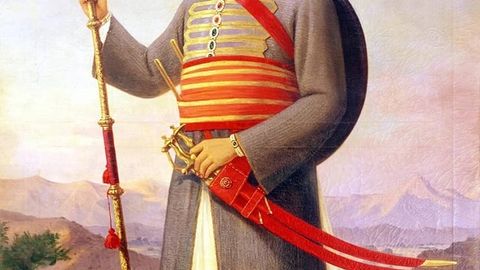
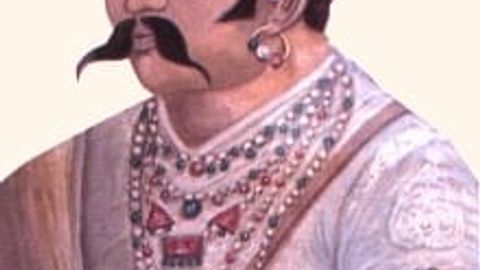
All →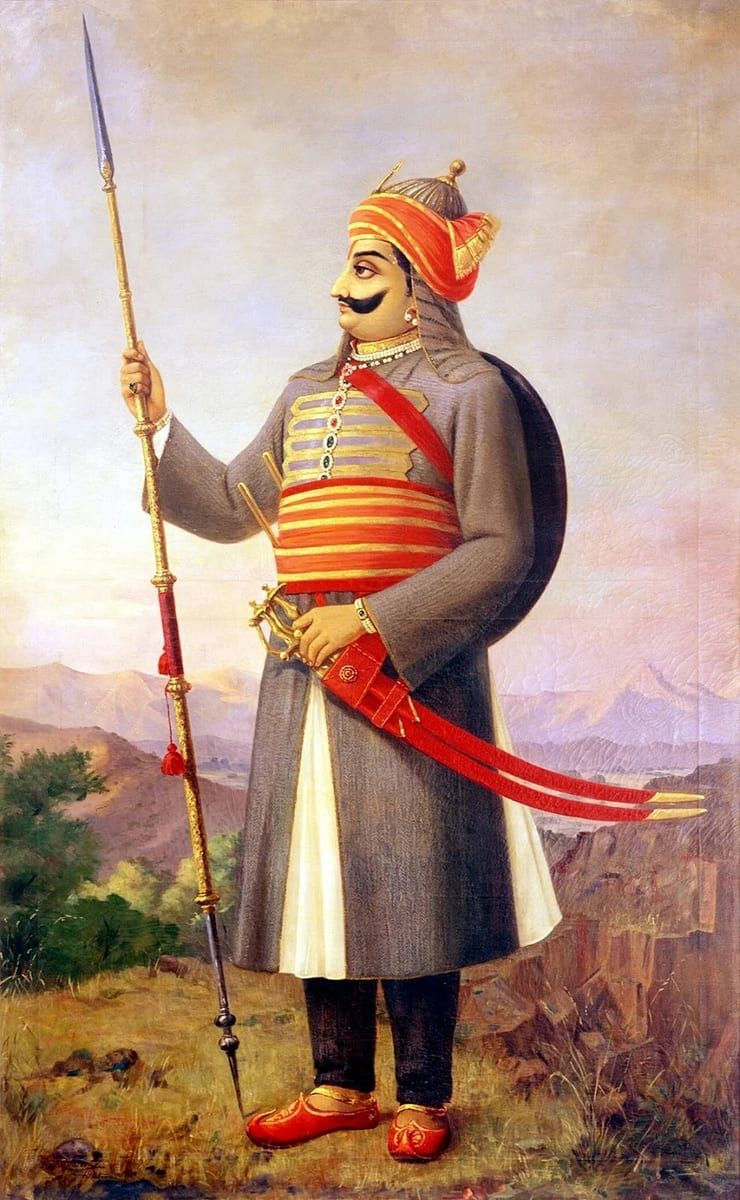 Maharana PratapMewar king1540–1597
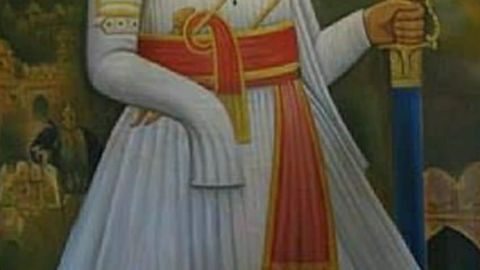
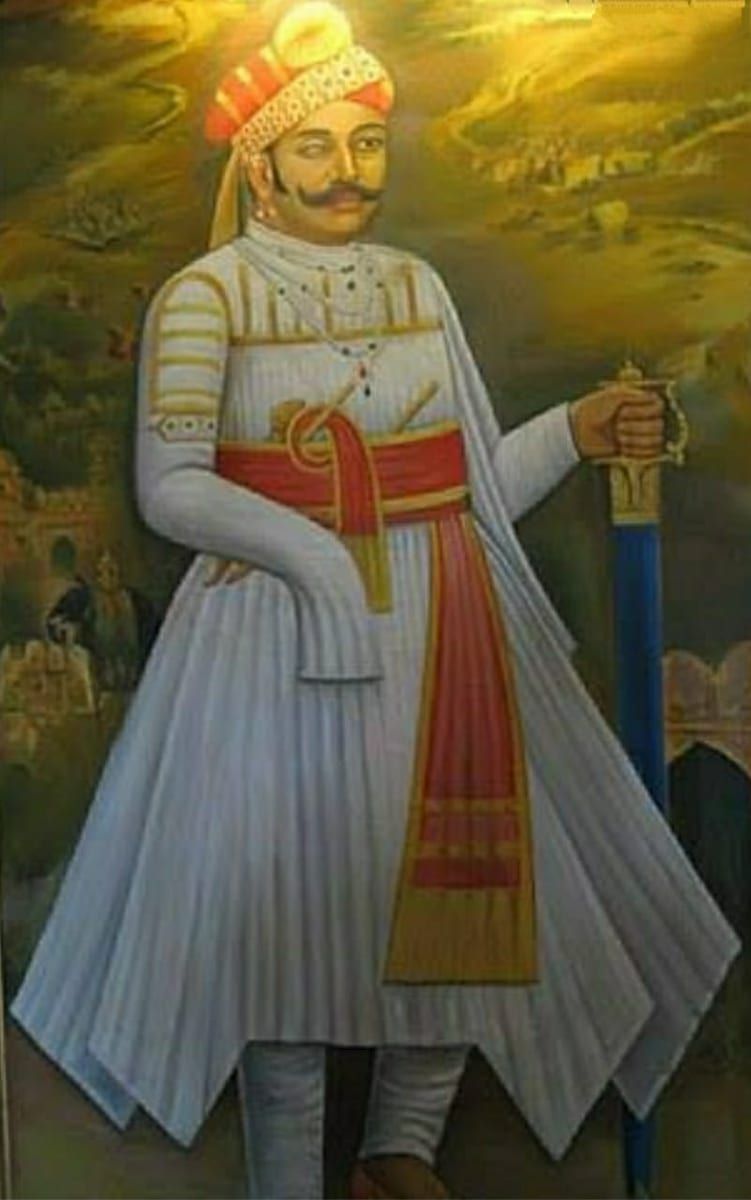 Rana SangaMaharana of Mewar1482–1528
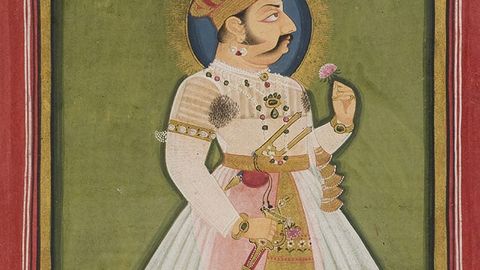
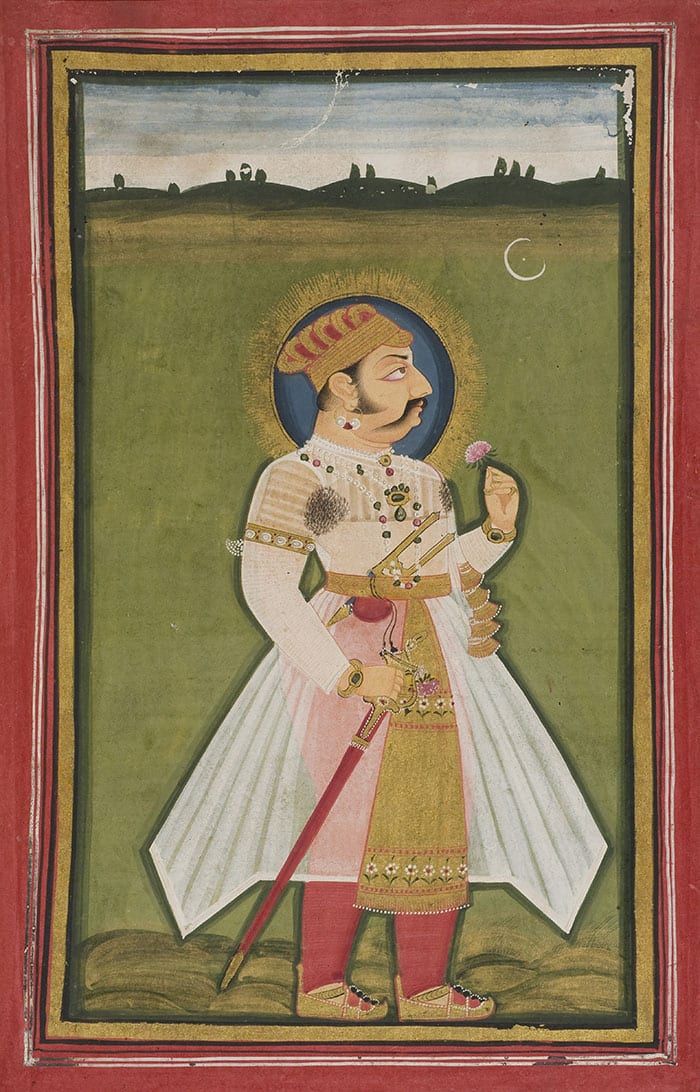 Rana KumbhaRuler of Mewar1417–1468
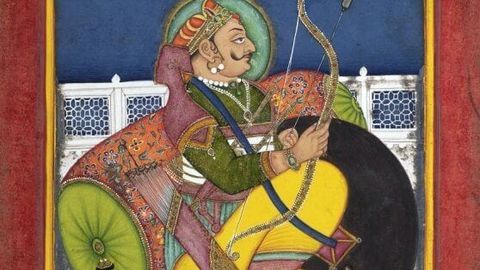
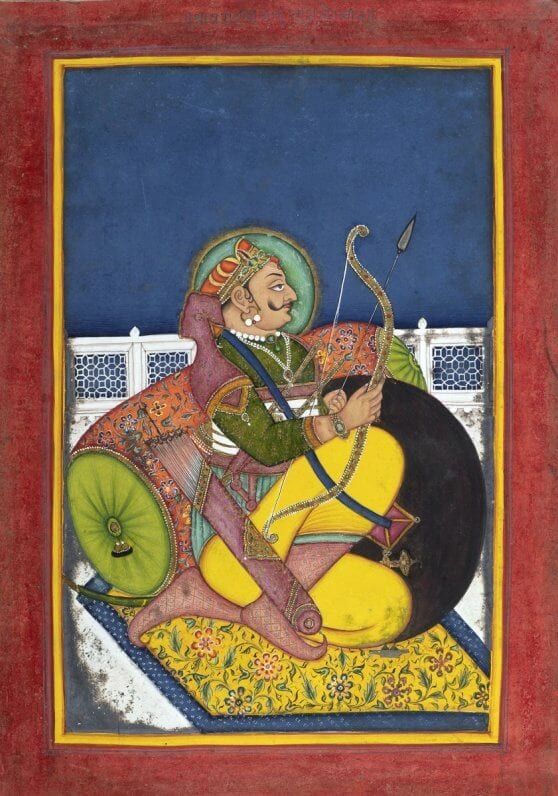 Prithviraj ChauhanChauhan kingc. 1166 – 1192
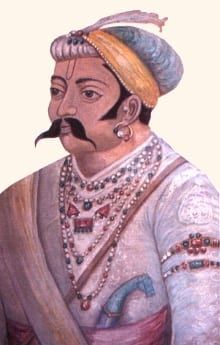 Rao JodhaRathore chief1416–1489
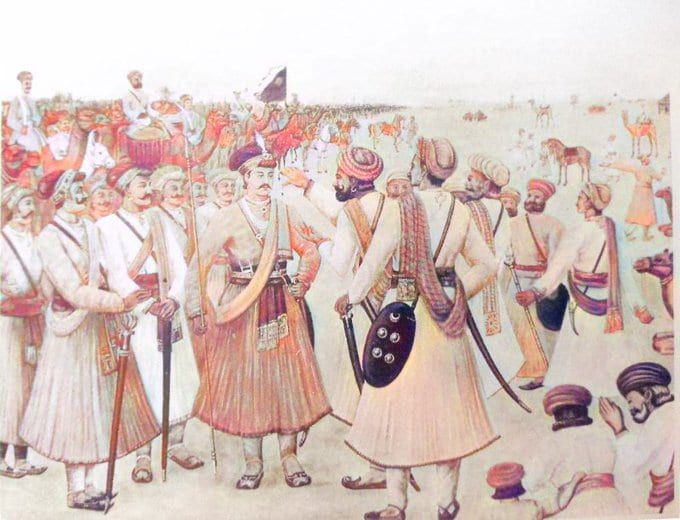 Rao BikaFounder of Bikaner1438–1504
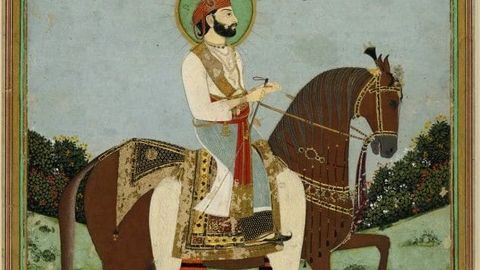
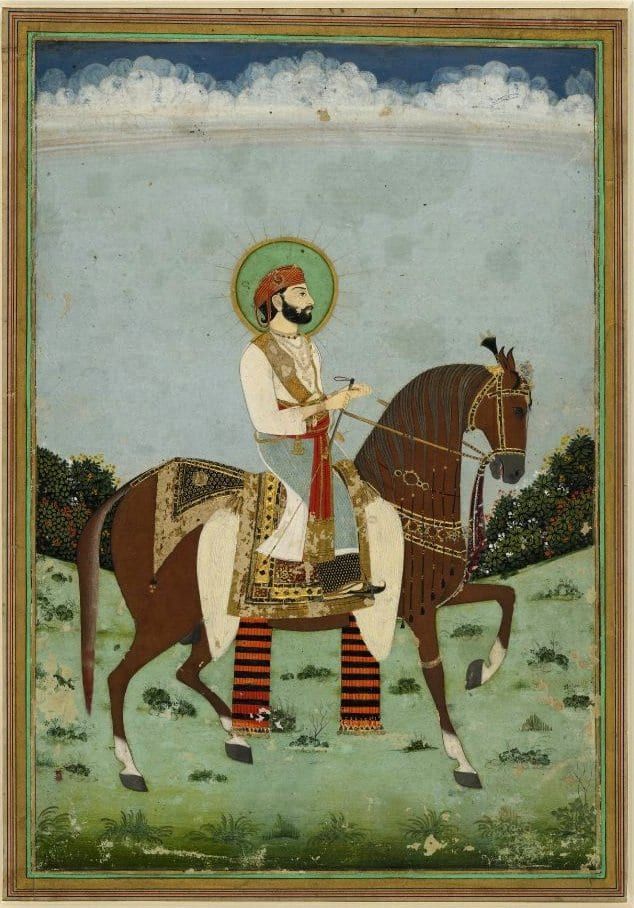 Jai Singh IIMaharaja and astronomer1688–1743
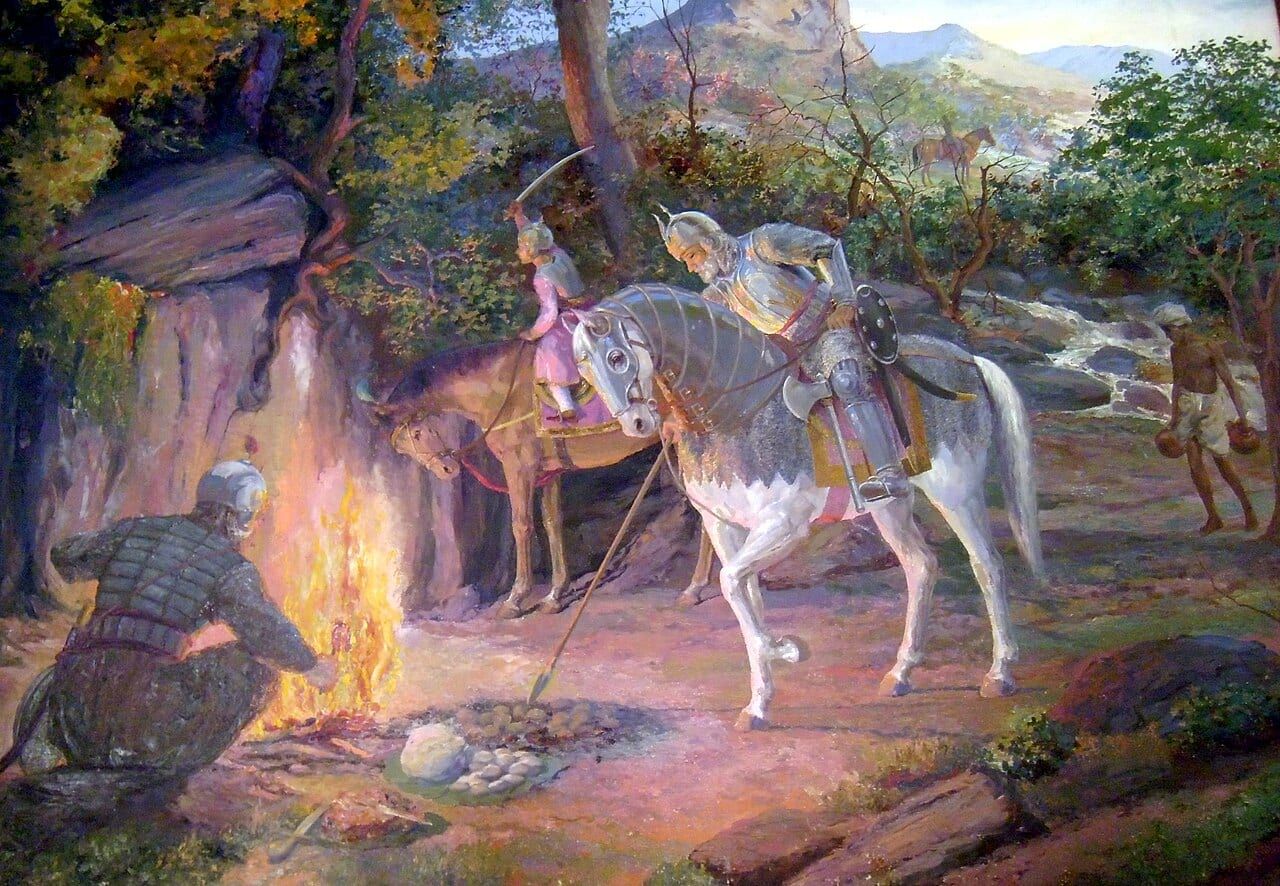 Durgadas RathoreRathore Rajput general1638–1718