
Hanumangarh sees BJP march under 'Save Democracy, Remove Chaos' campaign
Bikaner/ Hanumangarh. Under BJP's nationwide 'Save Democracy, Remove Chaos' campaign, BJP state spokesperson Dr. Surendra Singh Shekhawat arrived in Hanumangarh
· 1 min read
District · Bikaner division
Politics, administration, crime, education, farming and every local story from Hanumangarh district (Bikaner division).
Bikaner/ Hanumangarh. Under BJP's nationwide 'Save Democracy, Remove Chaos' campaign, BJP state spokesperson Dr. Surendra Singh Shekhawat arrived in Hanumangarh
· 1 min read
Hanumangarh district is located in the extreme north of Rajasthan, India, with its headquarters in the city of Hanumangarh. The district was created on 12 July 1994 and has a population of 1,774,692 according to the 2011 census.
Hanumangarh district is situated in the northern part of Rajasthan, India, with the city of Hanumangarh serving as both the district headquarters and its largest urban centre. The district’s location places it within the broader northern region of the state, linking it geographically to nearby areas while remaining distinct as an administrative unit.
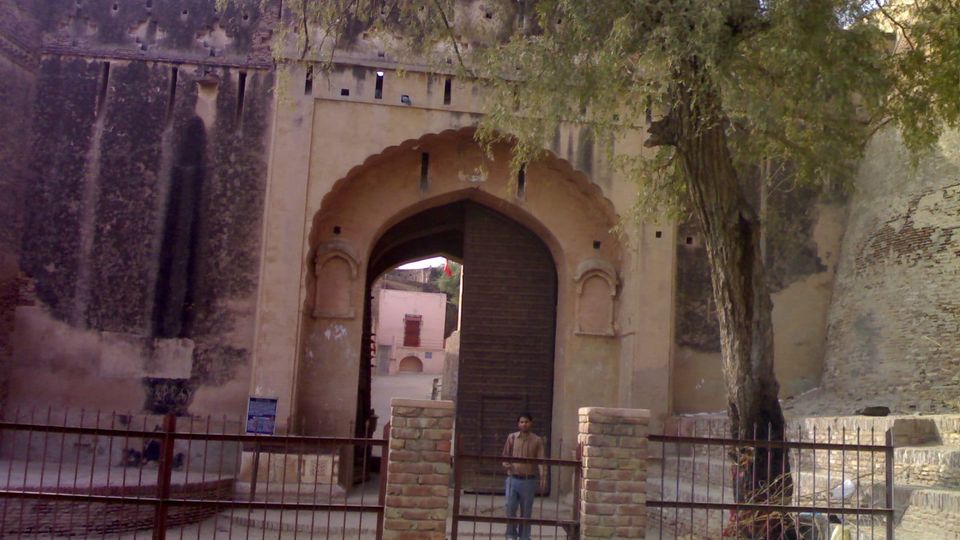
The city of Hanumangarh lies on the banks of the Ghaggar River, approximately 400 kilometres from Delhi. Historically, the settlement was known as Bhatner, a name derived from its founding by King Bhupat in 255 AD. Over the centuries, the town came under the control of the Bhati clan of Rajputs, reflecting the region’s feudal heritage.
In 1391, Bhatner experienced a notable siege by the forces of Timur. During this conflict, the Bhati ruler Dulachand briefly lost the fort, which was subsequently taken over by Rao Jetsa of Bikaner. These events underscore the strategic importance of the location and its fortifications throughout medieval history.
Hanumangarh district is linguistically diverse, with the 2011 census reporting that 59.48% of residents identified Rajasthani as their first language, making it the most widely spoken tongue in the area. Punjabi follows, spoken by 17.97% of the population, and is especially prevalent in the northern tehsils of Sangaria, Hanumangarh, and Pilibanga, where the Malwayi dialect is the most common form. Bagri is the mother tongue for 12.87% of inhabitants, while Hindi accounts for 6.59% and Marwari for 0.94%.
Punjabi enjoys a strong educational presence; it is taught as a language subject in many schools and is chosen by students up to postgraduate level. In addition to Punjabi, the Saraiki language is spoken by Arora Hindu and Rai Sikh communities who migrated from Pakistan after Partition. Hindi serves as the official language of the district, with English designated as an additional official language.
The district’s demographic profile shows a population of 1,774,692 in 2011, a sex ratio of 906 females per 1,000 males, and a literacy rate of 68.37%. Urban residents constitute 19.75% of the total, while Scheduled Castes and Scheduled Tribes make up 27.85% and 0.81% respectively. These figures provide context for the linguistic landscape, reflecting the varied cultural and social composition of Hanumangarh’s inhabitants.
Based on: the Wikipedia article (CC BY-SA 4.0) — facts from that source; edited and translated by Times of Rajasthan.
Farm advisory
Sat
30° 20°
0% · 0mm
Sun
31° 19°
0% · 0mm
Mon
31° 19°
0% · 0mm
Tue
30° 18°
0% · 0mm
Weather: Open-Meteo forecast. General advice — ask your Krishi Vigyan Kendra or agriculture supervisor for doses.
 VISUAL STORY · WITH MUSICHanumangarh Darshan▶ Watch & listen
READERS’ POLL
Vote to see the results
A proverb, a word and a district from the land of dunes — every day
PROVERB OF THE DAY
“पाणी पीजे छाण कर, गुरु कीजे जाण कर”
Strain water before you drink it; know a teacher before you follow one.
MARWARI WORD
मनवार
Lovingly insisting a guest eats and drinks a little more
DISTRICT OF THE DAY
Chittorgarh
FAIRS & FESTIVALS
This month: Pushkar Fair, Bundi Utsav
Kumbhalgarh Festival
Rajsamand · December
Discover Rajasthan →