

Dengue cases fall 34% and malaria 32% in Rajasthan, Udipur sees malaria outbreak
State has recorded 2,081 dengue and 984 malaria cases so far this year, showing a 34% and 32% decline respectively from last year
· 1 min read
District · Udaipur division
Politics, administration, crime, education, farming and every local story from Udaipur district (Udaipur division).
State has recorded 2,081 dengue and 984 malaria cases so far this year, showing a 34% and 32% decline respectively from last year
· 1 min read
On the fifth day of the Diwali fair organised by Udaipur Municipal Corporation, local artists enthralled the crowd at the Town Hall with song‑dance, classical dance and acro‑yoga performances, while stand‑up comedian Gaurav Gupta added a dash of laughter in the evening

Mahendra Kumar, 40, of Udaipur received a total financial assistance of ₹24 lakh under the National Scheduled Caste Scholarship Scheme in the form of fellowship, house‑rent allowance and contingency grant, enabling him to continue his PhD studies

Adilabad police arrested 23‑year‑old Udaipur resident Dinesh Patel in Gujarat for a ₹4.20 lakh fake online escort service scam. Police say he is linked to over 220 complaints


An elderly person in Udaipur’s Hiranmagri police station was defrauded of ₹1.73 lakh on 21 Oct 2026 after clicking a link on Facebook. The case is under investigation with help from cyber experts.
Udaipur district is one of the 50 districts of Rajasthan, with its headquarters in the historic city of Udaipur. The district features hilly terrain, a predominantly tribal population, and an economy largely based on agriculture and mineral resources.
Udaipur district is one of the fifty districts of Rajasthan in western India, forming part of the historic Mewar region. Its administrative headquarters is the city of Udaipur, which also serves as the capital of the former Mewar kingdom and the present‑day district.
The city of Udaipur lies in the south‑western corner of Rajasthan, near the Gujarat border, and is bounded on the west by the Aravalli Range, which separates it from the Thar Desert. It is situated roughly 415 km south of the state capital Jaipur and lies about midway between the major metros of Delhi (≈660 km) and Mumbai (≈800 km). The location provides strategic connectivity to Gujarat’s ports and is served by road, rail and the Maharana Pratap Airport.
Founded in 1559 by Udai Singh II of the Sisodia Rajputs after shifting the capital from Chittorgarh, Udaipur remained the capital of Mewar until 1818, when the region became a British princely state, and later merged into Rajasthan after Indian independence in 1947. The city is popularly called the “City of Lakes” because it is surrounded by five major artificial lakes—Fateh Sagar, Lake Pichola, Swaroop Sagar, Rangsagar and Doodh Talai—which are part of the National Lake Conservation Plan. The presence of these lakes has also led to Udaipur being likened to the “Venice of the East.”
Udaipur’s economy is dominated by tourism, driven by its historic forts, palaces, museums, gardens, temples and cultural festivals. In addition to tourism, the district benefits from mineral extraction, marble processing, chemical and electronic manufacturing, and a thriving handicraft sector. The city also hosts several state and regional public offices, including those of the Director of Mines and Geology and the Commissioner of Tribal Area Development, as well as private enterprises such as Hindustan Zinc Limited.
Education is an emerging strength of the region, with five universities, fourteen colleges and more than one hundred sixty high schools contributing to its reputation as an educational hub. The linguistic landscape includes Mewari, Rajasthani, Hindi and English, reflecting the cultural diversity of the area.
Udaipur district originated from the former Mewar or Udaipur State, comprising just under half of that princely territory. When the United State of Rajasthan was formed in 1948, the district was created by merging parts of the erstwhile Girwa, Khamnor, Rajnagar, Bhim, Magra, Kherwara and Kumbhalgarh districts together with the thikanas of Nathdwara, Kankroli, Salumbar (excluding Sayra tehsil), Bhinder, Kanor, Bansi, Bari Sadri, Amet, Sardargarh, Deogarh and Gogunda.
During the 1951–61 decade two new tehsils, Nathdwara and Gogunda, were established within the district. In 1991, seven tehsils—Bhim, Deogarh, Amet, Kumbhalgarh, Rajsamand, Nathdwara and Railmagra—were transferred to form the new Rajsamand district. Subsequent restructuring created additional tehsils such as Rishabhdeo and Lasadiya in 2008, Badgaon in 2012, Bhindar in 2017, and Kanor in 2018.
The city of Udaipur itself was founded in 1559 by Maharana Udai Singh II, who selected the ridge east of Lake Pichola in the fertile Girwa Valley as the new capital of the Mewar kingdom. The site had previously hosted the trading town of Ayad, a former capital in the 10th‑12th centuries, but Udai Singh moved the capital to a more secure location after experiencing artillery warfare and flood‑prone conditions at Ayad. He built a palace on a spot blessed by a hermit, and later erected a six‑kilometre city wall with seven gates—Surajpole, Chandpole, Udiapole, Hathipole, Ambapole, Brahmpole, Delhi Gate and Kishanpole—forming the walled city that still exists today.
In the late 16th century, Mughal Emperor Akbar captured Chittor in 1567 and visited Udaipur in 1576‑77, staying for six months. Although Akbar attempted to subdue the region at the Battle of Haldighati, Maharana Pratap resisted Mughal rule, and the battle remained inconclusive. By the mid‑18th century, after the decline of the Mughal Empire, Udaipur fell under Maratha influence as a tributary state, later becoming a princely state of British India in 1818. Today, Maharana Mahendra Singh Mewar serves as the 76th custodian of the Mewar dynasty.
Udaipur district covers an area of 11,724 square kilometres and displays a varied topography. The western and southern parts of the district are hilly, while an elevated plateau occupies the north and the eastern side consists of plains. The district is bounded on the northwest by the Aravalli Range, beyond which lie Sirohi and Pali districts, on the north by Rajsamand, on the east by Chittaurgarh and Pratapgarh, on the south by Dungarpur, and on the southwest by the state of Gujarat.
The district’s drainage is split among several river basins. In the west, the Sabarmati, Wakal and Sei rivers drain the landscape, whereas the southeastern area is drained by the Jakham, Gomti and Som rivers. The continental watershed formed by the Aravalli range divides the district, sending water from the northeastern part toward the Bay of Bengal and from the southwestern part toward the Gulf of Khambhat. About 47% of the district lies in the Mahi basin, 30% in the Sabarmati basin and 23% in the Banas basin, with an average annual rainfall of 637 mm.
Udaipur city, situated within the district, experiences a hot semi‑arid climate characterised by three main seasons. Summer extends from mid‑March to June, with temperatures ranging from 23 °C to 44 °C. The monsoon arrives in July, bringing dust, thunderstorms and the district’s most notable greenery and lakes, making it a popular monsoon destination. Winter lasts from October to March, featuring pleasant sunny days and cool nights, with temperatures falling between 5 °C and 30 °C. Even in January, the coldest month, daytime highs reach around 28.3 °C while mornings and evenings remain cold.
The climate pattern, combined with the district’s varied terrain, influences both the natural environment and human activity. The monsoon and winter periods are considered the most appealing times for visitors, attracting large numbers of tourists from mid‑September through late March or early April. The district’s clean‑air ranking—14th among national clean‑air cities in the 3‑10 L population category—reflects its relatively favourable air quality despite the broader desert conditions of Rajasthan.
The district of Udaipur is characterised by a predominantly tribal population, with Scheduled Tribes accounting for nearly half of its residents. In the 2011 census, 49.71% of the district’s population were classified as Scheduled Tribes, and in rural areas tribals made up 60.29% of inhabitants. A large portion of the district is designated as Scheduled Areas because of these tribal concentrations, covering entire tehsils such as Kotra, Jhadol, Lasadiya, Salumbar, Sarada, Kherwara, Rishabhdeo and Gogunda, as well as parts of Girwa, Mavli and Vallabhnagar. Among the 2,479 villages in the district, 1,945 (78%) fall under the Tribal Sub‑Plan, reflecting the significance of tribal communities in the region.
Linguistically, the district exhibits a diverse mix of languages. According to the 2011 census, the most widely spoken first language was Wagdi, used by 37.00% of the population, followed closely by Mewari at 34.19%. Hindi was the mother tongue for 13.12% of residents, while 12.05% spoke Rajasthani. These figures illustrate the coexistence of tribal languages alongside more widely used regional and national languages.
In the urban centre of Udaipur city, the linguistic profile differs somewhat. Hindi emerges as the dominant language, spoken as a first language by 54.77% of the city’s population, while Mewari is spoken by 23.03%. Rajasthani accounts for 11.39%, Urdu for 3.87% and Sindhi for 2.97%. The city’s language landscape therefore reflects both the broader district trends and the influence of urban multilingualism, with Hindi and Mewari remaining the major languages alongside a range of other regional tongues.
Udaipur district is organized into fifteen sub‑divisions, each serving as a primary administrative unit. The sub‑divisions are Sarada, Girwa, Gogunda, Badgaon, Kherwara, Bhinder, Lasadiya, Mavli, Vallabhnagar, Kotra, Jhadol, Rishabhdev and Salumbar, and they together form the backbone of local governance in the district.
These sub‑divisions are further broken down into a total of eighteen tehsils. In some cases a sub‑division contains more than one tehsil: Girwa sub‑division includes the tehsils of Girwa and Gogunda, while Kherwara sub‑division comprises Kherwara and Rishabhdeo. Other sub‑divisions such as Mavli, Vallabhnagar, Kotra and Jhadol each consist of a single tehsil that shares the same name. Salumbar sub‑division is unique in having three tehsils—Lasadiya, Salumbar and Sarada.
At the next tier of rural administration, the district contains twenty Panchayat Samitis, which coordinate development activities and local governance across the various tehsils and villages within Udaipur district.
The economy of Udaipur district is heavily reliant on agriculture, with more than sixty percent of its workforce employed as cultivators or agricultural labourers. This dominant agricultural base shapes the livelihoods of the majority of residents and underpins the district’s overall economic profile.
In recognition of its developmental challenges, the Ministry of Panchayati Raj listed Udaipur in 2006 among the nation’s 250 most backward districts. Consequently, it receives assistance through the Backward Regions Grant Fund Programme, which aims to address structural deficits and promote balanced growth.
Beyond farming, Udaipur district is distinguished by its rich mineral endowment. The area yields significant quantities of metallic ores such as copper, lead, zinc and silver, as well as non‑metallic resources including rock phosphate, asbestos, limestone and marble. These minerals generate a higher value of output than the rest of Rajasthan combined, providing a substantial industrial base.
The city of Udaipur itself benefits from a diversified economy. Tourism, driven by its lakes, historic palaces and luxury hotels, attracts over a million visitors annually, contributing notably to local income. Handicrafts—particularly paintings, marble articles, silver work and terracotta—are promoted through platforms like Shilpgram, supporting regional artisans.
The mineral sector remains a major employer, with marble mining, processing and export forming a well‑established industry. Udaipur also hosts Hindustan Zinc, the world’s second‑largest zinc producer, reinforcing the district’s role as a key hub for metal and mineral production.
Udaipur’s cultural landscape is a blend of historic heritage and living traditions. The city’s architecture—lakes, temples, forts, and palaces—provides a backdrop for a vibrant folk scene that includes dances such as Bhavai, Ghoomar, Kachchhi Ghodi, Kalbeliya, and Terahtaali. Ghoomar, a community dance for women, is performed on auspicious occasions with circles of ladies moving in harmony. Kalbeliya, a sensuous form performed by snake charmers, features dancers in long black skirts embroidered with silver ribbons. Bhavai dancers balance brass pitchers while pirouetting, and Kachchhi Ghodi dancers ride decorated dummy horses, swords in hand, to drum and fife rhythms. These dances complement the city’s fairs and festivals, and the accompanying music relies on instruments such as morchang, naad, tanpura, and sarangi.
Miniature painting is another artistic tradition nurtured by Udaipur’s rulers. Wall paintings depicting mythological and chivalric tales adorn houses and are used in wedding decorations. The Pichvai, painted on cloth, and the phad, a cloth scroll in folk style, are notable examples. The Bharatiya Lok Kala Mandal, a cultural institution with a museum, showcases Rajasthani culture through dresses, tribal jewelry, turbans, dolls, masks, musical instruments, paintings, and puppets. Its events—folk song and dance performances, theatre, and puppetry—highlight social themes and serve as educational tools.
The Gangaur Festival, celebrated in March–April, is a major Hindu festival in Udaipur. Women worship clay idols of Gan and Gauri, seeking marital happiness and health. On the eve of the festival, henna adorns palms and fingers. A dedicated Gangaur Ghat on the waterfront of Lake Pichola serves as a site for immersion of the idols. The procession, beginning at the City Palace, moves through the city on palanquins, chariots, bullock carts, and folk performances.
Udaipur’s scenic beauty has attracted filmmakers, making it a popular shooting location for Hollywood and Bollywood productions. Notable films include the Indian sections of James Bond’s Octopussy, The Jewel in the Crown, and The Best Exotic Marigold Hotel, among others. The city also hosts cultural events such as India’s first World Music Festival in 2016, featuring artists from over twelve countries, and the Udaipur Lake Festival, which offers musical programs, adventure sports, jungle safari, bird watching, light and sound shows, and an art fair around the lakes over several days.
Udaipur is well connected to the major cities of India by land, rail, and air. The Maharana Pratap Airport is a small domestic airport situated in a satellite town about 20 kilometres from Udaipur. Daily flights connect Udaipur with Jaipur, Mumbai, Delhi, Chennai, Aurangabad, Bangalore, Hyderabad, Surat and Varanasi, and airlines such as Air India, Vistara, IndiGo and SpiceJet operate there.
Rail connectivity is provided by Udaipur City railway station and Rana Pratap Nagar railway station. Through these stations, Udaipur has direct train connectivity on the broad gauge network to most of the major cities in Rajasthan and the rest of India, including Mysuru, Bengaluru, Khajuraho, Alwar, Jaipur, Kota, Chittorgarh, Ajmer, Delhi, Mumbai, Kolkata, Ratlam, Patliputra, Indore, Ujjain, Surat, Vadodara, Gwalior and Agra. A broad gauge conversion was completed in October 2022 for Ahmedabad. Luxury trains such as The Palace on Wheels, Royal Rajasthan on Wheels, Maharaja Express and The Indian Maharaja have Udaipur as a scheduled stop, and trains connecting Udaipur with Delhi include the Mewar Express and Chetak Express.
The city lies on the intersection point of the East West Corridor, Golden Quadrilateral, National Highway 76 and National Highway 8, midway between Delhi and Mumbai, located around 700 kilometres from either city. The East West Corridor, which starts from Porbandar and ends at Silchar, intersects the Golden Quadrilateral and shares the common space from Udaipur to Chittor. The roads in this part of the country are paved and fit for private vehicles. One can drive from Jaipur (around 6 hours), Ahmedabad (4½ hours) or Surat (9 hours) on NH 8 or Golden Quadrilateral, from Kota (3 hours – EW Corridor or NH 76). Udaipur City Bus Depot has lines running for the majority of other destinations in Rajasthan and farther north and west towards Madhya Pradesh and Gujarat. Apart from the Rajasthan State Road Transport Corporation (RSRTC), there are numerous private operators and companies providing bus services to and from other cities.
Local transport options include unmetered taxis, private taxis, radio taxis, auto rickshaws and regular city bus services. Since 2015, Uber and Ola cab services are available.
Education in Udaipur is served by various government, deemed and private universities. The major government universities in the city are Mohan Lal Sukhadia University, Maharana Pratap University of Agriculture and Technology and Rajiv Gandhi Tribal University. J.R.N. Rajasthan Vidyapeeth is a deemed university, while Pacific University, Bhupal Nobles University and SPSU are among the leading private universities of repute. The Indian Institute of Management Udaipur, established in 2011, also resides in the city.
Based on: the Wikipedia article (CC BY-SA 4.0) — facts from that source; edited and translated by Times of Rajasthan.
Farm advisory
Sat
32° 21°
0% · 0mm
Sun
31° 21°
0% · 0mm
Mon
31° 21°
0% · 0mm
Tue
31° 21°
0% · 0mm
Weather: Open-Meteo forecast. General advice — ask your Krishi Vigyan Kendra or agriculture supervisor for doses.
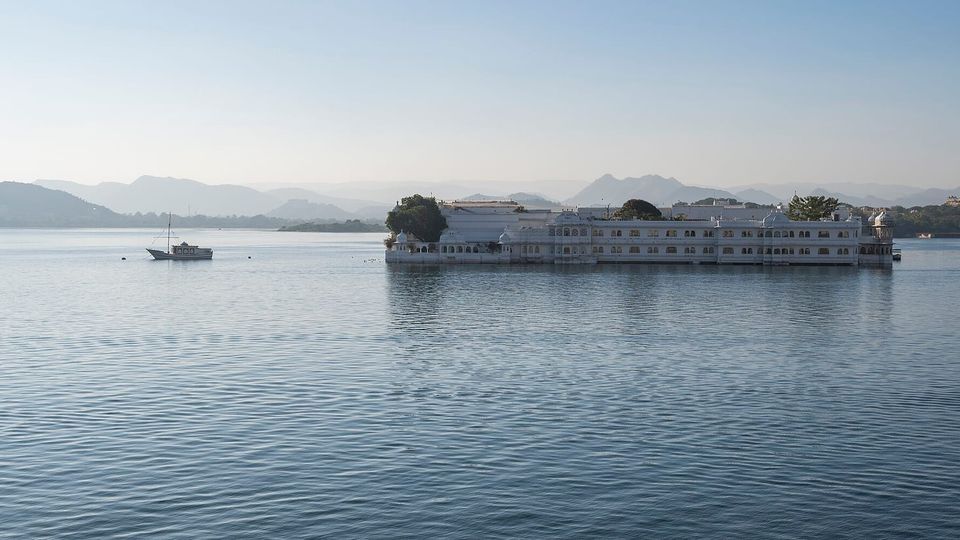 VISUAL STORY · WITH MUSICUdaipur Darshan▶ Watch & listen
READERS’ POLL
Vote to see the results
A proverb, a word and a district from the land of dunes — every day
PROVERB OF THE DAY
“पाणी पीजे छाण कर, गुरु कीजे जाण कर”
Strain water before you drink it; know a teacher before you follow one.
MARWARI WORD
मनवार
Lovingly insisting a guest eats and drinks a little more
DISTRICT OF THE DAY
Chittorgarh
FAIRS & FESTIVALS
This month: Pushkar Fair, Bundi Utsav
Kumbhalgarh Festival
Rajsamand · December
Discover Rajasthan →


