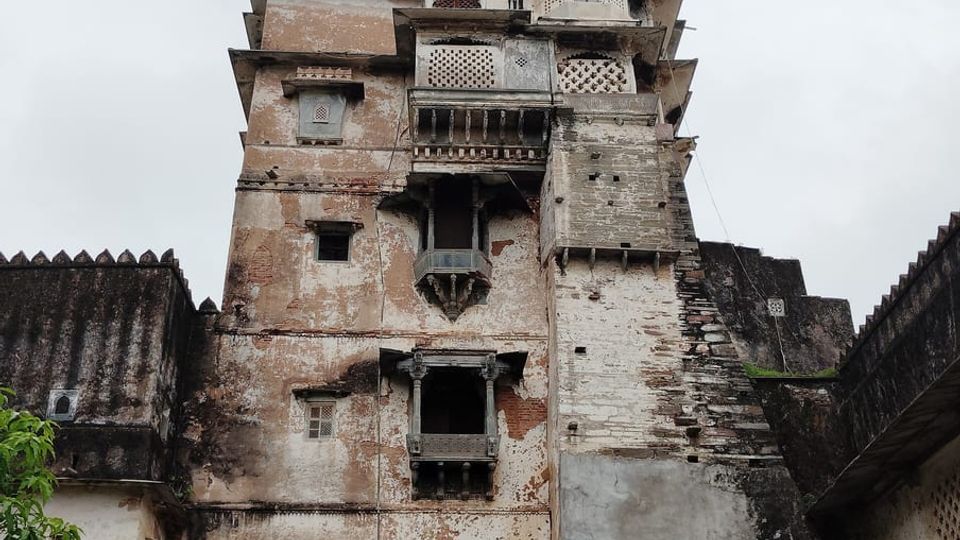
The area that now forms Dungarpur district was inhabited by the Bhil people from as early as 4000 BCE, and they remained the dominant ethnic group throughout later periods. Rajputs invaded the region in the 12th century, establishing a foothold that would evolve over centuries. In 1197 a Rajput prince from Mewar, Guljaram Punjabikir, founded Dungarpur State, though full Rajput control over the district took many more years to consolidate. The Rajputs referred to the combined area of present‑day Dungarpur and Banswara districts as Bagar or Vargar, while the Bhils continued to form the core of the local military and police under British rule.
Dungarpur became the seat of the elder branch of the Guhilot family of Mewar. The city itself was founded in 1282 A.D. by Rawal Veer Singh, the eldest son of Mewar’s ruler Karan Singh, and later expanded near the end of the 14th century by Rawal Bir Singh, who named it after Dungaria, an independent Bhil chieftain. The chiefs of Dungarpur bore the title Maharawal, tracing their lineage to Mahup, the disinherited eldest son of Karan Singh, who seized the Bagar region from the Bhil chiefs after taking refuge with his mother’s Chauhan family.
After the death of Rawal Udai Singh of Bagar at the Battle of Khanwa in 1527, his territories were split into the princely states of Dungarpur and Banswara. Over the following centuries the region passed under Mughal, Maratha and finally British suzerainty, becoming a 15‑gun salute state by treaty in 1818. By 1901 the district’s population was recorded at 100,103, with the town of Dungarpur itself housing 6,094 inhabitants.
The last ruling Maharawal of Dungarpur was Rai‑i‑Rayan Maharawal Shri Lakshman Singh Bahadur (1918–1989). He received the Knight Commander of the Star of India in 1935 and the Grand Commander of the Indian Empire in 1947. Following India’s independence he served twice in the Rajya Sabha (1952, 1958) and later as a member of the Rajasthan Legislative Assembly in 1962 and again in 1989.