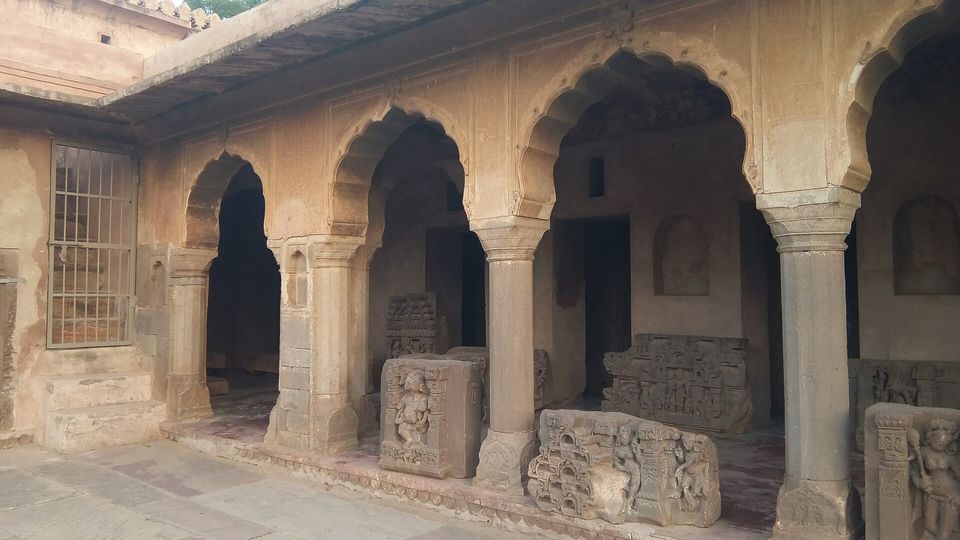
Dausa is situated in a region known as Dhundhar and served as its first capital. In the 10th century CE it was ruled by the Chauhans and Badgurjars. In the 11th century CE Dulha Rai won it from the Badgurjars and continued to rule until 1036 CE, after which he changed his capital from Dausa to Khoh.
During the reign of Akbar, who visited Ajmer as a pilgrim to Khwaja Moinuddin Chisti in 1562 CE, he stayed in Dausa and met with Rupsi Bairagi, the Hakim of Dausa at the time and brother of the then ruler of Amber, Raja Bharmal.
The district of Dausa was constituted on 10 April 1991 by separating four tehsils—Dausa, Baswa, Sikrai, and Lalsot—from Jaipur district. Mahwa Tehsil of Sawai Madhopur was added to the district on 15 August 1992.
Prior to Indian independence in 1947, Dausa was part of the princely state of Jaipur ruled by the Kachhwaha Rajput dynasty. It was originally governed by the Chauhan Rajputs in the 10th century CE, with control passing to Kachhwaha Raja Sodh Dev (r. 996‑1006 CE) and then to his son, Raja Dulha Rai, who ruled Dhundhar from Dausa for three decades before moving to Khoh in 1028 CE.
Dausa has produced prominent freedom fighters such as Tikaram Paliwal and Ram Karan Joshi, who contributed to the fight for independence and the formation of the state of Rajasthan. Tikaram Paliwal was elected Chief Minister of Rajasthan in 1952, while Ram Karan Joshi was the first Panchayati Raj Minister of Rajasthan and submitted the first Panchayati Raj Bill in the Vidhansabha in 1952.
The poet Sunderdas was born on Chaitra Shukla Navami in Vikram Samvat 1653 in Dausa. He was a renowned Nirgun Panthi Sant and wrote 42 Grantha, among which Gyan Sundaram and Sunder Vilas are famous.