

In Sri Ganganagar, air pollution rises; health department orders mask use and precautions
When air pollution level rises in Sri Ganganagar, health department advises use of N95/N99 masks and special precautions
· 1 min read
District · Bikaner division
Politics, administration, crime, education, farming and every local story from Sri Ganganagar district (Bikaner division).
When air pollution level rises in Sri Ganganagar, health department advises use of N95/N99 masks and special precautions
· 1 min read
In accordance with the State Election Commission, on 6 November, MD BEd College, Sri Ganganagar, gave practical training on EVM and ballot box to PO and APO First for the Panchayati Raj general election

In the meeting held on 6 November in Sri Ganganagar, the election officer released the timetable for the special short revision programme based on the eligibility date of 1 January 2027. The final roll will be published on 4 January.

Green crackers will be sold and used from 8 a.m. to 10 p.m. on Diwali in Shri Ganganagar


District Collector Dr. Amit Yadav of Shri Ganganagar issued a restriction order on 6 November to ban firing crackers on the holy Diwali festival. As per the order, fireworks are prohibited within 2 km from 7 pm to 6 am.

District Collector Dr. Amit Yadav of Shri Ganganagar, seeing the risk of fire from crackers during Diwali, directed all health centres to stay open till midnight

District Collector and District Magistrate of Shri Ganganagar formed a team to ensure law and order on Diwali and banned shopkeepers from selling fireworks without a licence.

Youth programme under Ministry of Youth and Sports held at Jain Kanya PG College, Shri Ganganagar on 5 November. Students expressed views on ‘One Nation, One Election’.

Voting for Sarpanch and Panch positions will take place on 16 November 2026 in the 8 Panchayat Samiti areas of Shri Ganganagar. Nominations will be accepted from 8 am to 11 am on 15 November, and the election will run from 7 pm to 6 pm.

Education & JobsSri Ganganagar
A awareness camp was organised on 4 November at K.L.M. Gurukul Academy in Shri Ganganagar on National Education Day, providing information on the NALSA Scheme 2026 and child rights

On 4 November in Shri Ganganagar city, the logistics department seized 146 litres of petrol and 4 cylinders with a prompt raid on illegal petrol‑diesel sales and domestic gas cylinder misuse.

In Shri Ganganagar district, on 5 November 2026, voting for Panch and Sarpanch positions will take place in the Gram Panchayats of Vijay Nagar, Suratgarh and Rajiyasar under the third phase of the Panchayati Raj general elections.

At Shri Ganganagar State Minority Boys Residential School, students explained the importance of voting to parents during a sweep programme on Monday

On 2 November, Election Supervisor and Joint Secretary of Minority Affairs Department, Mr. Aslam Sher Khan, arrived in Ganganagar district to review election preparations.

Education & JobsSri Ganganagar
A workshop on the daughter’s role in a drug‑free society was held on 2 November at Anupam Dhingra State Girls School No. 4 in Shri Ganganagar.

Voting teams departed from Shri Ganganagar and have completed preparations for the election on 3 November 2026
Sri Ganganagar district is the northernmost district of Rajasthan, India, with its headquarters in Sri Ganganagar. The district transformed from a largely uninhabited region into a productive agricultural area after the construction of the Ganga Canal.
Sri Ganganagar district occupies the northernmost part of Rajasthan, India, and serves as the administrative region for the city of the same name. The district’s headquarters is located in Sri Ganganagar, which lies close to the international border with Pakistan.
The city of Sri Ganganagar was founded by Maharaja Ganga Singh of the former Bikaner State. He initiated the development of canal irrigation in this otherwise arid zone, and the city was named in his honor.
The introduction of the Gang Canal, followed later by the Bhakra irrigation system, dramatically altered the landscape. These water projects converted the desert terrain into productive agricultural land, earning the area the reputation of being the "food basket of Rajasthan."
Overall, the district’s identity is closely tied to its transformation from a dry region into a fertile agricultural hub, a change driven primarily by the irrigation infrastructure established under Maharaja Ganga Singh’s reign.
Sri Ganganagar district, named after Maharaja Ganga Singh of Bikaner, was originally part of the largely uninhabited Bikaner State in the former Rajputana region. The area first fell under the jurisdiction of Bahawalpur state, but it was unguarded until a companion of Maharaja Ganga Singh, Hindu Mal, moved boundary posts from Suratgarh northward to what is now Hindumalkot, reporting his successful incursion before his death, which gave the town its name.
A severe famine struck Bikaner State from 1899 to 1900, prompting Maharaja Ganga Singh to seek a solution through irrigation. He engaged A.W.E. Standley, Chief Engineer of Punjab, who confirmed that the western part of the state could be irrigated using water from the Sutlej River. The Sutlej Valley Project plan was drawn by Punjab’s chief engineer R.G. Kennedy, but progress was delayed by objections from Bahawalpur. Intervention by Viceroy Lord Curzon in 1906 led to a Tripartite Conference and an agreement on 4 September 1920.
Construction of the canal began with the foundation stone of the Canal Head Works at Ferozepur laid on 5 December 1925. By 1927, 143 km (89 mi) of lined canal—known as the Ganga Canal—had been completed, bringing Sutlej waters into the region. The canal was officially opened on 26 October 1927 by Viceroy Lord Irwin, a date the city commemorates as its foundation day. The irrigation transformed the area into a productive “Food Basket” of Rajasthan and enabled the planning of Sri Ganganagar as one of India’s first well‑planned modern cities, with distinct residential blocks and a commercial marketplace.
Sri Ganganagar district was formally created from the irrigated portions of Bikaner State on 30 March 1949. Later, in 1994, part of the district was separated to form Hanumangarh district.
The district’s population is linguistically diverse, with Punjabi being the most widely spoken first language, accounting for 31.66% of residents according to the 2011 census. Close behind, 25.08% of the population speak Bagri, while 24.22% use Rajasthani as their mother tongue. Hindi is the first language for 13.02% of people, and smaller shares speak Marwari (2.11%) and Saraiki (0.18%).
In the urban centre of Sri Ganganagar city, the linguistic profile expands to include both official and commonly used languages. Hindi and English serve as the official languages of the city, while Punjabi, Hindi, Rajasthani, Bagri and Saraiki are the most commonly spoken among its residents. This reflects the broader district pattern of multilingualism, with the city’s population of 237,780 exhibiting a similar mix of language use.
Religious affiliation in the district aligns closely with its linguistic composition. Hinduism is the dominant religion, followed by a substantial Sikh community and a smaller Muslim minority. This religious landscape is mirrored in the city, where Hindus form the majority, with Sikh and Muslim minorities also present.
The district’s demographic characteristics show a sex ratio of 887 females per 1,000 males overall, and a literacy rate of 70.25%. Urban areas house 27.19% of the population, and Scheduled Castes and Scheduled Tribes constitute 36.58% and 0.68% respectively. After the district’s bifurcation, the residual district retained a population of 1,270,690, a sex ratio of 881, and an urban population of 33.09%.
Sri Ganganagar district is divided into eleven tehsils, each with a designated headquarters. The tehsils are Sri Ganganagar, Sri Karanpur with its headquarters in Karanpur, Sadulshahar, Padampur, Suratgarh, Anupgarh with its headquarters in Anupgarh, Sri Bijaynagar with its headquarters in Vijainagar, Gharsana with its headquarters in Gharsana, Raisinghnagar with its headquarters in Raisinghnagar, Gajsinghpur, and Rawla Mandi.
In addition to the tehsils, the district contains twelve sub‑tehsils: Lalgarh Jattan, Hindumalkot, Chunawadh, Mirzawala, Binjhbayla, Ridmalsar, Rajiasar, Jaitsar, 365 Head (2KLD), Kesrisinghpur, Muklawa, and Sameja. The administrative structure includes nine sub‑division offices (SDOs) located in Ganganagar, Sadulsahar, Karanpur, Padampur, Raisinghnagar, Vijainagar, Anupgarh, Gharsana, and Suratgarh.
The district has one municipal council in Ganganagar city and ten municipal boards spread across Suratgarh, Sadulshahar, Padampur, Karanpur, Gajsinghpur, Kesrisinghpur, Raisinghnagar, Vijainagar, Anupgarh, and Gharsana. Governance at the village level is organized through 409 gram panchayats, overseeing a total of 3,061 villages, which is the highest number of villages in Rajasthan.
Politically, the district is represented in the national parliament by Member of Parliament Kuldeep Indora of the Indian National Congress. At the state level, the Member of Legislative Assembly is Jaydeep Bihani of the Bharatiya Janata Party.
Desert land was converted to a green town by the efforts of Maharaja Ganga Singh, who brought the Ganga Canal. It carries the excess waters of Punjab and Himachal Pradesh to the region.
The economy of the city is based on agriculture; its main crops are wheat, mustard and cotton. Other crops include guar, bajra, sugar cane and grams. In recent years, farmers are diverting towards horticulture. Kinnow (a hybrid citrus fruit) is a popular horticultural product; other fruits of the citrus family are also grown. The city also have the largest carrot market of Rajasthan.
Industries in Sri Ganganagar District are based on agriculture. Major industries are cotton ginning and pressing factories, mustard oil mills, wheat flour mills, and sugar mills. (known for its Royal Heritage Liqueurs)
Rang Mahal, a historic palace, stands as one of the most visited landmarks in Sri Ganganagar district. Its architecture reflects the region’s heritage and attracts tourists and scholars alike.
The district hosts several significant military and industrial sites. The Airforce base in Suratgarh, the Thermal Power Plant Super Critical Suratgarh, and the All India Radio Station Suratgarh are key facilities that underscore the area’s strategic importance. Additionally, the Central Farm located in Suratgarh, Jaitsar, and Sardargarh, along with the CCBF Suratgarh and Shree Cement Udaipur Suratgarh, contribute to the district’s agricultural and industrial profile.
Border villages such as Koni and Hindumalkot serve as important points of contact with neighboring regions, while Padpata Dhaam in Dhaban Jhallar and Chanana Dham near Chanana provide cultural and religious experiences for visitors.
Fortified sites like Suratgarh Sodhal Fort, Dhab Suratgarh, Anupgarh Fort, and Shivpuri (29GB) Fort showcase the district’s historical military architecture. These forts are often visited by those interested in the region’s past.
Religious devotion is evident in places such as Rojhri Dham, a complex dedicated to the worship of Hanuman. The temple of Hanuman is situated on the right side of the Anupgarh-Bikaner road, about one kilometre from Rojhri Village, and is accessible from several nearby towns, including Anupgarh, Rawla Mandi, and Chhatargarh. The site is a notable destination for pilgrims within the district.
Sri Ganganagar is well connected by road, with National Highway 62 passing through the district. The city is linked directly to major cities such as Delhi, Jaipur, Ludhiana, Chandigarh, Bikaner, Bathinda, Sirsa, Hisar, and Haridwar, among others. Local transport within the district relies mainly on auto rickshaws and cycle rickshaws.
The Sri Ganganagar Junction railway station serves as the main railway hub in the district. From this station, trains provide direct connections to cities including Delhi, Jaipur, Kota, Bikaner, Haridwar, Hanumangarh, Jodhpur, Ambala, Sikar, Bathinda, Firozpur, Fazilka, Howrah, Trivandrum, Nanded, Ahmedabad, Pune, Roorkee, Kanpur, Bangalore, and several other destinations.
For air travel, Lalgarh Airport offers local charter services within the district. The nearest international airport is Sri Guru Ram Das Ji International Airport in Amritsar, located 241 km away.
In terms of education, Sri Ganganagar hosts the Sri Ganganagar Medical College, which serves as a key institution for medical education in the region.
Based on: the Wikipedia article (CC BY-SA 4.0) — facts from that source; edited and translated by Times of Rajasthan.
Farm advisory
Sat
30° 19°
0% · 0mm
Sun
31° 19°
0% · 0mm
Mon
31° 19°
0% · 0mm
Tue
30° 18°
0% · 0mm
Weather: Open-Meteo forecast. General advice — ask your Krishi Vigyan Kendra or agriculture supervisor for doses.
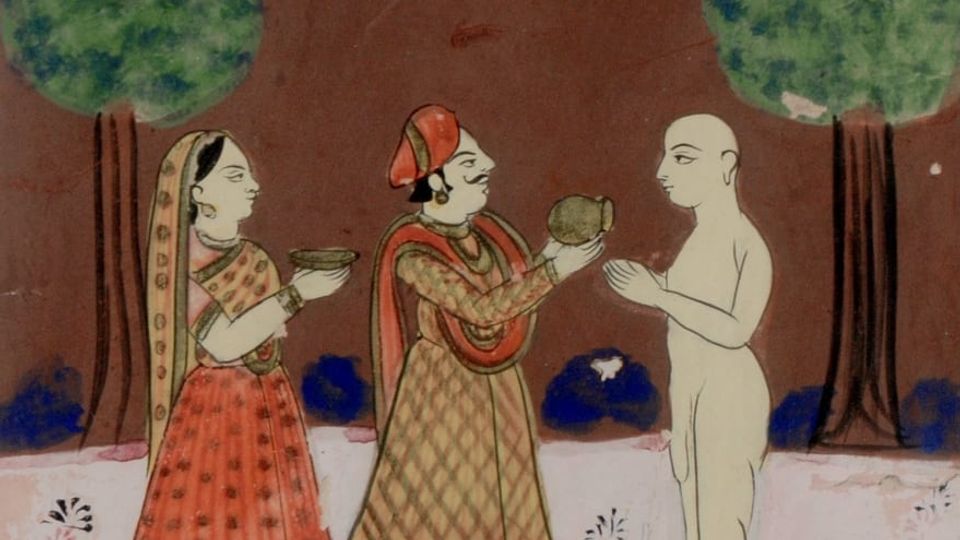 VISUAL STORY · WITH MUSICSri Ganganagar Darshan▶ Watch & listen
READERS’ POLL
Vote to see the results
A proverb, a word and a district from the land of dunes — every day
PROVERB OF THE DAY
“पाणी पीजे छाण कर, गुरु कीजे जाण कर”
Strain water before you drink it; know a teacher before you follow one.
MARWARI WORD
मनवार
Lovingly insisting a guest eats and drinks a little more
DISTRICT OF THE DAY
Chittorgarh
FAIRS & FESTIVALS
This month: Pushkar Fair, Bundi Utsav
Kumbhalgarh Festival
Rajsamand · December
Discover Rajasthan →


