Skip to content

District · Bharatpur division

Deeg News — Latest from Deeg

Politics, administration, crime, education, farming and every local story from Deeg district (Bharatpur division).

30°CClear · 18°/30°डीगAll alerts
KNOWN FORDeeg water palacesFountains
Deeg water palacesFountains

About Deeg

Deeg district is a newly formed district in Rajasthan, inaugurated on 7 August 2023. It lies at the tri‑junction of Rajasthan, Haryana and Uttar Pradesh and includes nine tehsils.

Overview

Deeg district is a newly formed administrative district in the northwestern Indian state of Rajasthan. It was carved out of the former Bharatpur district and officially inaugurated on August 7, 2023, marking a recent reorganisation of the state's district boundaries.

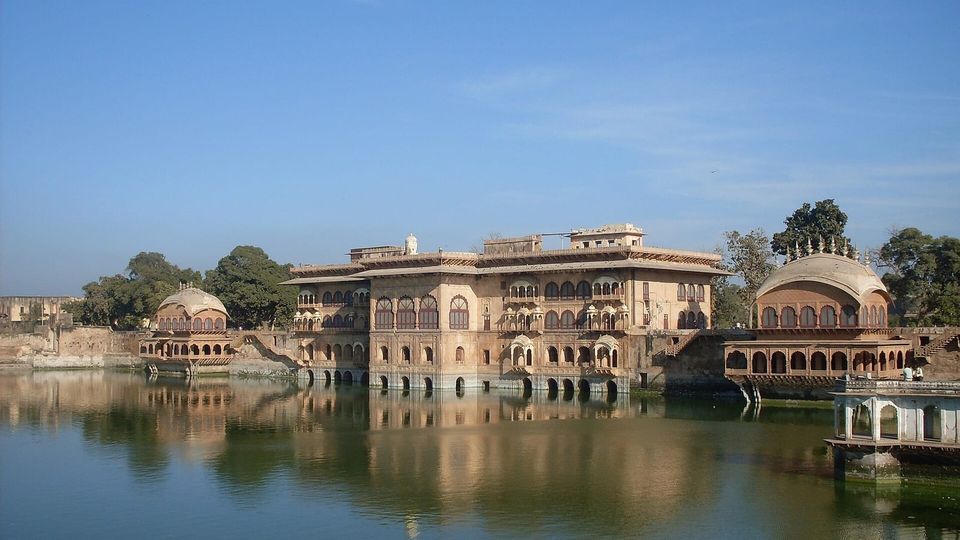
The district takes its name from the historic city of Deeg, which lies within its borders. Deeg is known for its rich architectural heritage, featuring a collection of palaces, forts, gardens, and fountains that reflect the region’s cultural legacy.

Historically, Deeg served as the first capital of the Hindu Jats of Bharatpur, playing a pivotal role in the political and cultural development of the area, especially due to its proximity to the historic city of Agra.

Maharaja Suraj Mal, a notable ruler of the region, commissioned the construction of several buildings and landmarks in Deeg and oversaw the renovation of the Deeg Palace, which is distinguished as the only Hindu‑style palace in North India.

History

After acquiring the throne, the Jat ruler Maharaja Badan Singh selected De eg as his stronghold and capital, initiating the construction of the De eg Palace. The palace, situated about 32 km from Bharatpur, served as a summer mansion for the royal family and marked the foundation of the Jat House in Bharatpur. Under Badan Singh’s reign De eg experienced significant prosperity and urbanisation.

Maharaja Suraj Mal, son of Badan Singh, is remembered as a role model for modern Jats. Recognising the strategic importance and architectural grandeur of the palace, Suraj Mal ordered a fortress to be built around it to guard against the frequent threat of Mughal invasions.

In 1804 the region became a focal point of conflict when the Battle of De eg and the subsequent Siege of De eg pitted the British East India Company against the Jat rulers of Bharatpur and their Maratha allies, reflecting the contested control of the area.

Geography and climate

Deeg district lies in the state of Rajasthan, India, at coordinates 27.47° N latitude and 77.33° E longitude. The area sits at an average elevation of about 174 metres (571 feet) above sea level, giving it a modest altitude within the largely flat terrain of the region. The town of Deeg, the district’s administrative centre, is situated roughly 32 kilometres from the city of Bharatpur, and is notable for the historic Deeg Palace, a summer resort built in 1772 for the Jat rulers of Bharatpur.

People and languages

Deeg district is home to a diverse population of over one million people, with Hindus forming the majority community across the region. Muslims, primarily belonging to the Meo community, are largely concentrated in the northern tehsils that are part of Mewat, while the southern tehsils remain predominantly Hindu with only very small minority percentages.

The linguistic landscape of the district reflects this cultural mix. According to the 2011 census, the most widely spoken first language is Braj, used by 52.86% of residents. Hindi follows as the mother tongue for 31.65% of the population, and Rajasthani is spoken by 11.87%. Smaller language groups include Urdu at 1.62% and Punjabi at 1.55%.

These language patterns correspond closely with the district’s demographic distribution, where a significant portion of the population lives in rural areas and maintains traditional linguistic identities. The presence of Urdu speakers aligns with the Muslim communities, particularly the Meos, while Punjabi speakers represent a minor segment of the overall populace.

Culture, fairs and places to see

Deeg district boasts several notable tourist attractions that reflect its rich cultural heritage. Aadi Badrinath Dham lies 15 km northwest of Deeg city, while Braj Kedarnath Dham is situated 25 km to the northwest, both serving as important pilgrimage sites. The town of Kaman, located 20 km north of Deeg, is linked to Lord Krishna’s early life and features temples and holy sites such as Vimal Kund and the Chaurasi Khamba temple, known for its eighty‑four pillars.

The centerpiece of Deeg’s cultural landscape is the Deeg Palace, famed for its nine hundred fountains that are activated twice a year during the Braj Holi festival in February/March and the Avamasaya festival in September. The palace also hosts the Jawahar exhibition fair each September, named after Maharaja Jawahar Singh, and houses a museum that remains closed on Fridays. Complementing the palace, the Deeg Fort stands on slightly elevated ground with a square layout, rubble and mud walls reinforced by twelve imposing towers, the largest being Lakha‑Burj in the northwest corner. A shallow wide moat surrounds the fort, accessed via a northern bridge and a single gate, and within its walls lie a partially ruined palace, underground chambers, the tomb of Muhammad Shafi, and a Mughal Mir Bakhshi.

The Deeg Festival, celebrated to honor Deeg sathapna Diwas, features a variety of activities including shobhayatra, sports, dress competitions, deepdan, colour fountains, cultural evenings, and mehndi rangoli. These events, together with the regular operation of the palace fountains and the annual Jawahar fair, underscore the district’s vibrant tradition of festivals and communal gatherings.

Based on: the Wikipedia article (CC BY-SA 4.0) — facts from that source; edited and translated by Times of Rajasthan.

Farm advisory

Deeg — next 7 days

Full advisory →
  1. Sat

    30° 18°

    0% · 0mm

  2. Sun

    31° 18°

    0% · 0mm

  3. Mon

    30° 18°

    0% · 0mm

  4. Tue

    29° 17°

    0% · 0mm

  • The next 3 days are dry and clear — a good window for spraying, harvesting and drying the crop.
  • Timely wheat sowing; first irrigation about 3 weeks after sowing (crown-root stage).

Weather: Open-Meteo forecast. General advice — ask your Krishi Vigyan Kendra or agriculture supervisor for doses.

VISUAL STORY · WITH MUSICDeeg Darshan▶ Watch & listen

READERS’ POLL

Do you use cloth or jute bags instead of plastic for your daily shopping?

Vote to see the results

Other districts in this division

Rajasthan Ri Baat

A proverb, a word and a district from the land of dunes — every day

PROVERB OF THE DAY

“पाणी पीजे छाण कर, गुरु कीजे जाण कर”

Strain water before you drink it; know a teacher before you follow one.

MARWARI WORD

मनवार

Lovingly insisting a guest eats and drinks a little more

DISTRICT OF THE DAY

Chittorgarh

  • Chittorgarh Fort
  • Vijay Stambh
  • Meera Bai

FAIRS & FESTIVALS

This month: Pushkar Fair, Bundi Utsav

Kumbhalgarh Festival

Rajsamand · December

Discover Rajasthan →