Ranakpur Jain Temple
Welcome to the visual story of Ranakpur Jain Temple.
TIMES of RAJASTHAN · DARSHAN
Ranakpur Jain Temple
Welcome to the visual story of Ranakpur Jain Temple.
In detail
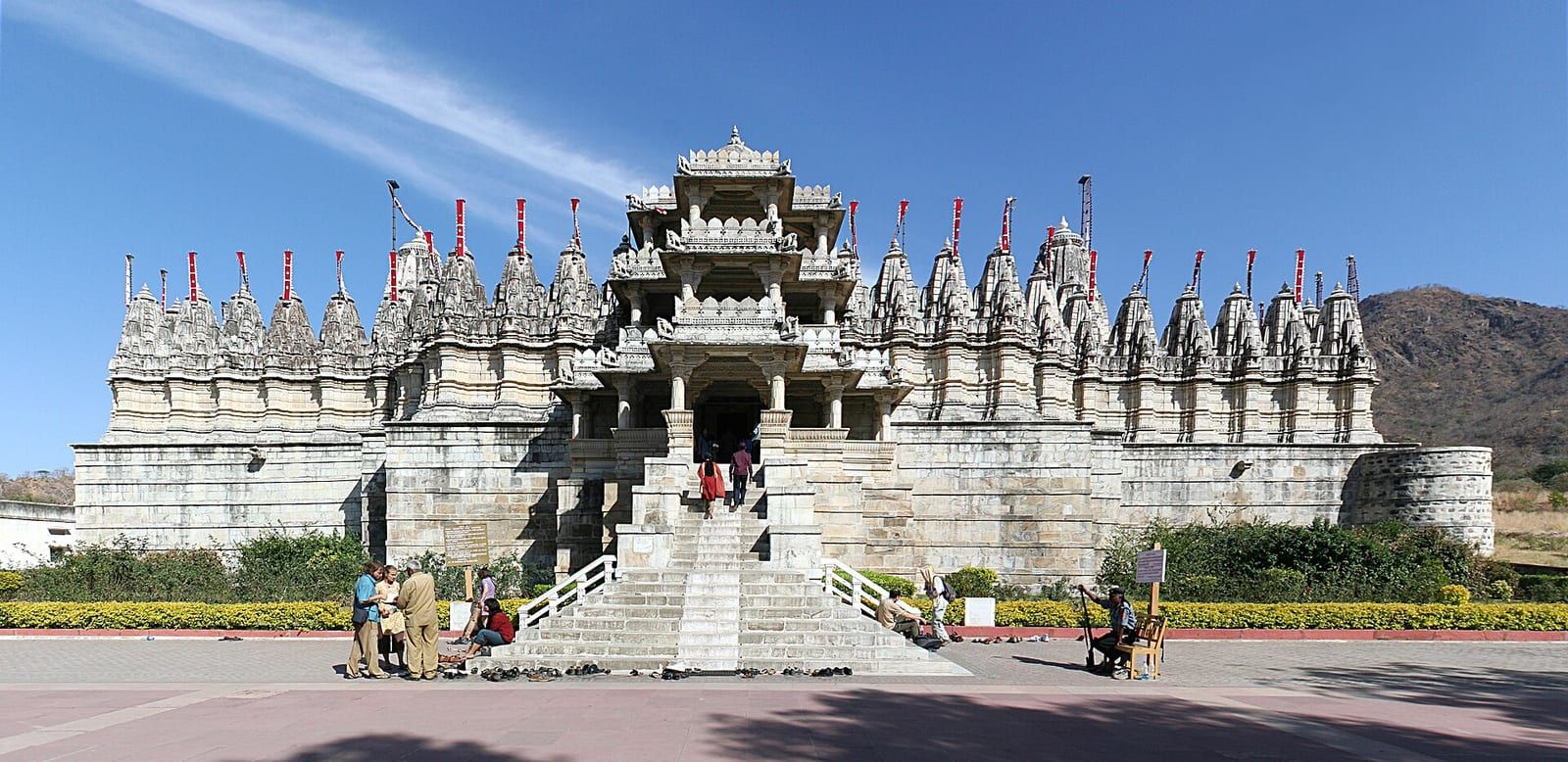
Ranakpur Jain temple, also known as Chaturmukha Dharana Vihara, is a Śvētāmbara Jain temple dedicated to Tirthankara Rishabhanatha located in Ranakpur, Pali district, Rajasthan, and was begun in the 15th century by Seth Dhanna/Dharna Shah after a divine vision. It is a major pilgrimage site and part of the Gorwad Panch Tirth group, featuring several subsidiary temples on its campus.
Overview
Ranakpur Jain temple, also known as Chaturmukha Dharana Vihara, is a Śvētāmbara Jain shrine situated in the village of Ranakpur near Sadri in Rajasthan’s Pali district. Dedicated to the first Tirthankara, Rishabhanatha (Adinath), the temple serves as a major pilgrimage destination for the Śvetāmbara community and is regarded as one of the largest and most significant Jain temples in the region.
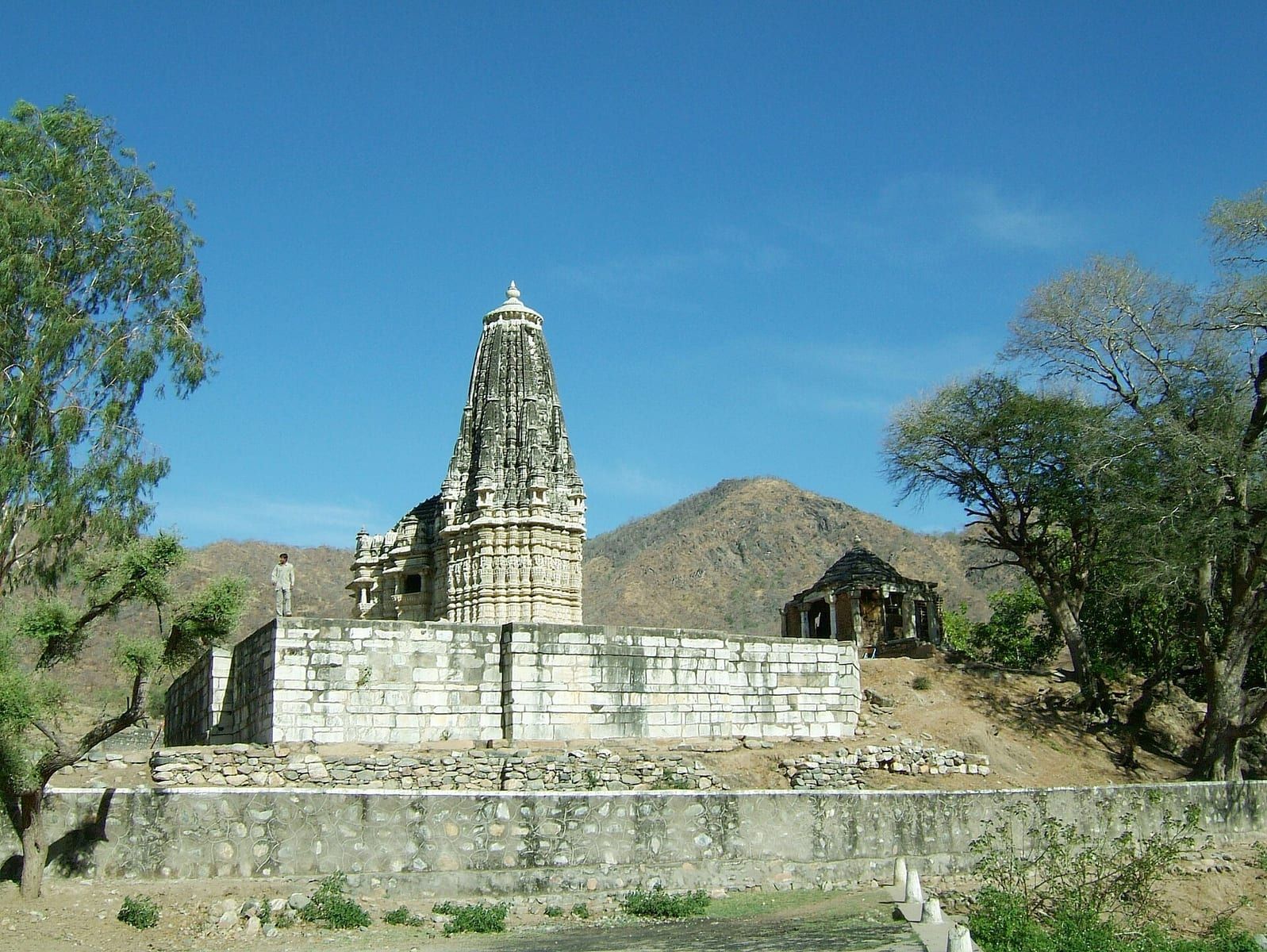
The construction of the temple was initiated in the 15th century by Seth Dhanna, also referred to as Dharna Shah, a local Jain businessman who claimed to have received a divine vision prompting the project. Over time, the complex expanded to include a number of subsidiary shrines, such as the Chaumukha temple, Surya temple, Suparshvanatha temple, and Amba temple, forming a broad religious campus.
Ranakpur forms part of the Gorwad Panch Tirth, a group of five pilgrimage sites that also includes Muchhal Mahavir, Narlai, Nadol, and Varkana. Together these sites constitute an important circuit for Jain devotees, reinforcing Ranakpur’s role within the broader network of Jain sacred geography.
History and origins
The Ranakpur Jain Temple’s origins are recorded in a 1436 CE copper‑plate, temple inscriptions and the Sanskrit work Soma‑Saubhagya Kavya. According to these sources, a Porwal merchant named Dharna Shah of Ghanerao began the project in 1389 after a dream of a celestial vehicle, doing so under the patronage of Rana Kumbha, the ruler of Mewar. The construction was overseen by an architect named Dwepa, and a later pillar inscription near the main shrine records that in 1439 the architect Deepaka built the temple at the direction of the devout Jain Dharanka.
When the ground floor was finished, the ceremonies were supervised by Acharya Somsundar Suri of the Tapa Gaccha, an event described in the Soma‑Saubhagya Kavya. The building work continued for several decades, with some accounts stating it was completed in 1458 CE, while an audio guide for visitors notes a fifty‑year construction period involving 2,785 workers. Another source places the completion around 1496, fifty years after 1446. The town and the temple both bear the name of Rana Kumbha, reflecting his support for the monument’s creation.
What it is like
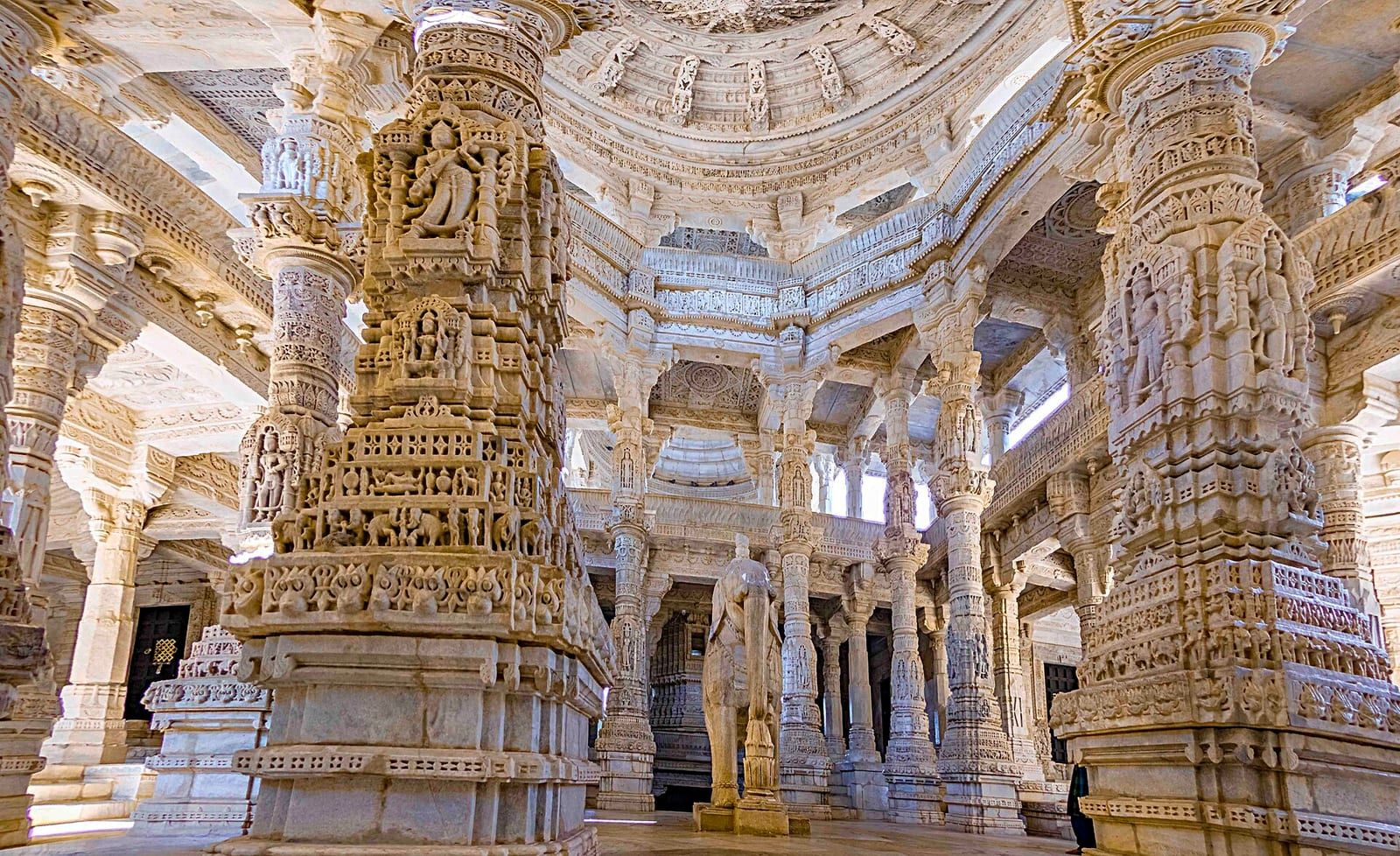
The Ranakpur Jain Temple is celebrated for its intricate carvings and distinctive architecture, standing apart from the sculptural fame of the Dilwara temples. Constructed in the form of a Nalini‑Gulma Vimana—a heavenly vehicle that founder Dharna Shah envisioned in a dream—the temple exemplifies the Māru‑Gurjara architectural style.
At the heart of the complex lies a garbhagriha that houses the main Chaumukha Adinatha idol. From this sanctum, four openings open onto the rangamandapa, a dancing hall, which in turn connects to a two‑storeyed mandapa. This sequence continues to another two‑storeyed mandapa known as the Balana and nalimandapa, creating a layered progression of spaces within the courtyard.
The courtyard itself is enclosed by a wall that contains sub‑shrines and features projections such as devakulikas and minor deities, adding further depth to the temple’s layout. Rising above the structure are five shikharas, the central one being the largest, each symbolising Mount Meru—the cosmic axis of Jambudvipa—while the preaching hall serves as the Samavasarana.
Based on: the Wikipedia article (CC BY-SA 4.0) — facts from that source; edited and translated by Times of Rajasthan.
More visual stories
 Folk musicKesariya Balam — the songs of the ManganiyarsMaand singing from the Thar, the hum of the kamaicha and the clack of the khartal.5 scenes · with music · ♥ 11
 Folk danceGhoomar — the dance of the swirling skirtSwirling ghagras, flowing veils and clapping rhythms at Gangaur, Teej and weddings.3 scenes · with music · ♥ 13
 Folk danceKalbeliya — the serpent dance, a UNESCO heritageBodies sway like serpents to the pungi; on UNESCO’s intangible heritage list since 2010.4 scenes · with music · ♥ 1
 PaintingPhad and Ravanahatha — a story that travelsThrough the night, the bhopa and bhopi sing the epic of folk deities before the phad, to the ravanahatha.4 scenes · with music · ♥ 5
Photos: Ingo Mehling / Wikimedia Commons (CC BY-SA 3.0) · Banerjeedebasis / Wikimedia Commons (CC BY-SA 4.0) · Acred99 / Wikimedia Commons (CC BY-SA 3.0)