Pushkar — Brahma Temple and the lake
A visual story of Pushkar’s Brahma Temple and lake.
TIMES of RAJASTHAN · DARSHAN
Pushkar — Brahma Temple and the lake
A visual story of Pushkar’s Brahma Temple and lake.
In detail
Brahma Temple in Pushkar, Rajasthan, is a 14th‑century marble and stone shrine dedicated to the creator‑god Brahma, situated near the sacred Pushkar Lake and famed for its red pinnacle and four‑headed deity. The temple, governed by a Sanyasi priesthood, hosts a major Brahma festival on Kartik Poornima attracting many pilgrims after lake‑baths.
Overview
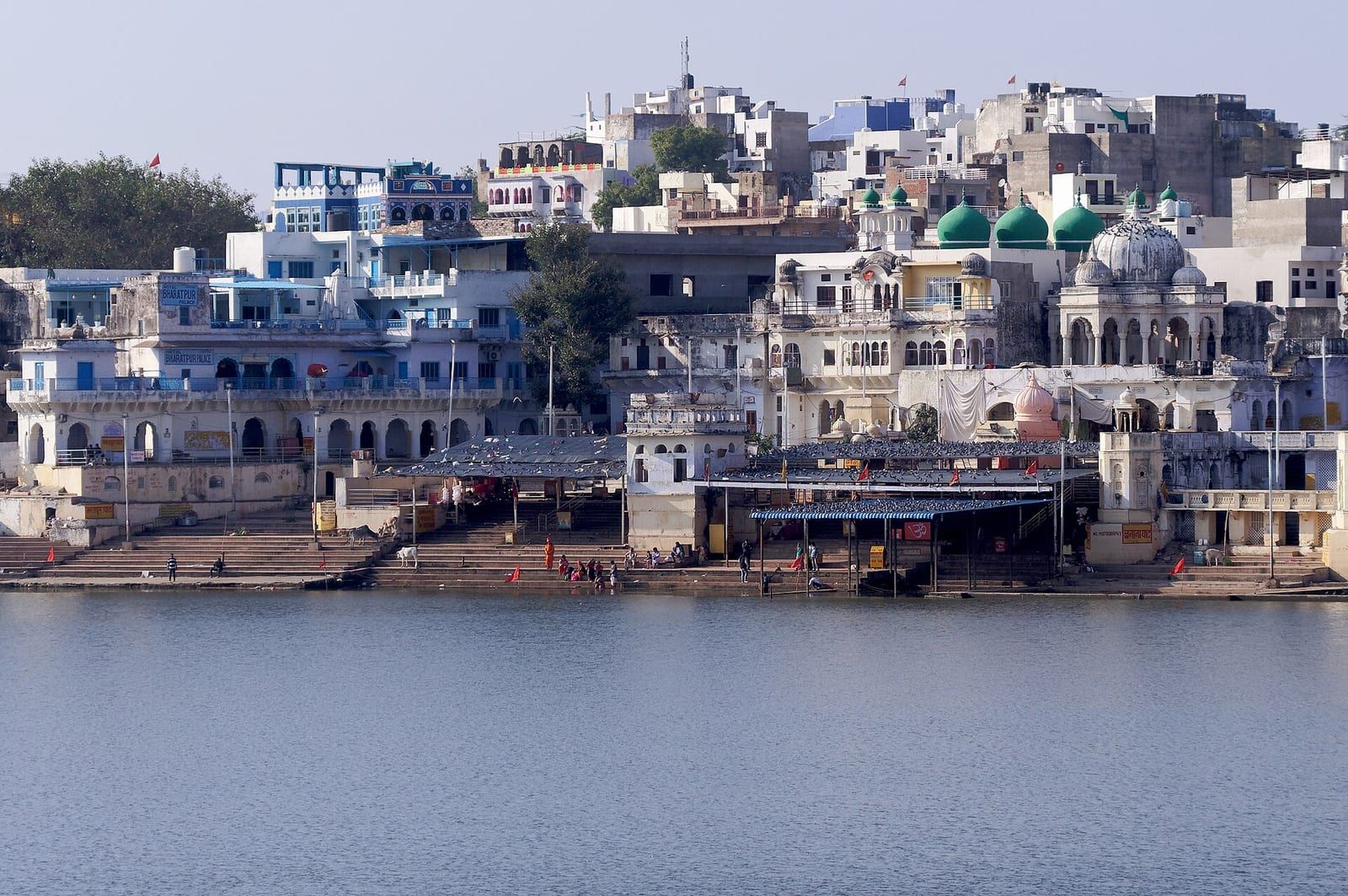
Brahma Temple, also known as Jagatpita Brahma Mandir, stands in Pushkar, Rajasthan, adjacent to the sacred Pushkar Lake, a site whose legend is closely intertwined with the temple. It is one of the very few surviving Hindu temples dedicated to the creator‑god Brahma and is regarded as the most prominent among them.
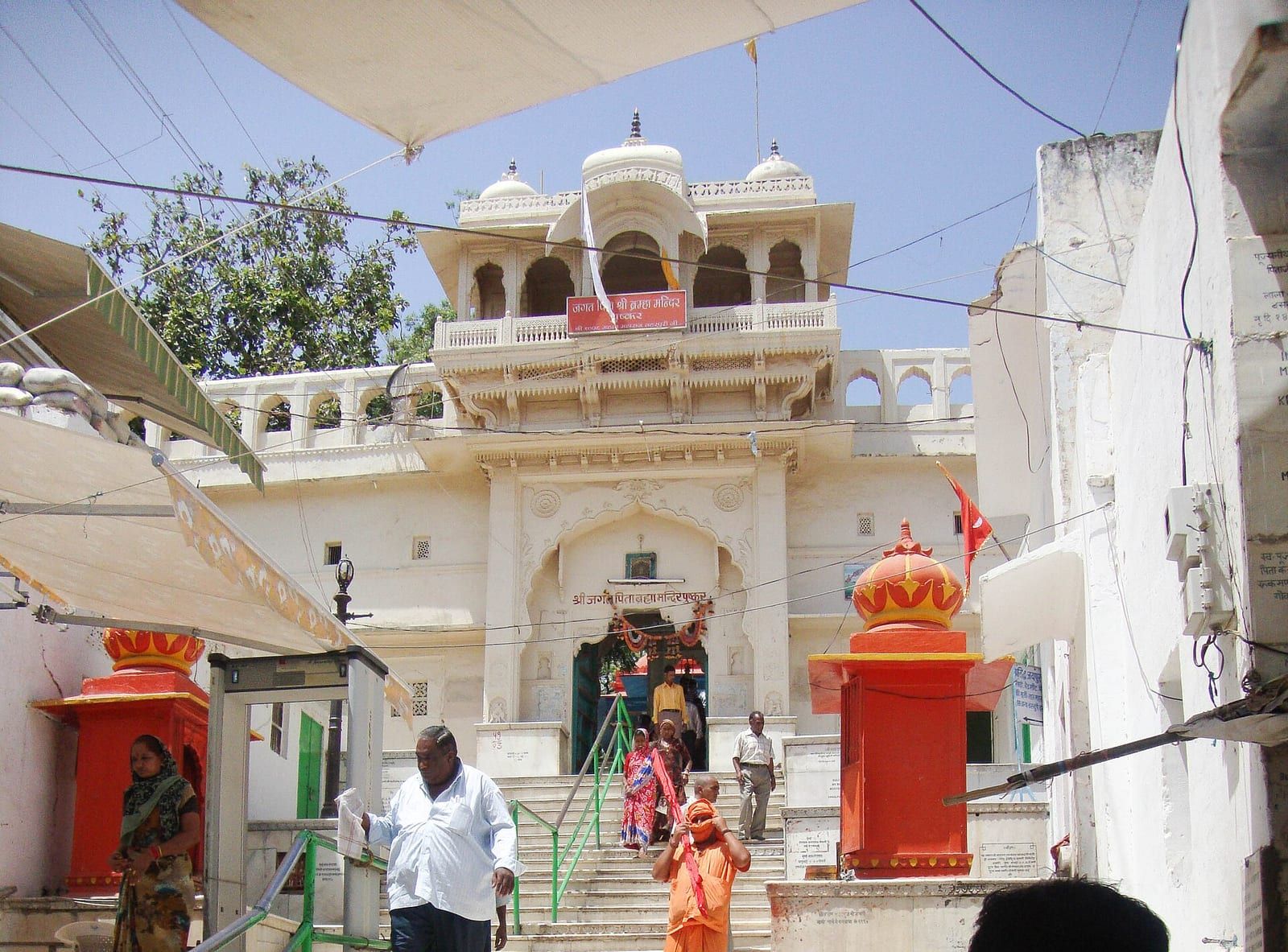
The present structure dates from the 14th century CE, though it has undergone partial rebuilding over time. Constructed from marble and stone slabs, the temple is distinguished by a red shikhara (pinnacle) and decorative hamsa (swan) motifs that crown its exterior.
Inside the sanctum sanctorum, worshippers find a four‑headed image of Brahma accompanied by his consort Gayatri, the goddess of the Vedas. The temple’s administration is overseen by priests of the Sanyasi ascetic sect.
Each year on Kartik Poornima, a major festival dedicated to Brahma draws large numbers of pilgrims. Devotees first bathe in the sacred Pushkar Lake before proceeding to the temple to partake in the celebrations.
History and origins
Pushkar is said to have over five hundred temples, of which many are ancient and were destroyed or desecrated during the rule of Mughal emperor Aurangzeb (1658–1707) before being rebuilt. The most important of these is the Brahma temple, which dates to the fourteenth century and is traditionally attributed to the sage Vishwamitra after Brahma’s yagna, with the belief that Brahma himself chose the site. The eighth‑century philosopher Adi Shankara is recorded as having renovated the temple, and the present medieval structure reflects additions and repairs made by Maharaja Jawat Raj of Ratlam while retaining the original design.
The temple is frequently described in scriptures as the only Brahma temple in the world, a status linked to a curse by Savitri (Saraswati). Although other Brahma temples now exist, the Pushkar shrine remains the most prominent among the few that survive in India. It has been highlighted in contemporary media as one of the most religious cities globally and as a key pilgrimage destination for Hindus.
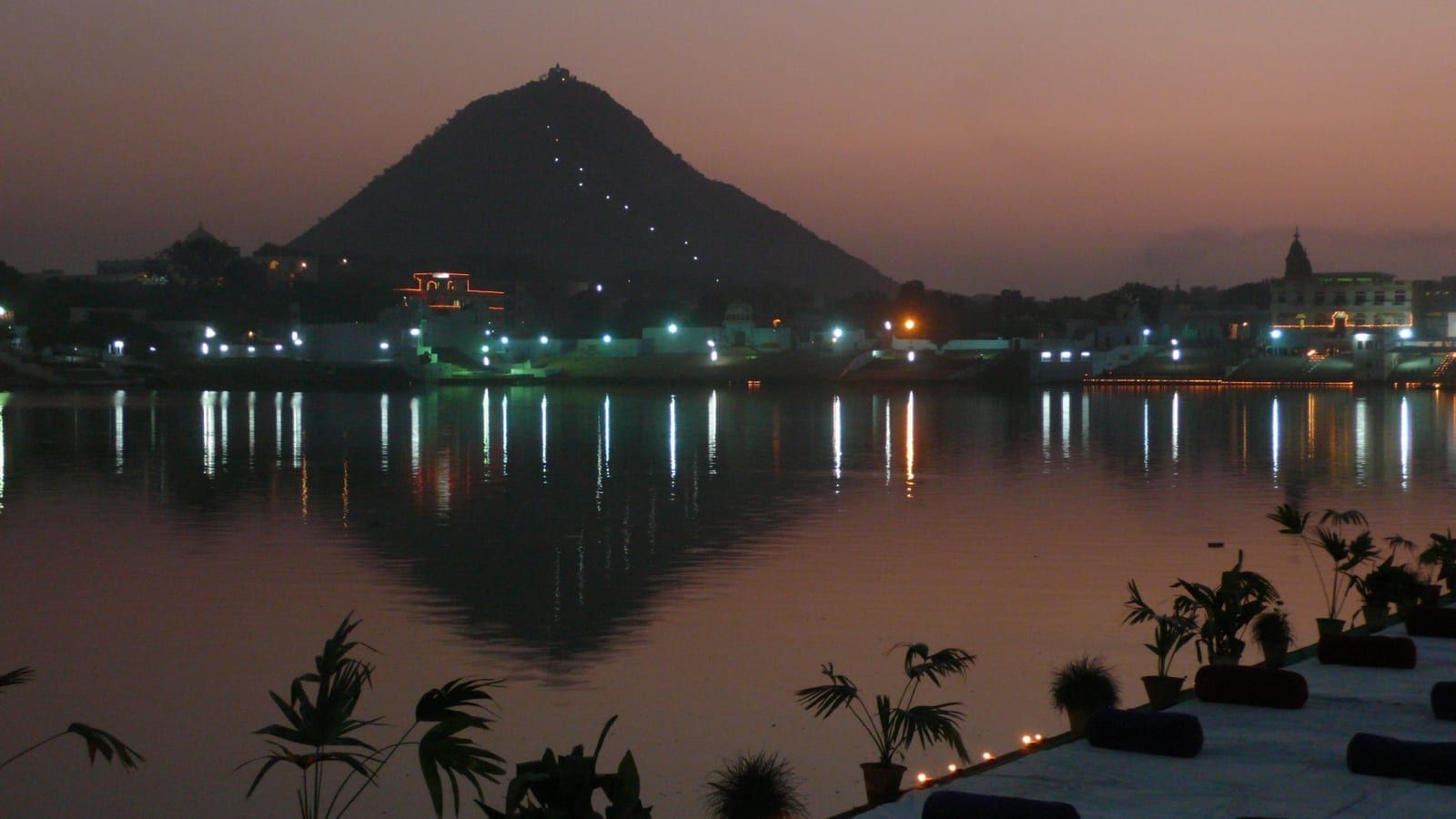
According to the Padma Purana, Brahma slew the demon Vajranabha with a lotus‑flower weapon, and the fallen petals formed three lakes: the main Pushkar Lake (Jyeshta Pushkar), the middle Pushkar (Madya Pushkar), and the youngest Pushkar (Kanishta Pushkar). To protect his yajna at the main lake, Brahma created surrounding hills—Ratnagiri, Nilgiri, Sanchoora and Suryagiri—and stationed deities there.
When Brahma’s wife Savitri could not arrive in time for the yajna, he married a Gurjar girl named Gayatri, who completed the ritual. Upon arriving, Savitri cursed Brahma that he would never be worshipped, later moderating the curse to allow worship only at Pushkar. She also cursed Indra, Vishnu, Agni and the priests, while Gayatri’s blessings mitigated these effects, ensuring Pushkar’s status as a preeminent pilgrimage site and granting various divine protections.
Savitrī’s curse and its partial reversal are said to have given rise to a spring on Ratnagiri hill, known as Savitri Jharna, where a temple in her honor stands. This intertwining of myth and history underscores the temple’s unique religious significance and its enduring place in the cultural landscape of Rajasthan.
What it is like
The Brahma Temple in Pushkar rises on a high plinth and is reached by a flight of marble steps that lead to an ornate entrance gate archway, its canopy supported by pillars. Beyond the gate, visitors enter a pillared outdoor hall, or mandapa, before proceeding to the sanctum sanctorum, the garbhagriha, which is also constructed of marble. The temple’s structure is assembled from stone slabs and blocks bound together with molten lead, and its striking red shikara, about 70 feet tall, crowns the building, while a hamsa motif – the swan or goose that is Brahma’s mount – adorns the main entry gate.
Inside, the marble floor is laid out in black‑and‑white checkered patterns, and the walls are inlaid with hundreds of silver coins donated by devotees, each bearing the donor’s name. A silver turtle rests on the mandapa floor facing the garbhagriha, and the marble flooring has been periodically replaced over the years. The central deity, a life‑size marble chaumurti, was consecrated in 718 CE by Adi Shankara. This four‑faced idol of Brahma sits cross‑legged, holding a rosary, a book, kusha grass, and a kamandalu, each symbolising time, the primal waters, knowledge, and sacrificial rites respectively, while Brahma rides his hamsa.
Flanking Brahma’s central image are the deities Gayatri on his left and Sarasvati on his right, accompanied by other figures from the Hindu pantheon. The temple walls are embellished with images of a peacock, the mount of Sarasvati, as well as life‑sized dvarapalas, the gate‑keepers, and a gilded Garuda, the eagle‑man mount of Vishnu, underscoring the temple’s rich iconographic program.
Based on: the Wikipedia article (CC BY-SA 4.0) — facts from that source; edited and translated by Times of Rajasthan.
More visual stories
 Folk musicKesariya Balam — the songs of the ManganiyarsMaand singing from the Thar, the hum of the kamaicha and the clack of the khartal.5 scenes · with music · ♥ 11
 Folk danceGhoomar — the dance of the swirling skirtSwirling ghagras, flowing veils and clapping rhythms at Gangaur, Teej and weddings.3 scenes · with music · ♥ 13
 Folk danceKalbeliya — the serpent dance, a UNESCO heritageBodies sway like serpents to the pungi; on UNESCO’s intangible heritage list since 2010.4 scenes · with music · ♥ 1
 PaintingPhad and Ravanahatha — a story that travelsThrough the night, the bhopa and bhopi sing the epic of folk deities before the phad, to the ravanahatha.4 scenes · with music · ♥ 5
Photos: Adityavijayavargia / Wikimedia Commons (CC BY-SA 4.0) · Jakub Hałun / Wikimedia Commons (CC BY-SA 4.0) · SINHA / Wikimedia Commons (CC BY-SA 3.0)