Mount Abu
Welcome to a visual story capturing the charm of Mount Abu.
TIMES of RAJASTHAN · DARSHAN
Mount Abu
Welcome to a visual story capturing the charm of Mount Abu.
In detail
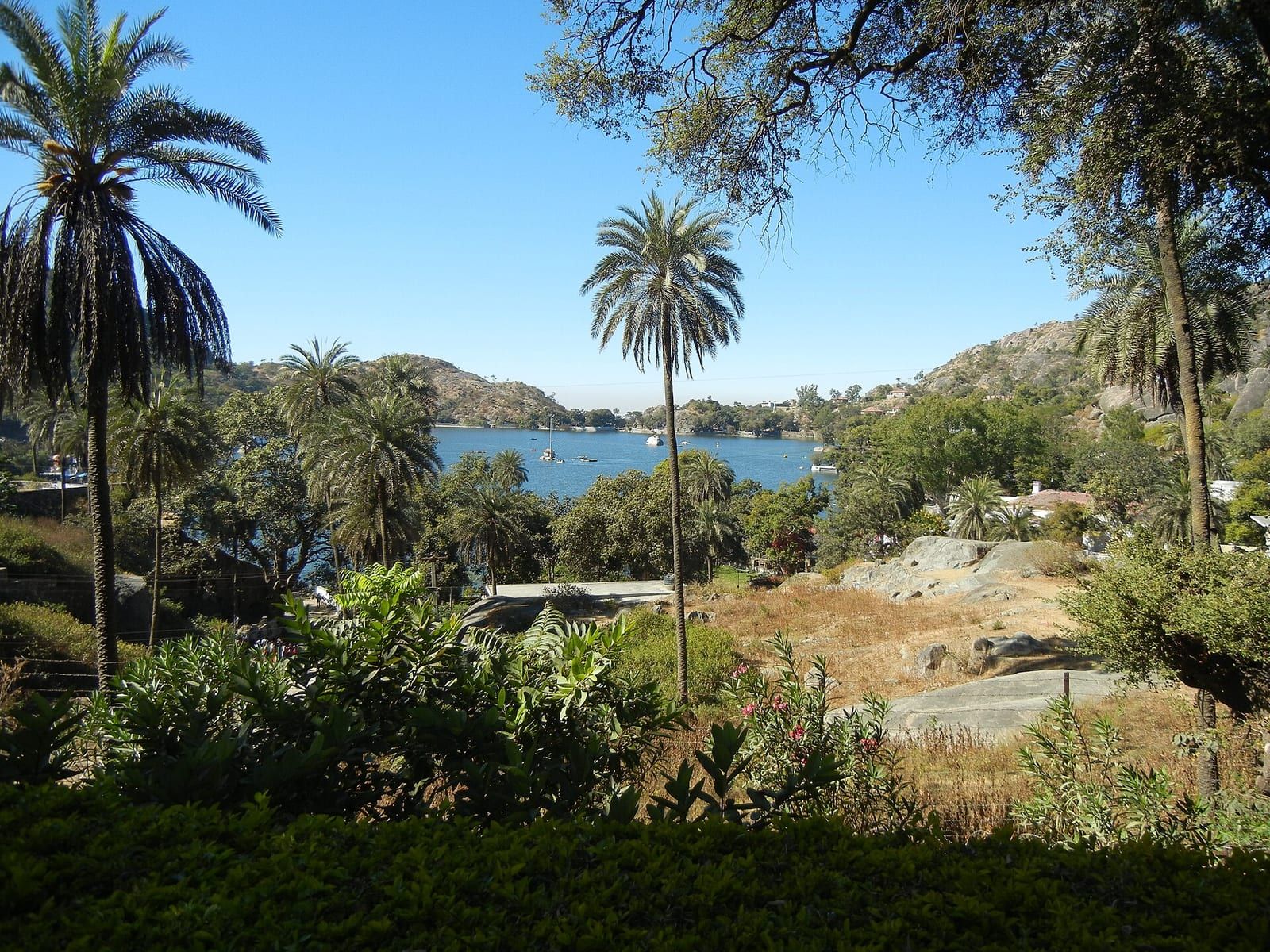
Mount Abu is a hill station in Sirohi district, Rajasthan, featuring a rocky plateau 22 km long and 9 km wide. It is known as an oasis in the desert, hosting rivers, lakes, waterfalls, evergreen forests, and numerous Hindu and Jain temples.
Overview
Abu Raj, formerly known as Mount Abu, is a hill station situated in the Sirohi district of Rajasthan, India. The mountain itself forms a rocky plateau that stretches approximately 22 kilometres in length and 9 kilometres in width.
The area is often described as an "oasis in the desert" because it hosts a variety of natural water features, including rivers, lakes, and waterfalls. These water bodies are complemented by evergreen forests that cover the plateau.
In addition to its natural attractions, Abu Raj is home to numerous Hindu and Jain temples, reflecting the region's cultural and religious diversity.
History and origins
The ancient name of Mount Abu was Arbuda, a term that appears in the Puranas as Arbudaranya, meaning "forest of Arbuda." The name Abu is a diminutive form of this older designation. According to tradition, the sage Vasishtha retired to the southern spur of the mountain after a disagreement with sage Vishvamitra, and another legend speaks of a serpent named Arbuda saving the life of Nandi, the bull of Lord Shiva, on the same peak. This event is said to have led to the mountain being called Arbudaranya, which over time evolved into the name Abu.
A further legend recounts that Vasishtha performed a yajna at the summit of Mount Abu, seeking divine support for the defense of righteousness on earth. In response, a youth emerged from the Agnikunda, the fire altar, becoming the first Agnivansha. The region also hosts the Achalgarh Fort, an impressive structure attributed to the Paramara kings, and the Dilwara Temples, a major Jain pilgrimage site situated about 2.5 kilometres from Mount Abu. The Dilwara complex, designed by Vastupala and built by Vimal Shah between the 11th and 13th centuries, is renowned for its white marble sculpture.
In 1311 CE, Rao Lumba of the Deora‑Chauhan dynasty conquered Mount Abu and moved the capital to Chandravati in the plains. After Chandravati’s destruction in 1405, Rao Shasmal established Sirohi as his headquarters. The British later leased the area from the Maharaja of Sirohi for use as a headquarters.
The Arbuda Mountains are traditionally regarded as the original abode of prominent sages such as Atri and Vasishtha, a connection noted in various inscriptions and epigraphs, including the Tilakamanjari of Dhanpala. One theory suggests that the term Gurdhara, meaning "land of the gurus," was corrupted over time into Gurjara.
A municipality was established at Abu in 1864, comprising six members nominated by the Agent to the Governor General (AGG).
Where and when
Mount Abu sits at an elevation of 1,220 m (4,003 ft) and is the only hill station in Rajasthan. Its high altitude has made it a popular retreat from the heat of Rajasthan and neighboring Gujarat for centuries.
The town is surrounded by a range of forested hills that form the Mount Abu Wildlife Sanctuary, established in 1960. The sanctuary covers 290 km² (110 mi²) and extends from approximately 300 m at the foothills to 1,722 m at Guru Shikhar. This variation in elevation creates a wide range of climates, vegetation and habitats, from xeromorphic subtropical thorn forest at the base to subtropical evergreen forest along watercourses and valleys higher up. The sanctuary supports diverse plant communities, including orchids, ferns, bamboo and medicinal plants, and is home to more than 150 recorded bird species.
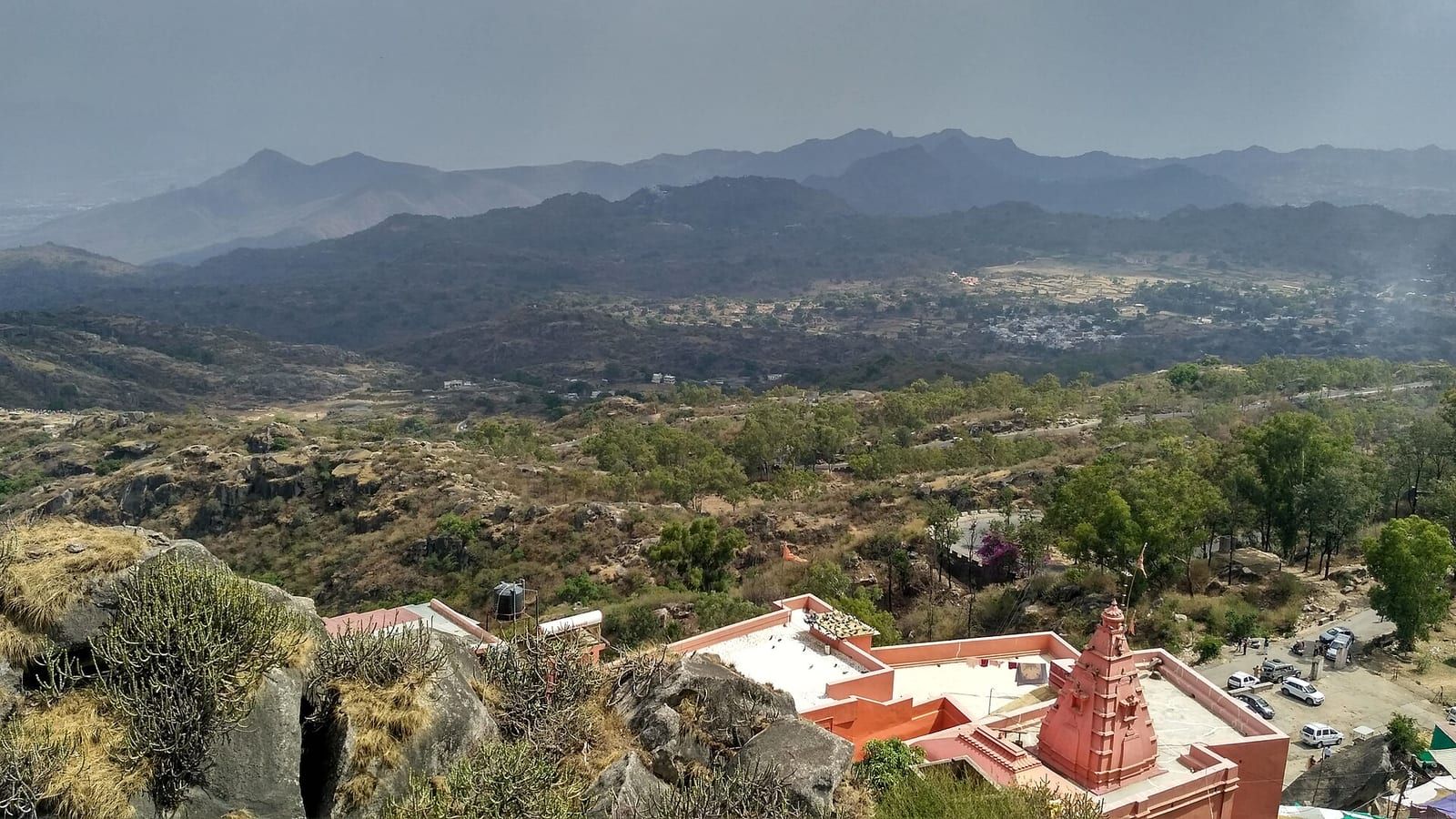
The mountain hosts several Hindu temples, such as the Adhar Devi Temple carved out of solid rock, the Shri Raghunath Ji Temple, the shrine to Dattatreya on Guru Shikhar, and the Achaleshwar Mahadev Temple built in 1412. Nearby, the 14th‑century Achalgarh Fort, built by Kumbha of Mewar, surrounds Nakki Lake and the Toad Rock. Jain temples are also prominent, including the Dilwara Temples complex about 2.5 km from town. These marble temples, built between the 11th and 16th centuries by Vimal Shah and designed by Vastupala, feature intricate marble carvings and are a pilgrimage site for Jains.
Mount Abu is also the spiritual headquarters of the Brahma Kumaris community. Their 50‑acre campus hosts a museum and offers meditation and spiritual learning in a natural setting. Each year, roughly 2.5 million visitors come to the sprawling campus.
The sanctuary’s ecological diversity is reflected in its fauna. Mammals, reptiles and birds thrive in the varied habitats, and ornithological studies have documented species such as the threatened green avadavat (Amandava formosa) in grassland, agricultural and shrub‑associated habitats on the Abu hills.
Importance today
Biodiversity research at Mount Abu remains a cornerstone of contemporary conservation efforts, particularly for the green avadavat. Long‑term ornithological studies have highlighted the species’ presence in the region, with recent systematic surveys in 2023 covering 129 one‑kilometre grids. The surveys recorded the green avadavat in 40 of those grids, underscoring its continued relevance to the local ecosystem.
The species’ distribution is closely linked to higher elevations and areas rich in grass and shrub cover. These habitat preferences have guided current conservation strategies, ensuring that management plans prioritize the protection of these specific ecological niches. The findings also reveal that development, sprawl, and land‑use change pose significant pressures on suitable habitat, prompting a need for targeted mitigation measures.
Community engagement has become integral to the conservation narrative. The Abu Model, documented through the PANORAMA platform, demonstrates how green avadavat conservation can be intertwined with nature tourism, local ecological knowledge, and livelihood opportunities. This model, presented at the Udaipur Bird Festival in 2020, showcases a socio‑ecological framework that encourages community participation while safeguarding biodiversity.
The ongoing research, supported by organizations such as WWF‑India and the Rajputana Society of Natural History, continues to refine our understanding of the green avadavat’s behavior and habitat requirements. By integrating field research with conservation‑management planning, these efforts aim to balance ecological integrity with sustainable development in Mount Abu’s unique landscape.
Based on: the Wikipedia article (CC BY-SA 4.0) — facts from that source; edited and translated by Times of Rajasthan.
More visual stories
 Folk musicKesariya Balam — the songs of the ManganiyarsMaand singing from the Thar, the hum of the kamaicha and the clack of the khartal.5 scenes · with music · ♥ 11
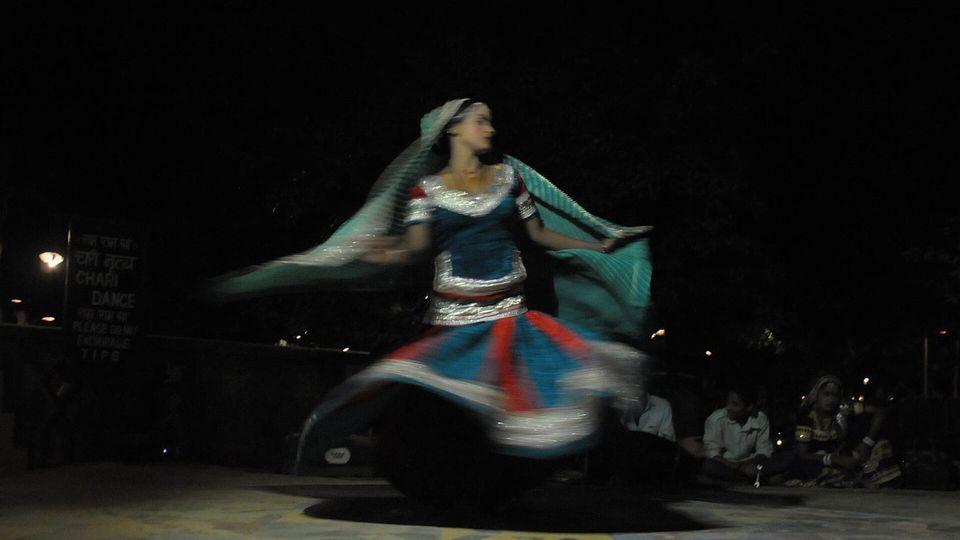 Folk danceGhoomar — the dance of the swirling skirtSwirling ghagras, flowing veils and clapping rhythms at Gangaur, Teej and weddings.3 scenes · with music · ♥ 13
 Folk danceKalbeliya — the serpent dance, a UNESCO heritageBodies sway like serpents to the pungi; on UNESCO’s intangible heritage list since 2010.4 scenes · with music · ♥ 1
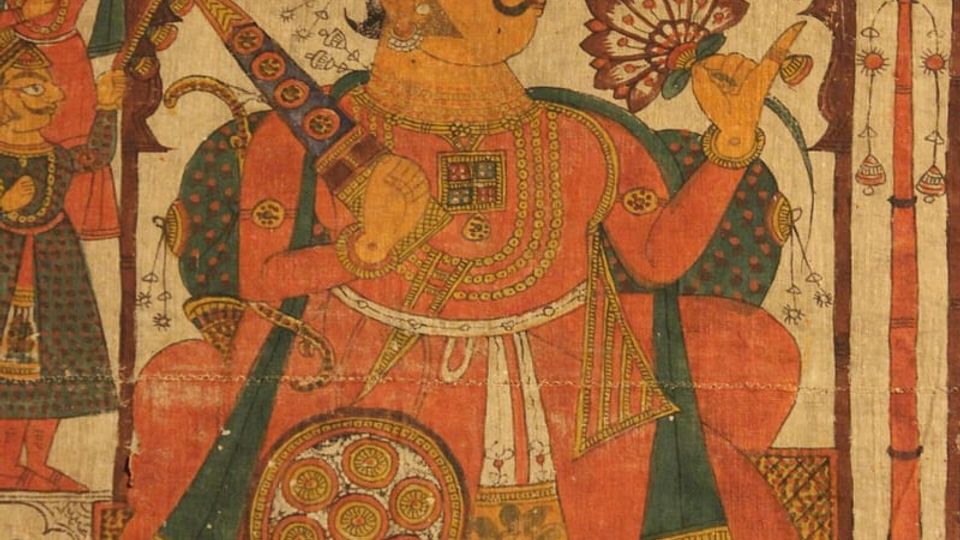 PaintingPhad and Ravanahatha — a story that travelsThrough the night, the bhopa and bhopi sing the epic of folk deities before the phad, to the ravanahatha.4 scenes · with music · ♥ 5
Photos: CorrectKnowledge / Wikimedia Commons (CC BY-SA 3.0) · Tejaspatel1 / Wikimedia Commons (CC BY-SA 4.0) · Neer Rajora / Wikimedia Commons (CC BY-SA 4.0)