Mojari
Welcome to a visual tale of Rajasthan's vibrant footwear.
TIMES of RAJASTHAN · DARSHAN
Mojari
Welcome to a visual tale of Rajasthan's vibrant footwear.
In detail
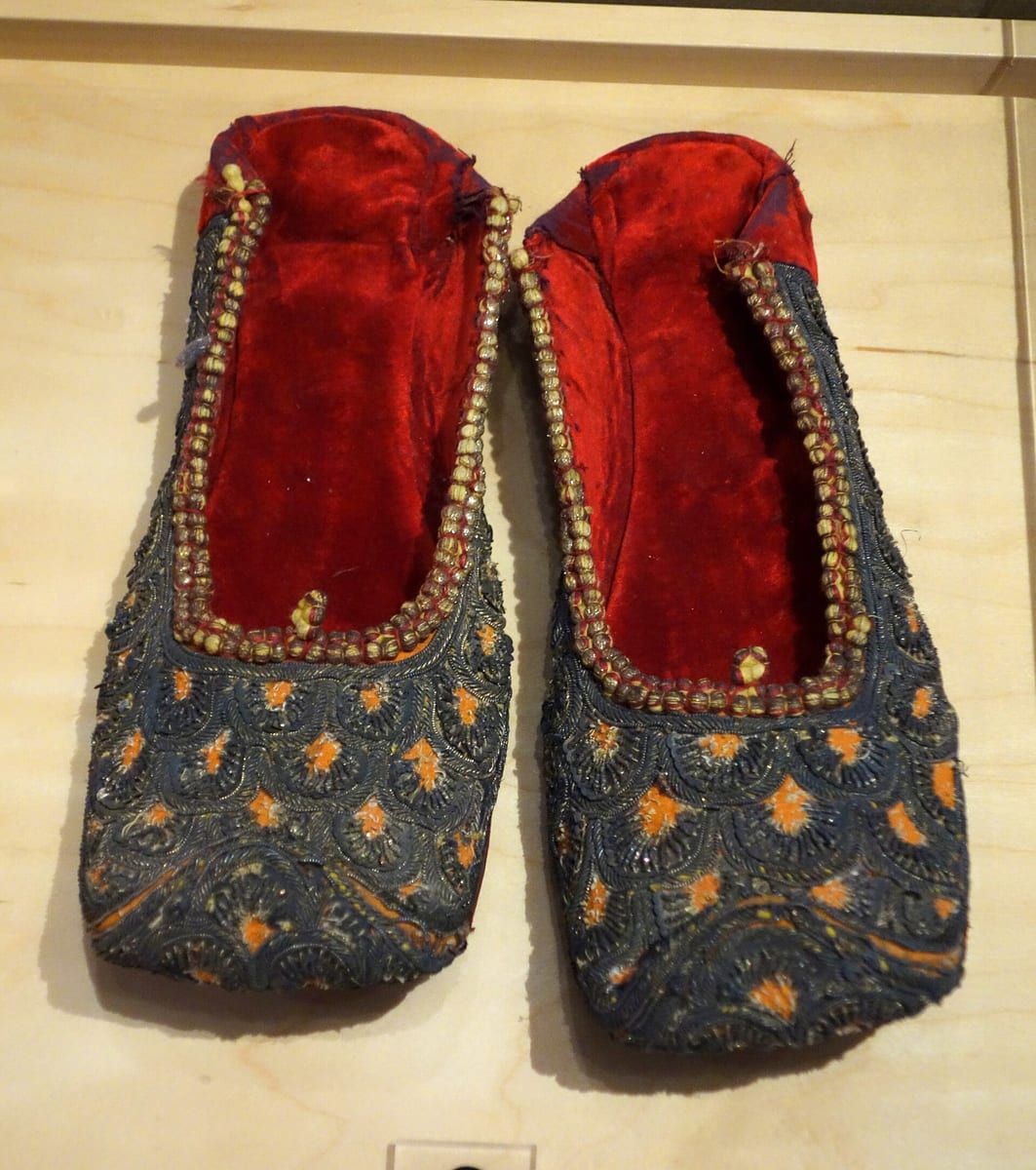
Mojari is a handcrafted mule‑style footwear traditionally made by artisans in India and Pakistan using tanned leather. It features one‑piece leather or textile uppers embroidered with brass nails, cowry shells, mirrors, bells, and ceramic beads, bonded to the sole with eco‑friendly cotton thread.
Overview
Sindhi Mojari, often simply called Mojari, is a handcrafted footwear style originating from India and Pakistan. The shoes are traditionally made by artisans who work primarily with tanned leather. The upper part of the Mojari is fashioned from a single piece of leather or textile, which is then embroidered and embellished with decorative elements such as brass nails, cowry shells, mirrors, bells, and ceramic beads.
The construction of the Mojari involves bonding the upper to the sole using cotton thread. This eco‑friendly thread not only provides a strong bond but also enmeshes the leather fibers, thereby strengthening the overall structure of the shoe. Some modern variations of the product range incorporate bright and ornate threads to enhance visual appeal.
Over the centuries, the design of Mojari has evolved, and because it is produced by individual artisans, the resulting products exhibit a wide variety of designs and colours. This diversity reflects the cultural richness, local ethos, and ethnic identities of the regions where Mojari are crafted.
History and origins
It is believed that one of the earliest examples of footwear worn on the Indian subcontinent is a sandal of wood, datable to circa 200 BC. During the 3rd and 4th Centuries in the Buddhist period, it was quite common to wear strapped sandals, and Indian kings wore sandals ornamented with precious jewels. Jain literature shows that leather was used for the making of shoes, which protected the toes from getting injured. Hides of cows, buffaloes, goats, sheep and other wild animals were used.
The Mojari originated under the Muslim rule in the Mughal Empire where it was decorated with colours, gems, and other ornaments as part of the Mughal Clothing. They are said to have been popularised under the Mughal King Saleem Shah as a result. In Pakistan, they are also commonly worn with Pakistan's national dress Shalwar Kameez.
Based on: the Wikipedia article (CC BY-SA 4.0) — facts from that source; edited and translated by Times of Rajasthan.
More visual stories
 Folk musicKesariya Balam — the songs of the ManganiyarsMaand singing from the Thar, the hum of the kamaicha and the clack of the khartal.5 scenes · with music · ♥ 11
 Folk danceGhoomar — the dance of the swirling skirtSwirling ghagras, flowing veils and clapping rhythms at Gangaur, Teej and weddings.3 scenes · with music · ♥ 13
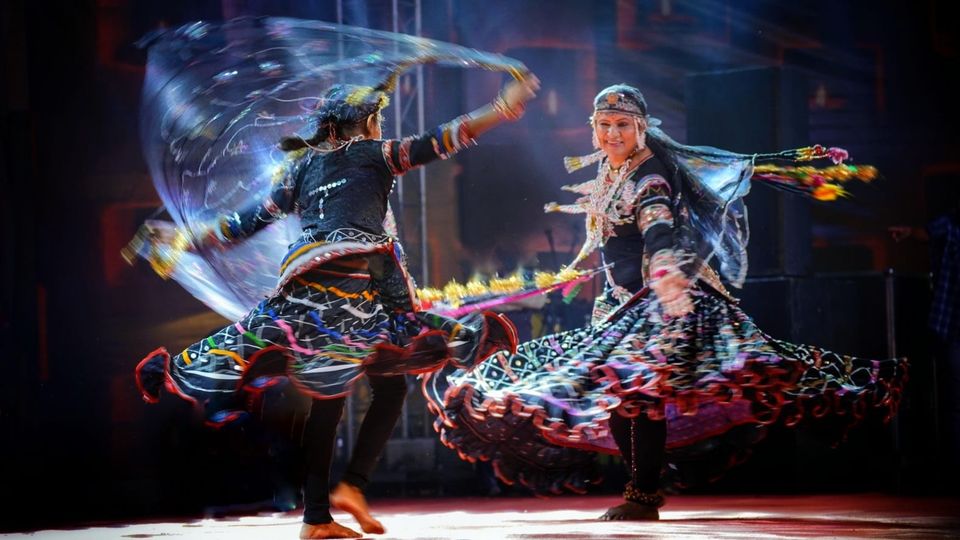 Folk danceKalbeliya — the serpent dance, a UNESCO heritageBodies sway like serpents to the pungi; on UNESCO’s intangible heritage list since 2010.4 scenes · with music · ♥ 1
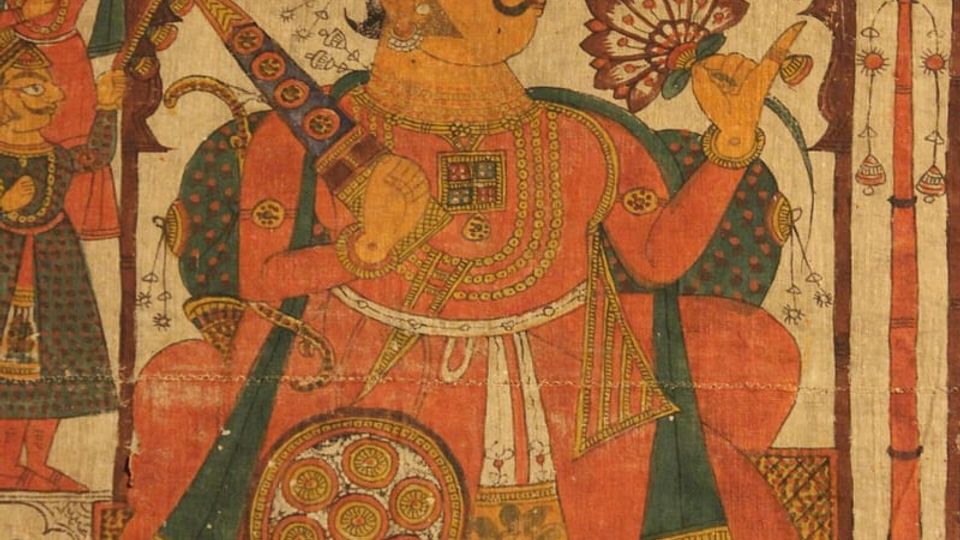 PaintingPhad and Ravanahatha — a story that travelsThrough the night, the bhopa and bhopi sing the epic of folk deities before the phad, to the ravanahatha.4 scenes · with music · ♥ 5