Miniature painting
Welcome to a visual journey through Rajasthan's miniature painting traditions.
TIMES of RAJASTHAN · DARSHAN
Miniature painting
Welcome to a visual journey through Rajasthan's miniature painting traditions.
In detail
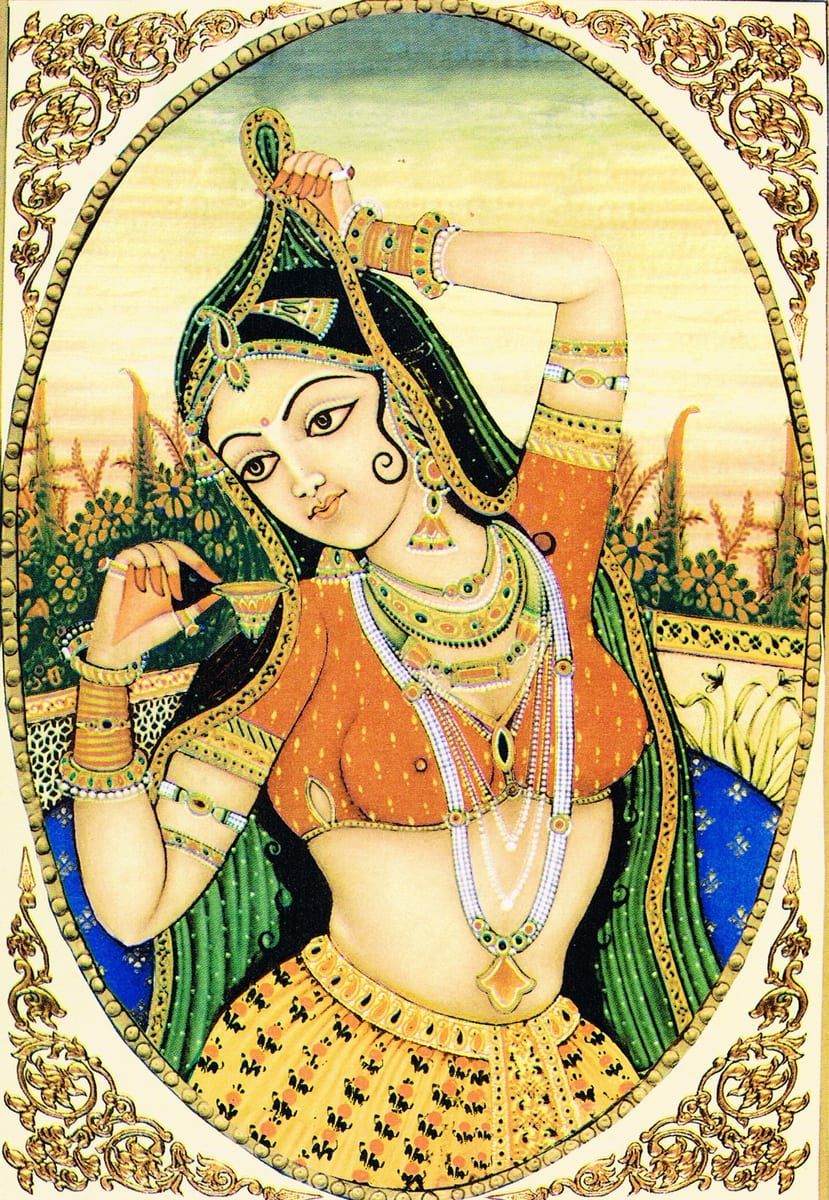
Rajput painting, a form of regional Hindu court art during the Mughal era, flourished from the late 16th to the mid‑19th century and is traditionally divided into Rajasthan and Pahari styles. Though influenced by Mughal, European, and Deccan techniques, it retained a distinct identity rooted in bright colour, flatness, and abstract form.
Overview
Rajput painting, a form of miniature art that developed in the regional Hindu courts during the Mughal era, spans roughly from the end of the 16th century to the middle of the 19th century. The tradition is traditionally divided into two distinct styles: Rajasthan and Pahari, which flourished in geographically distant areas yet remained united under Rajput rule and a shared cultural heritage.
The term ‘Rajput painting’ was coined by Ananda Coomaraswamy in his 1916 monograph, which was the first comprehensive study of the subject. The art form evolved from the Hindu painting of the 16th century, sometimes referred to as “Early Rajput Painting,” and was significantly reshaped by Mughal influences.
Within Rajput painting, a spectrum of styles emerged. Some, such as those from Mewar and Basohli, retained conservative idioms characterized by bright colour, flatness, and abstract form. Others, like Bikaner and Kangra, displayed a greater Mughal impact, evident in their refinement and cooler palette. Despite incorporating new techniques and subjects from Mughal, European, and Deccan painting, Rajput artists preserved a distinct identity, particularly in their preference for universal themes over individual ones.
Local styles began to crystallize in the 17th century, a period when Mughal painting dominated Indian art. By the 18th century, the Mughal school was one among many regional schools, and Rajput art contributed significantly to the overall artistic output. In the 19th century, the political decline of Rajput states and the rising influence of Western painting and photography led to the gradual cessation of Rajput painting.
What it is like
The miniature painting of Rajasthan is executed on paper with a technique that begins with a charcoal sketch, followed by a sanguine underdrawing and a thin white primer. The pigments are applied in successive layers; after each coat the surface is burnished face‑down to fuse the colors and give the work a subtle luster. When the painting is finished, outlines become crisp and details are sharpened, a stage called khulai. The final touches include fine shading, occasional gold, and intricate impasto work on ornaments and jewelry, with lips and fingertips reddened.
In the early 17th century the Rajput manuscript format evolved into the large pothī, where a full‑page painting occupies one side of a folio and the text appears on the reverse or on intervening folios. By the 18th century the format resembled a picture book, with a full‑page image on each side and accompanying text on the back. Later manuscripts, especially those from the Punjab Hills, reduced the Sanskrit text to selected verses or a Hindi summary, marking the culmination of Indian book illustration.
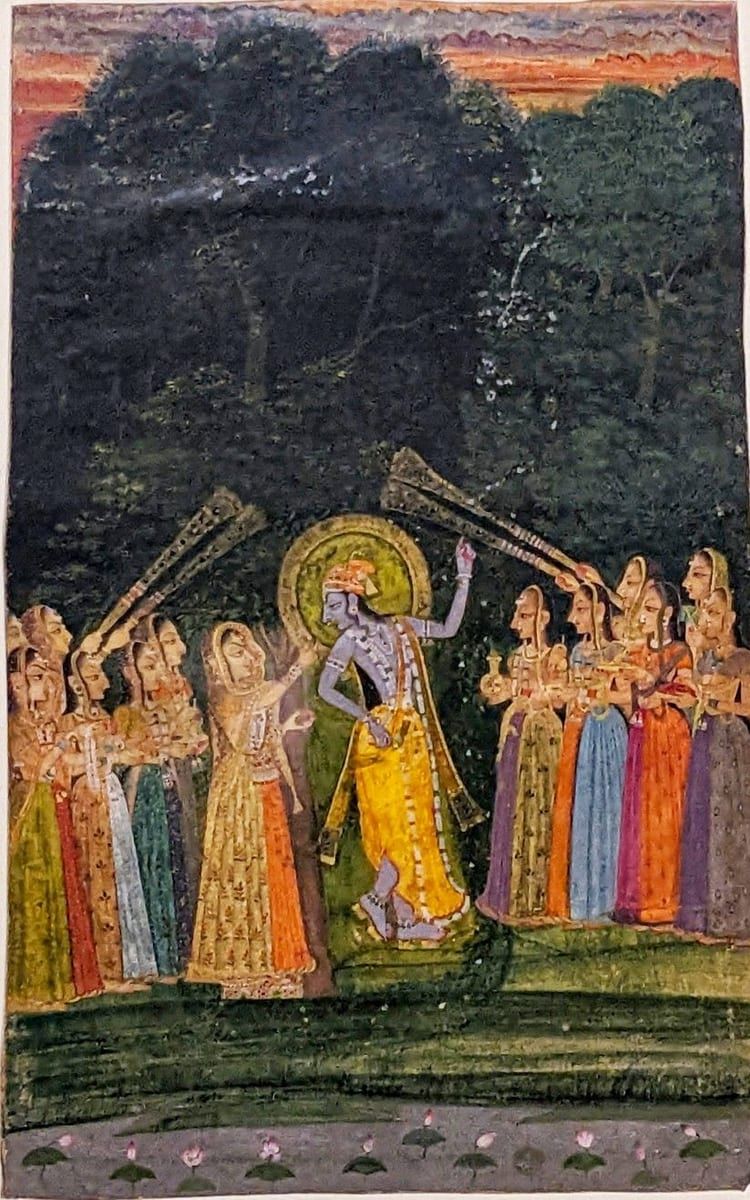
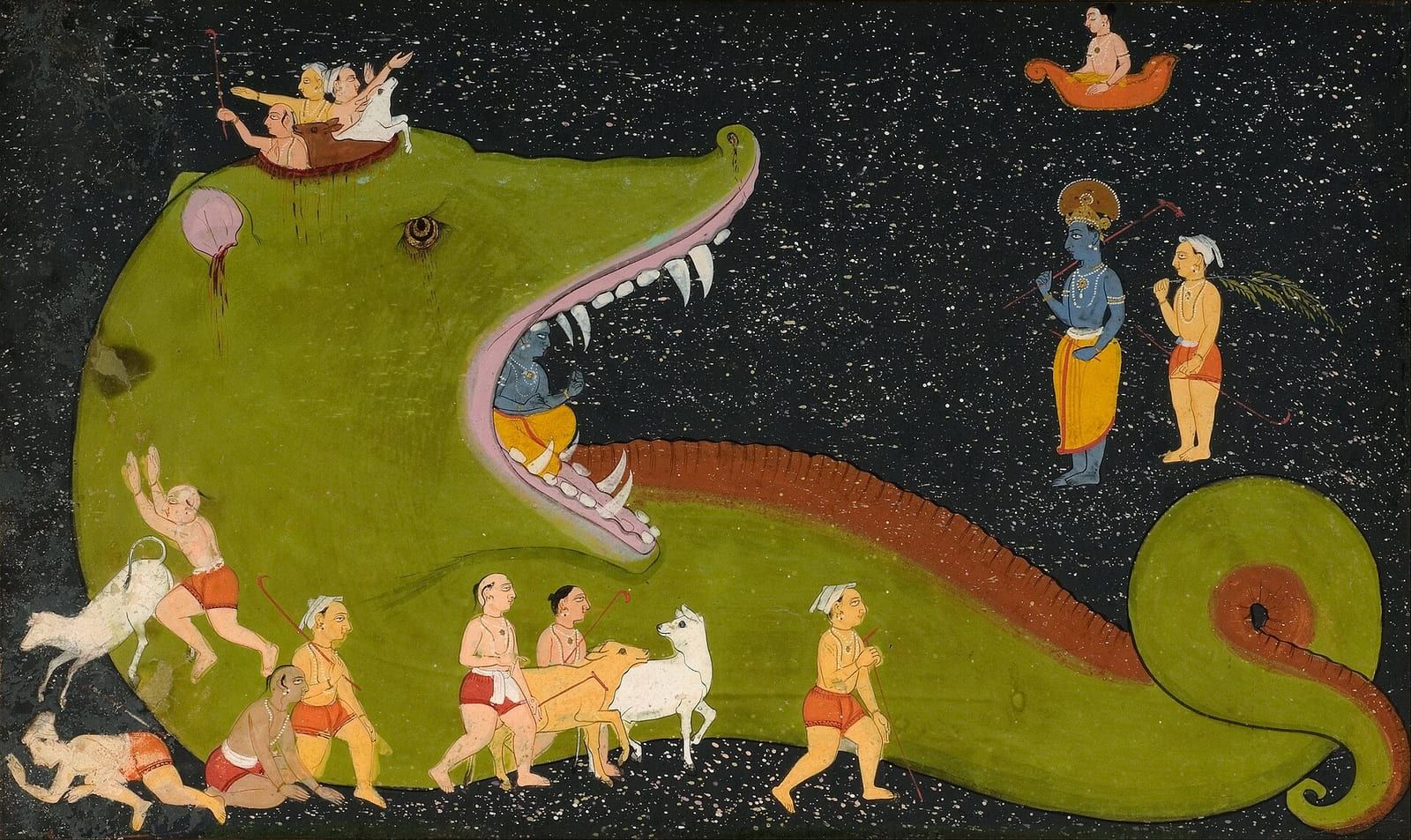
The subjects of these miniatures were largely devotional. The most common themes were Ragamalas and episodes from the life of Krishna, drawn from the Bhagavata Purana. The Ragamala, a text that celebrates bhakti, presents romantic and often sexual imagery in which the worshipper longs for union with the divine. Vaishnavism, dominant by the 16th century, also influenced the iconography, with Krishna frequently depicted as the beloved figure.
Illustrations were not limited to religious texts. The tenth book of the Bhagavata Purana and the Ramayana were popular, while the Mahabharata was rarely illustrated. Medieval Hindi and Sanskrit works such as the Rasikapriya, Rasamanjari, and Satasai were also illustrated, often focusing on the Ashta Nayika, the eight types of heroines. Mughal influence brought requests for portraits and historical scenes, expanding the scope beyond traditional mythological subjects.
Unlike Mughal workshops, Rajput artists worked within family groups rather than centralized halls. These “family workshops” could be large and extended, with members ranging from seniors to juniors, all sharing a common artistic lineage. The families maintained their own techniques and secrets, though intermarriage and social interactions gradually broke down strict isolation.
In the Pahari region, particularly Nurpur and Basohli, the style of the 17th century is exemplified by the works of Kripal. His paintings feature angular figures with large heads and eyes, set against flat planes of color. The technique is precise and refined, with strong colors and expressive compositions that distinguish them from earlier pre‑Mughal styles.
Based on: the Wikipedia article (CC BY-SA 4.0) — facts from that source; edited and translated by Times of Rajasthan.
More visual stories
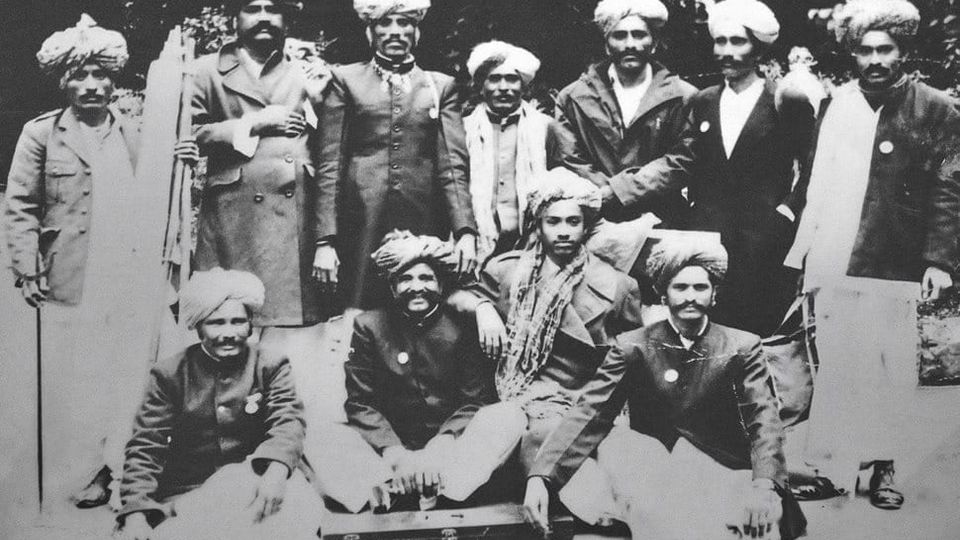 Folk musicKesariya Balam — the songs of the ManganiyarsMaand singing from the Thar, the hum of the kamaicha and the clack of the khartal.5 scenes · with music · ♥ 11
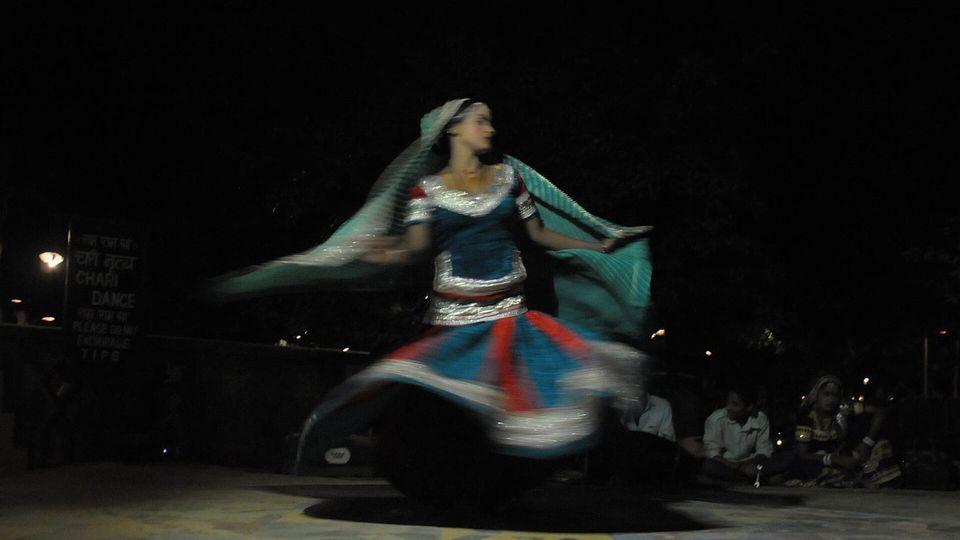 Folk danceGhoomar — the dance of the swirling skirtSwirling ghagras, flowing veils and clapping rhythms at Gangaur, Teej and weddings.3 scenes · with music · ♥ 13
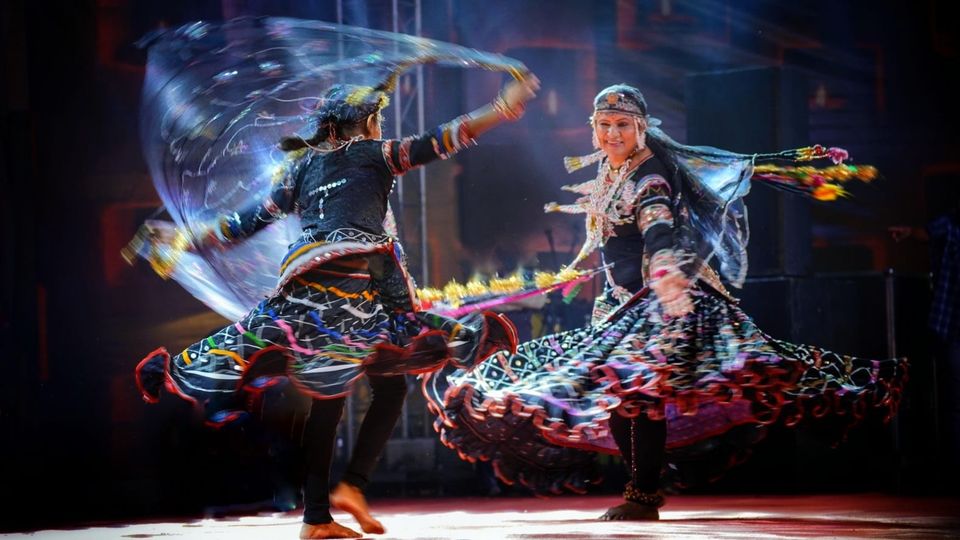 Folk danceKalbeliya — the serpent dance, a UNESCO heritageBodies sway like serpents to the pungi; on UNESCO’s intangible heritage list since 2010.4 scenes · with music · ♥ 1
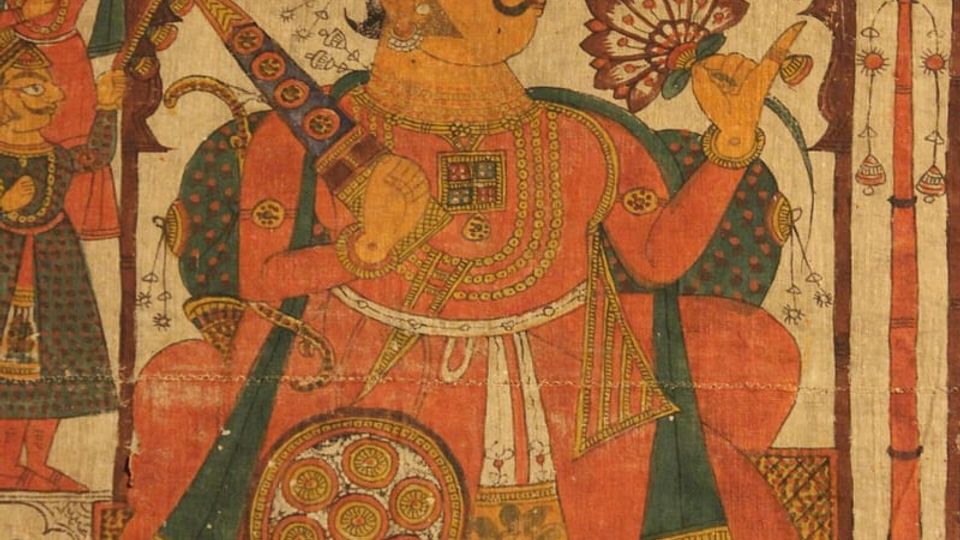 PaintingPhad and Ravanahatha — a story that travelsThrough the night, the bhopa and bhopi sing the epic of folk deities before the phad, to the ravanahatha.4 scenes · with music · ♥ 5
Photos: Onef9day / Wikimedia Commons (CC BY 3.0) · SpeakingArch / Wikimedia Commons (CC BY-SA 4.0) · Mewar School ca. 1600-1900 / Wikimedia Commons (Public domain)