Kumbhalgarh Fort
Explore the story of Kumbhalgarh Fort through four vivid scenes.
TIMES of RAJASTHAN · DARSHAN
Kumbhalgarh Fort
Explore the story of Kumbhalgarh Fort through four vivid scenes.
In detail
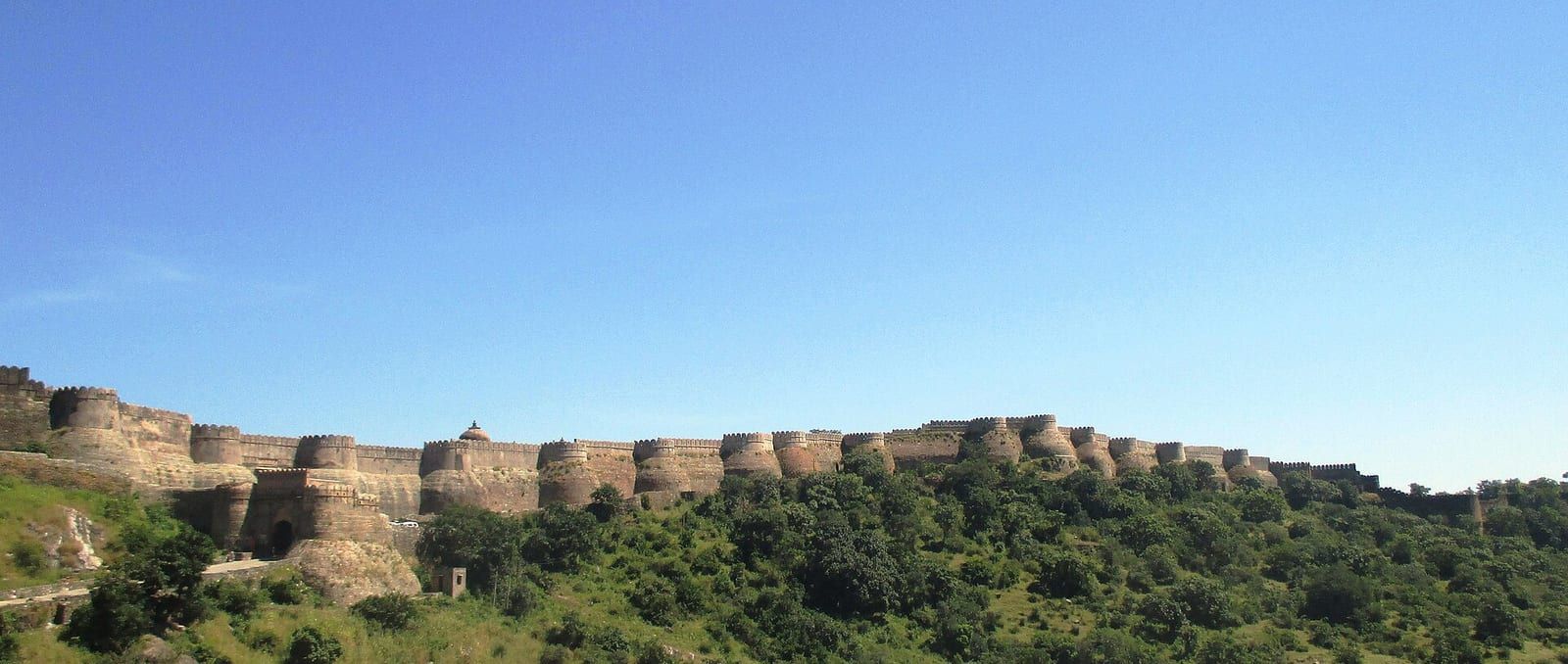
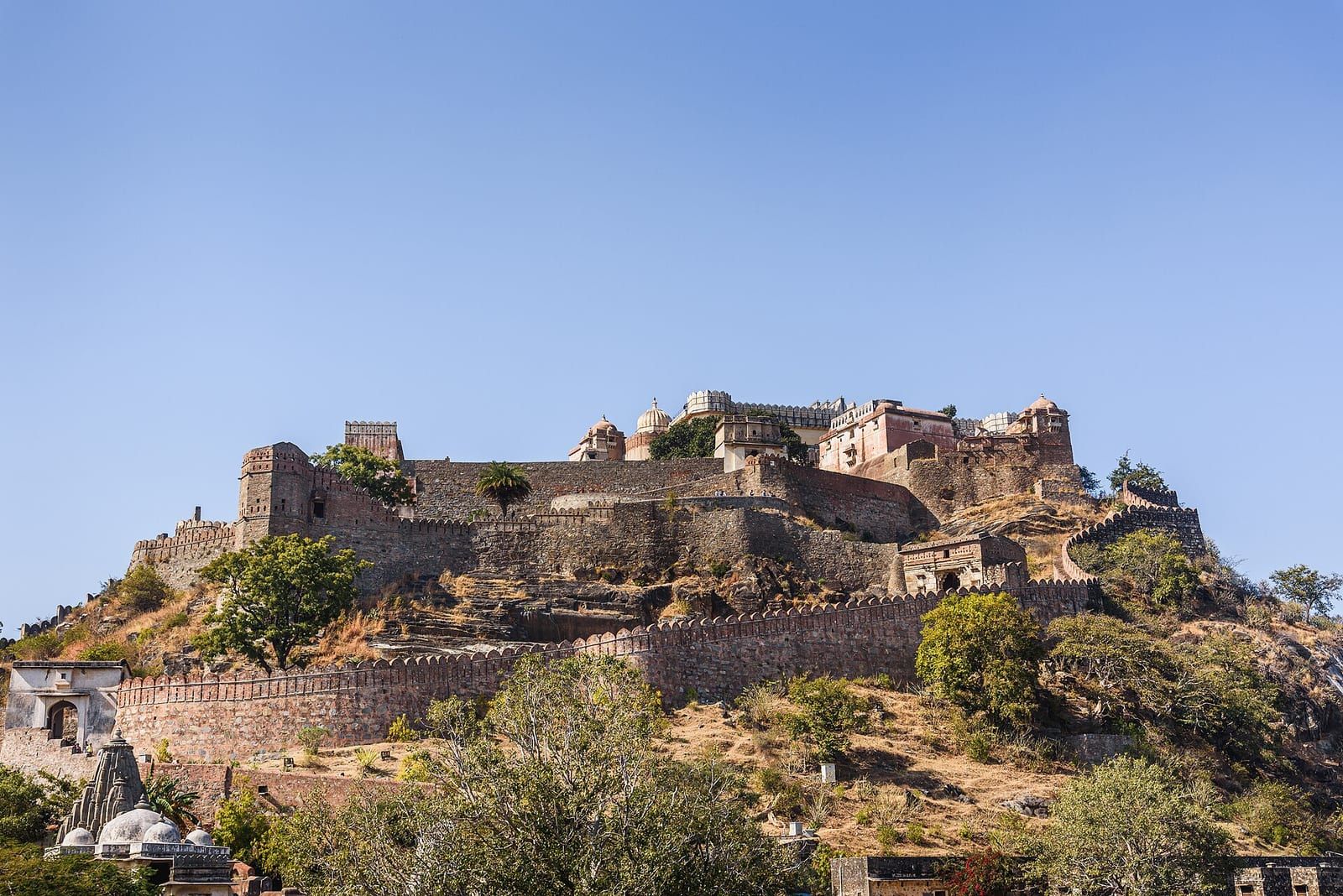
Kumbhalgarh Fort, known as the Great Wall of India, is a 15th‑century fortress built by Rana Kumbha on the Aravalli Hills, 48 km from Rajsamand and 84 km from Udaipur, featuring a 36‑km long continuous wall and the birthplace of Maharana Pratap.
Overview
Kumbhalgarh, often called the Great Wall of India, stands on the western range of the Aravalli Hills in the Rajsamand district of Rajasthan. The fortress was built in the 15th century by Rana Kumbha and lies about 48 km from Rajsamand and 84 km from Udaipur.
The most striking feature of the fort is its wall, which stretches 36 kilometers and is one of the longest continuous walls in the world. The sheer length and strength of this wall have earned Kumbhalgarh a reputation as a formidable defensive structure.
The site is also historically significant as the birthplace of Maharana Pratap, the renowned king and military leader of Mewar.
In 2013, during the 37th session of the World Heritage Committee in Phnom Penh, Cambodia, Kumbhalgarh Fort was inscribed as a UNESCO World Heritage Site. It was grouped with five other forts of Rajasthan under the designation Hill Forts of Rajasthan.
History and origins
Kumbhalgarh Fort derives its name from Rana Kumbha, the Mewar ruler who commissioned its construction in the 15th century. The suffix –garh, a common Indo‑Aryan term meaning fort, combines with Kumbha’s name to give the literal meaning “Kumbha’s Fort.” The prominence of the structure and its founder led the surrounding region to adopt the same name.
The area that would become the fort’s site was first brought under Mewar control by Rana Lakha, who won the plains of Godwar from the Chauhan Rajputs of Nadol in the late 14th century. In 1448 AD, Mandan, the chief architect of the Kingdom of Mewar, began building the fort under Rana Kumbha’s orders, as recorded in the Kumbhalgarh inscription. The fort served as Rana Kumbha’s second most favoured capital, and it was the largest and most elaborate of the 32 forts he is said to have built in his dominion.
The fort faced several sieges in the following decades. Ahmad Shah II of Gujarat attacked it in 1457 but was repelled, and a local belief that the Banmata deity protected the fort led him to destroy a temple there. Further attempts by Mahmud Khalji in 1458–59 and 1467 also failed. In October 1577, Akbar’s general Shahbaz Khan besieged the fort for six months, capturing it in April 1578, only for Maharana Pratap to recapture it in 1583.
In 1818, an armed band of sanyasis formed a garrison to protect the fort, but James Tod persuaded them to surrender, after which the British took control and later returned the fort to Udaipur State. Additions were made by subsequent Maharanas of Mewar, yet the original structure built by Maharana Kumbha remains intact, with well‑preserved residential buildings and temples. The fort is also known as the birthplace of Maharana Pratap.
What it is like
Kumbhalgarh Fort rises 1,100 m above sea level on the Aravalli range, its walls stretching 36 km and making it one of the longest fortifications in the world. The fort’s frontal walls rise 4.5 m and the complex contains seven fortified gateways, each with distinct architectural features.
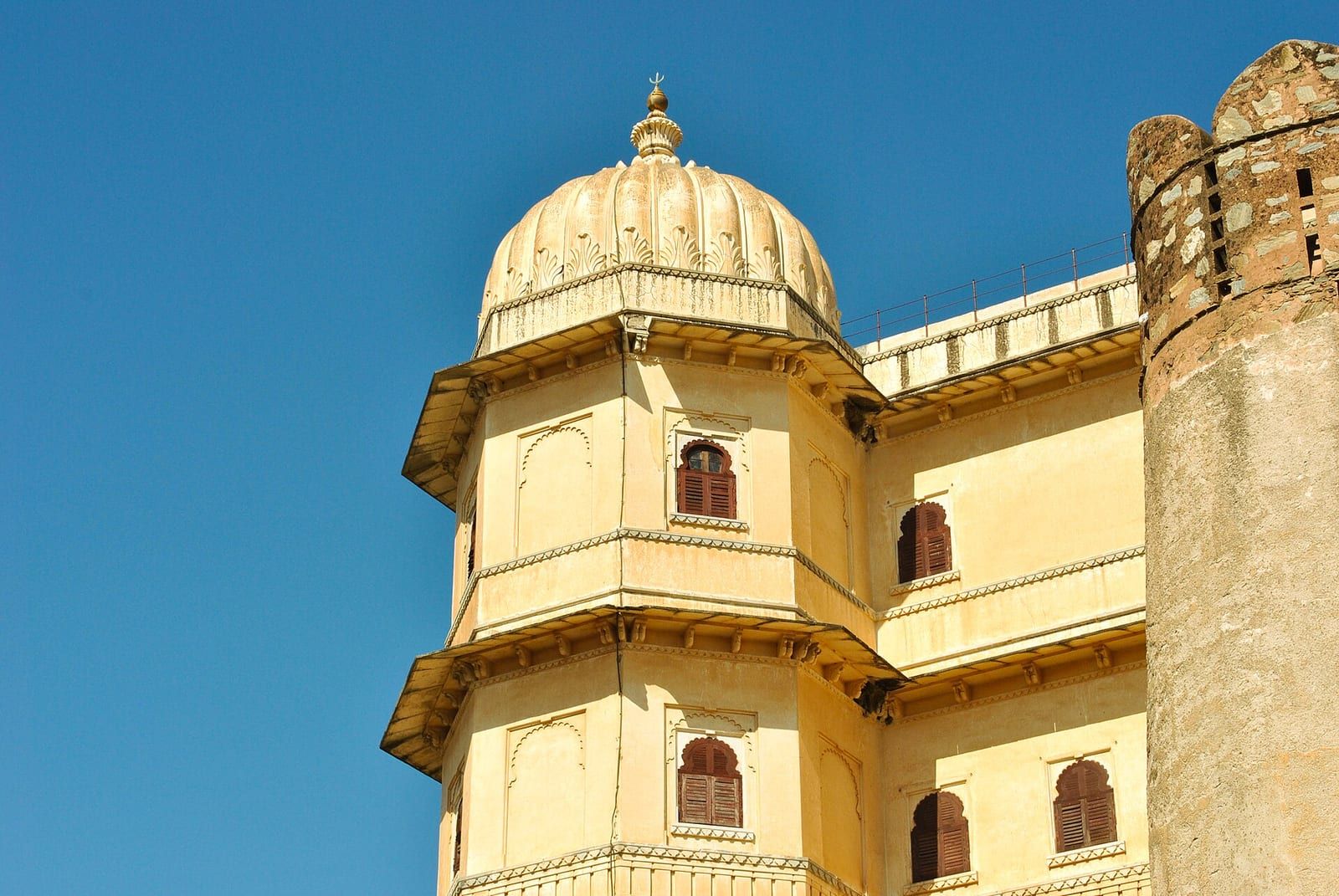
The first gate, Aaret Pol, opens onto the hilltop. From there a downward slope leads to Halla Pol, followed by Badshahi Bavdi, a stepped tank built after Shahbaz Khan’s invasion in 1578 to supply water to Mughal troops. Hanuman Pol, a double‑storeyed gate with octagonal bastions, stands half a kilometre from Halla Pol and bears a stone image of Hanuman brought by Maharana Kumbha.
The main entrance, Ram Pol, faces east and is accompanied by Vijay Pol. Between Ram Pol and Badal Mahal— the palace at the fort’s highest point— five more gates appear: Bhairon Pol, Nimboo Pol, Chaugan Pol, Pagda Pol and Ganesh Pol. From the palace top, one can see kilometres into the Aravalli Range.
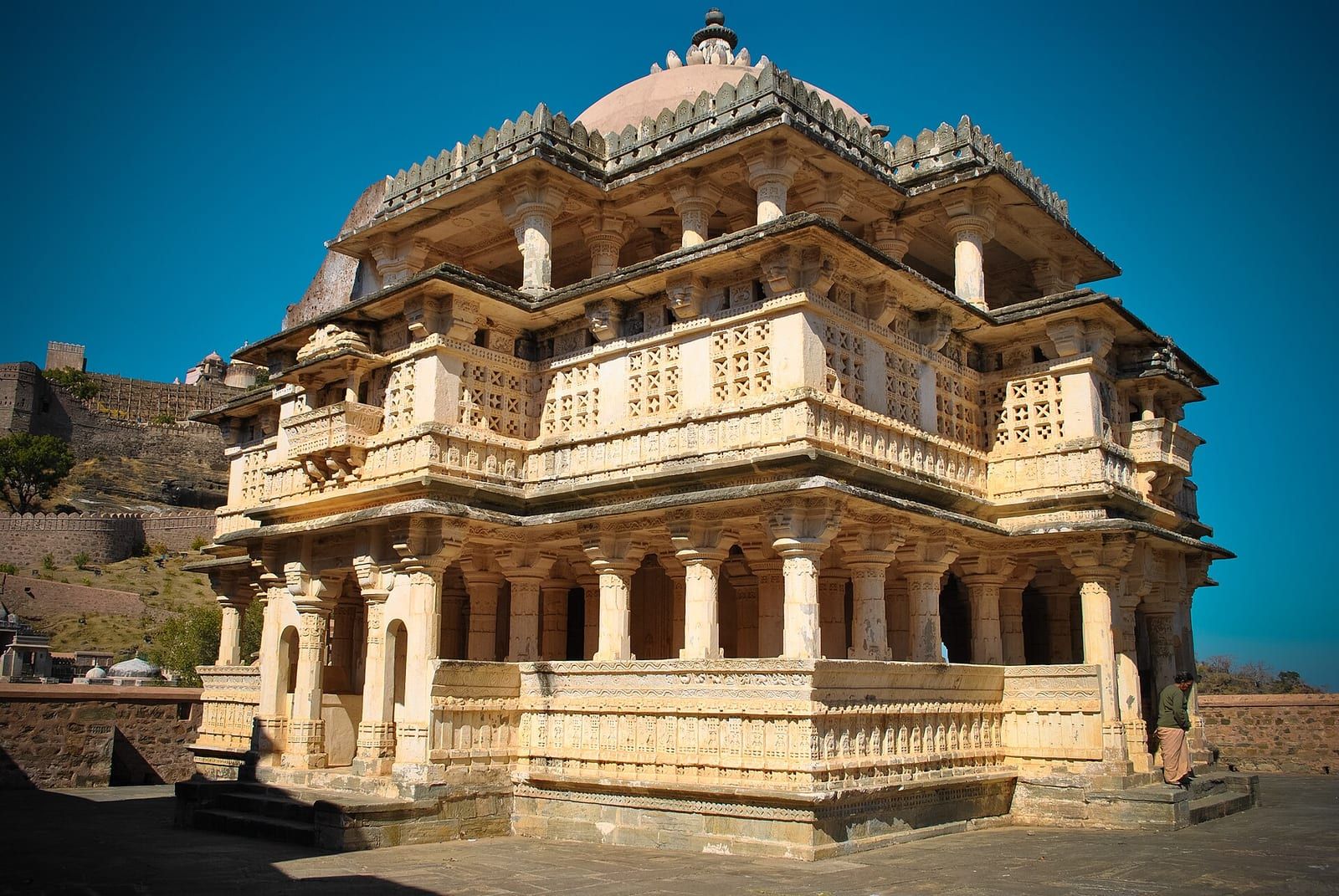
Within the walls, over 360 temples of Jain and Hindu faiths are scattered. Notable Hindu temples include Ganesha Temple, built by Maharana Kumbha, and Charbhuja Temple dedicated to the four‑armed goddess. Neel Kanth Mahadeva Temple, erected in 1458 CE, houses a black‑stone Shiva idol with twelve hands and was renovated by Rana Sanga. The Mataji (Kheda Devi) Temple lies south of Neel Kanth.
Jain worshippers find solace in the Parsva Natha Temple, built in 1513, and the Vedi Temple, constructed by Rana Kumbha in 1457 AD. The fort also hosts 52 Bawan Jain temples, four in the Golera group, and two near Vijay Pol. Additional sites include the Surya Mandir (Sun Temple), Juna Bhilwara Temple, Pital Shah Jain Temple, and the cenotaph of Kunwar Prithviraj beside Mamadeo Temple.
Based on: the Wikipedia article (CC BY-SA 4.0) — facts from that source; edited and translated by Times of Rajasthan.
More visual stories
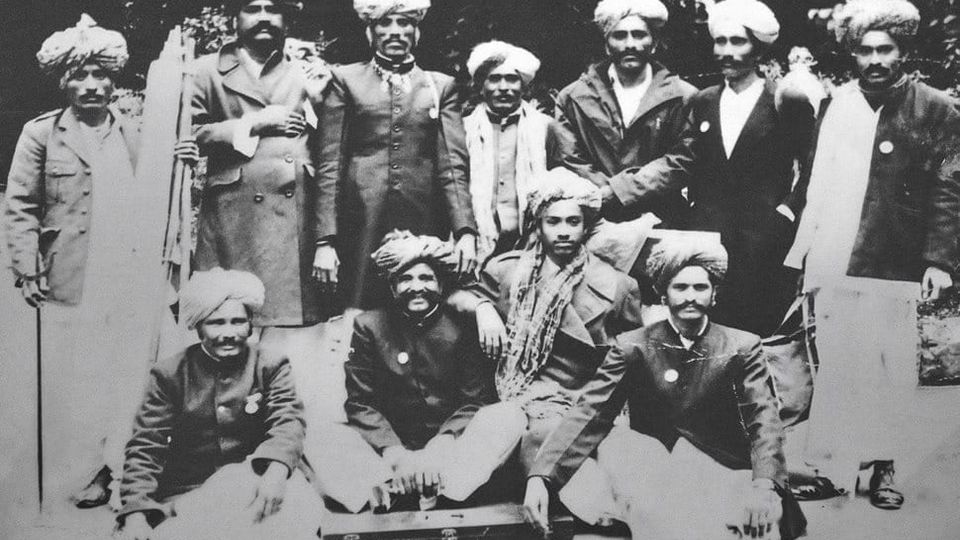 Folk musicKesariya Balam — the songs of the ManganiyarsMaand singing from the Thar, the hum of the kamaicha and the clack of the khartal.5 scenes · with music · ♥ 11
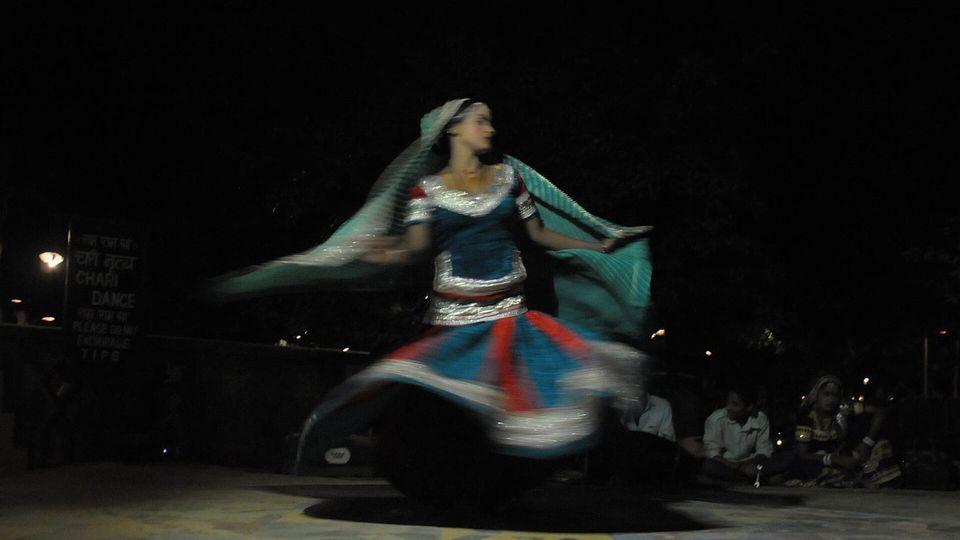 Folk danceGhoomar — the dance of the swirling skirtSwirling ghagras, flowing veils and clapping rhythms at Gangaur, Teej and weddings.3 scenes · with music · ♥ 13
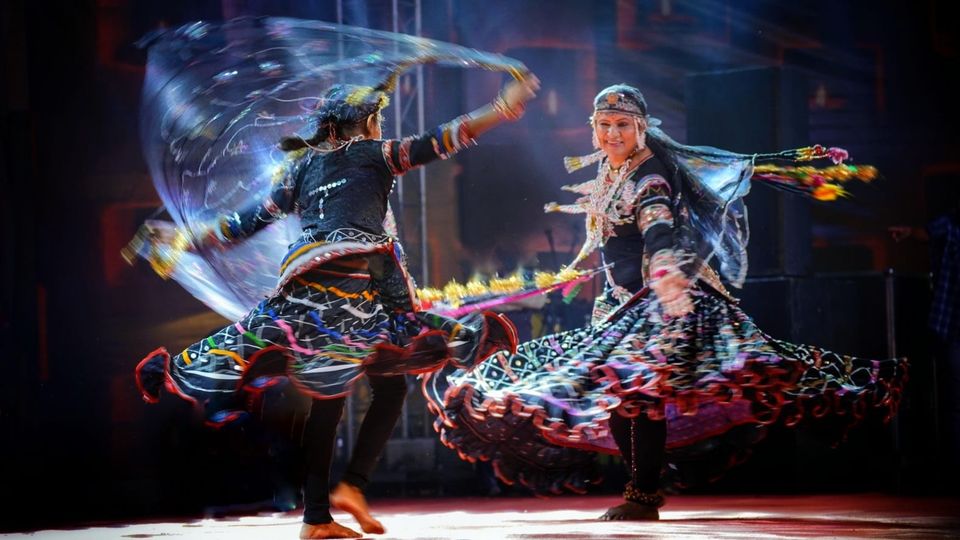 Folk danceKalbeliya — the serpent dance, a UNESCO heritageBodies sway like serpents to the pungi; on UNESCO’s intangible heritage list since 2010.4 scenes · with music · ♥ 1
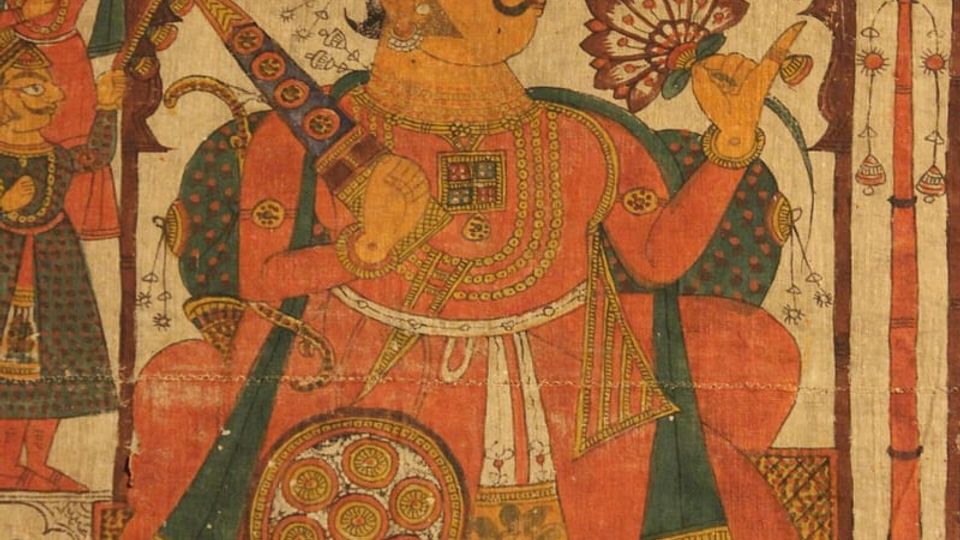 PaintingPhad and Ravanahatha — a story that travelsThrough the night, the bhopa and bhopi sing the epic of folk deities before the phad, to the ravanahatha.4 scenes · with music · ♥ 5
Photos: Sreesarkar / Wikimedia Commons (CC BY-SA 4.0) · Sujay25 / Wikimedia Commons (CC BY-SA 3.0) · Sujay25 / Wikimedia Commons (CC BY-SA 3.0) · Kartikr.naturephotography / Wikimedia Commons (CC BY-SA 4.0)