The Khejri tree
A visual tale centered on the beloved Khejri tree
TIMES of RAJASTHAN · DARSHAN
The Khejri tree
A visual tale centered on the beloved Khejri tree
In detail
Prosopis cineraria, known as khejri in Rajasthan, is a drought‑tolerant tree native to arid parts of Western Asia and the Indian subcontinent and serves as the national tree of the UAE and the state tree of Rajasthan and Telangana. The 1730 Khejarli incident, where Amrita Devi and others were killed protecting khejri trees, inspired later environmental movements such as Chipko.
Overview
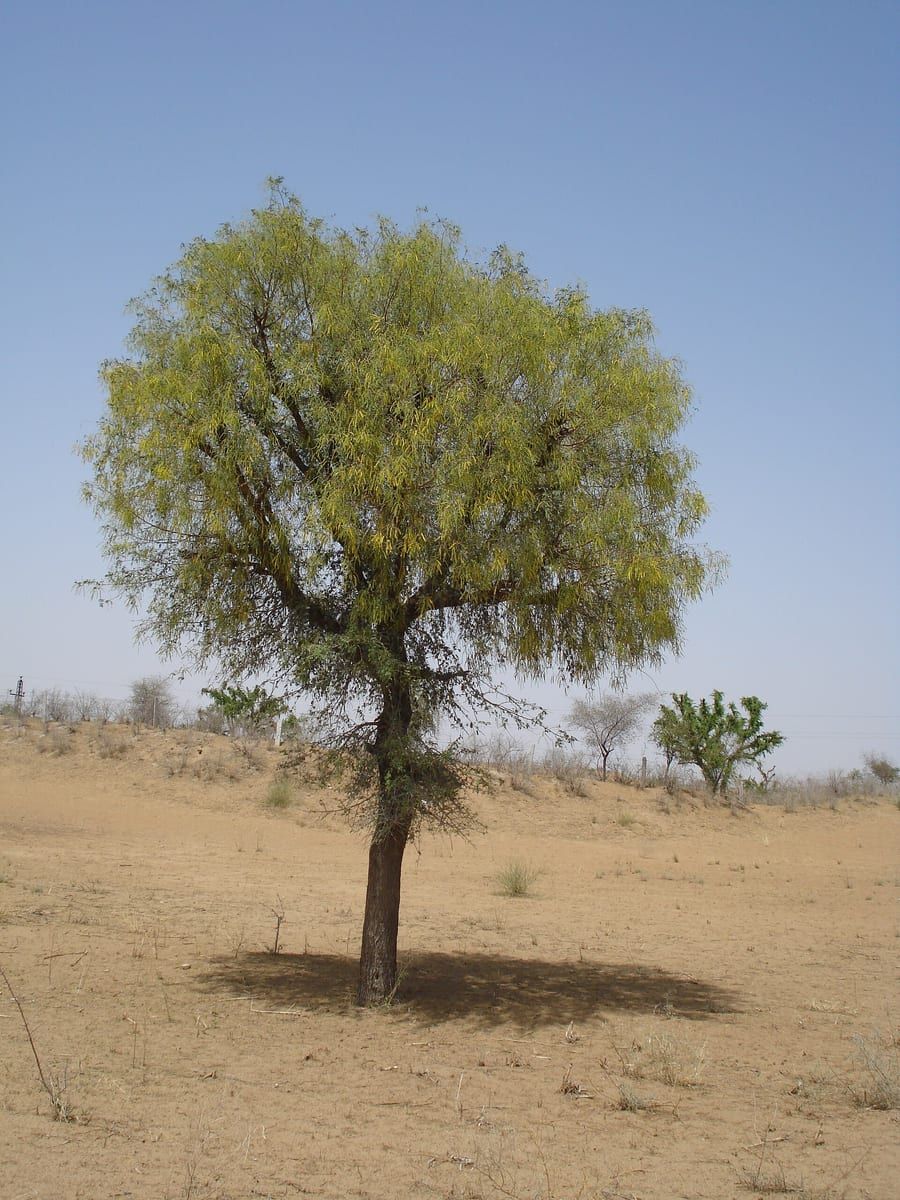
Prosopis cineraria, commonly called khejri in Rajasthan, is a flowering tree belonging to the pea family Fabaceae. It is native to the arid regions of Western Asia and the Indian subcontinent, thriving in countries such as Afghanistan, Bahrain, Iran, India, Oman, Pakistan, Saudi Arabia, the United Arab Emirates, and Yemen. The tree is characterised by bipinnate leaves and a remarkable ability to survive extreme drought conditions.
In India, the khejri holds official status as the state tree of Rajasthan, where it is widely recognised and valued. Its cultural significance is highlighted by a historic episode in 1730 AD at the village of Khejarli near Jodhpur, where local residents, led by Amrita Devi and her daughters, sacrificed their lives to protect khejri trees from being felled for a palace. The incident resulted in the deaths of 363 people and later inspired the Chipko movement of the 1970s, a broader environmental protest.
Beyond India, the species is also the national tree of the United Arab Emirates, where campaigns encourage citizens to plant it to combat desertification. A notable specimen, known as the Tree of Life in Bahrain, stands about 400 years old in a desert environment without obvious water sources, illustrating the tree’s resilience.
Prosopis cineraria has been introduced to parts of Southeast Asia, including Indonesia, where it has become an established species. Its adaptability to harsh, dry climates makes it a valuable component of arid and semi‑arid ecosystems across its native and introduced range.
What it is like
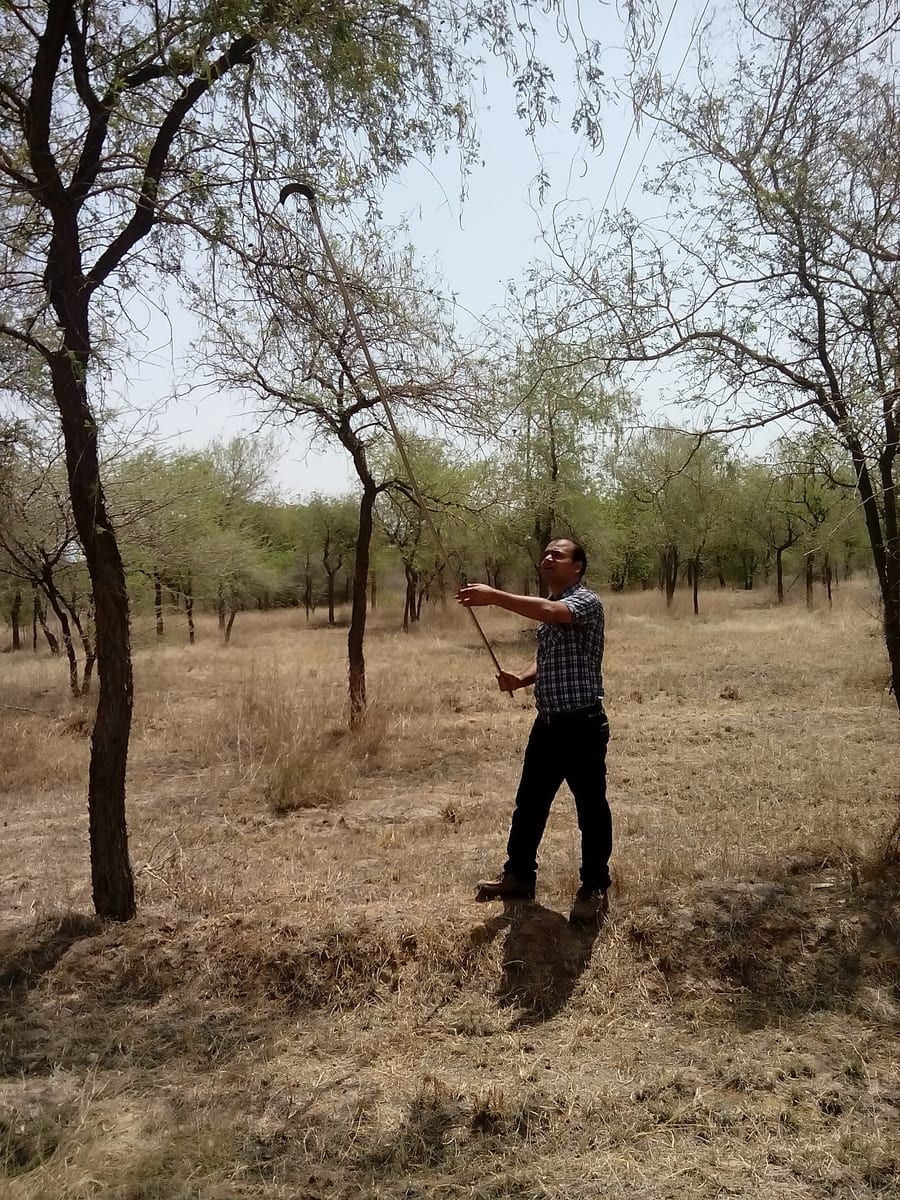
The Khejri tree, scientifically known as Prosopis cineraria, is a modest-sized tree that typically reaches heights between three and five metres. Its foliage is bipinnate, bearing seven to fourteen leaflets on each of one to three pinnae, and the branches are marked by thorns along the internodes. The tree produces small, creamy‑yellow flowers that give way to seed‑bearing pods.
This species thrives in extremely arid environments, managing to survive where annual rainfall can be as low as fifteen centimetres. Its presence often signals a deep water table beneath the surface, and it demonstrates a notable tolerance for highly alkaline and saline soils, traits shared with some other members of the Prosopis genus.
The Khejri should not be confused with the Chinese lantern tree, Dichrostachys cinerea, which displays bicoloured pink‑yellow flowers. In contrast, the Khejri’s flowers are uniformly yellow and bristled, a characteristic that helps distinguish it from the similar‑looking species.
Based on: the Wikipedia article (CC BY-SA 4.0) — facts from that source; edited and translated by Times of Rajasthan.
More visual stories
 Folk musicKesariya Balam — the songs of the ManganiyarsMaand singing from the Thar, the hum of the kamaicha and the clack of the khartal.5 scenes · with music · ♥ 11
 Folk danceGhoomar — the dance of the swirling skirtSwirling ghagras, flowing veils and clapping rhythms at Gangaur, Teej and weddings.3 scenes · with music · ♥ 13
 Folk danceKalbeliya — the serpent dance, a UNESCO heritageBodies sway like serpents to the pungi; on UNESCO’s intangible heritage list since 2010.4 scenes · with music · ♥ 1
 PaintingPhad and Ravanahatha — a story that travelsThrough the night, the bhopa and bhopi sing the epic of folk deities before the phad, to the ravanahatha.4 scenes · with music · ♥ 5
Photos: LRBurdak / Wikimedia Commons (CC BY-SA 4.0) · Editinf / Wikimedia Commons (CC BY-SA 4.0)