Khatu Shyam Ji
A brief introduction to the story of Khatu Shyam Ji and the pilgrimage to his shrine.
TIMES of RAJASTHAN · DARSHAN
Khatu Shyam Ji
A brief introduction to the story of Khatu Shyam Ji and the pilgrimage to his shrine.
In detail
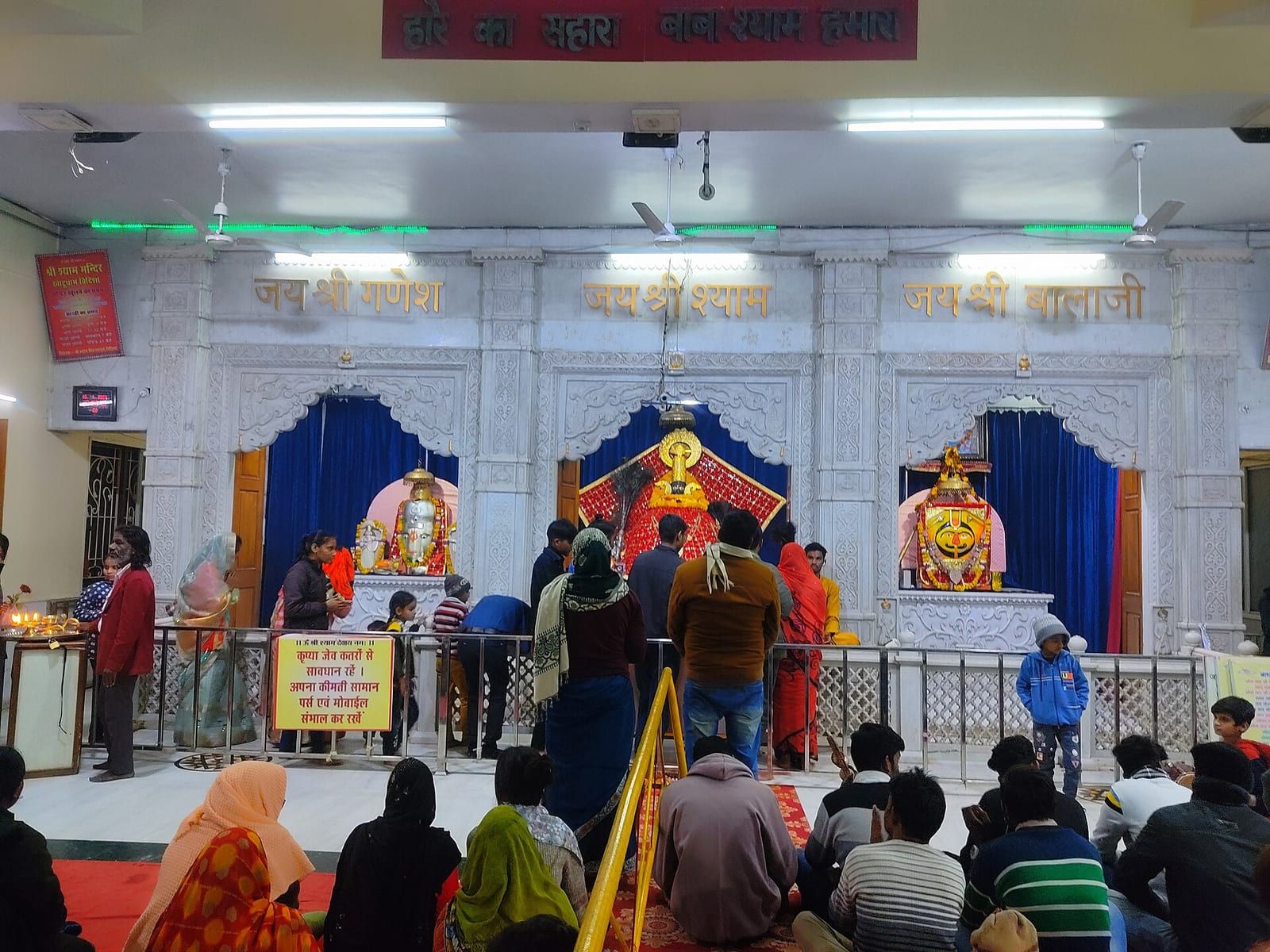
Khatu Shyam Ji Temple is a Hindu pilgrimage site in Khatu Shyam Ji town, Sikar district, Rajasthan, dedicated to Khatu Shyam, believed to be the manifestation of Barbareek from the Mahabharata. It draws millions of devotees each year, especially during the Falgun Mela held in February‑March.
Overview
Khatu Shyam Ji Temple is a Hindu temple situated in the town of Khatu Shyam Ji, which lies within the Sikar district of Rajasthan, India. The shrine is dedicated to Khatu Shyam, a divine figure revered as a manifestation of Barbareek, a character from the Indian epic Mahabharat.
The temple holds a prominent place among religious sites in Rajasthan, drawing large numbers of devotees each year. Its significance is especially evident during the Falgun Mela, a festival celebrated in the Hindu month of Falgun (February–March), when the influx of pilgrims markedly increases.
Overall, Khatu Shyam Ji Temple serves as a major pilgrimage destination, reflecting both its mythological associations and its role in regional religious practice.
History and origins
According to legend, the temple was originally constructed in 1027 CE by Roop Singh Chauhan, a local ruler who, guided by a dream, unearthed a buried idol of Barbareek at a site now known as Shyam Kund, a sacred pond near the temple. The idol was installed there, marking the beginning of its veneration as a holy site. The present structure, built of white Makrana marble, reflects traditional Rajasthani architecture.
The temple’s prominence grew over the centuries because of its association with Barbareek, a legendary figure from the Mahabharata. Barbareek, described as the son of Ghatotkacha and Kaamktankta and the grandson of the Pandava Bhima and Hidimba, is revered as Khatu Shyam Ji and is believed to be blessed by Lord Krishna in the Kaliyug.
Tradition holds that Lord Krishna granted Barbareek a boon that he would be worshipped in this age under the name Shyam. This belief is echoed in a 17th‑century poem of 25 couplets, the Shyam Pacchisi, composed by Durga Das Mathur in Braj Bhasha around 1675. The temple’s historical significance was further reinforced during the medieval period, notably in the Battle of Khatu Shyamji in 1779, when local chiefs defended the region against Mughal forces.
Mythologically, the deity worshipped at the temple is identified with Barbareek, the grandson of Bhima and son of Ghatotkacha. Legend says Barbareek possessed three divine arrows capable of deciding the outcome of the Kurukshetra war. To ensure fairness, Krishna, disguised as a Brahmin, tested Barbareek’s resolve and ultimately asked him to sacrifice his head. Impressed by his selflessness, Krishna blessed him, declaring that he would be worshipped as Shyam in the Kaliyug. The temple is believed to house Barbareek’s head, making it a sacred site for devotees.
Based on: the Wikipedia article (CC BY-SA 4.0) — facts from that source; edited and translated by Times of Rajasthan.
More visual stories
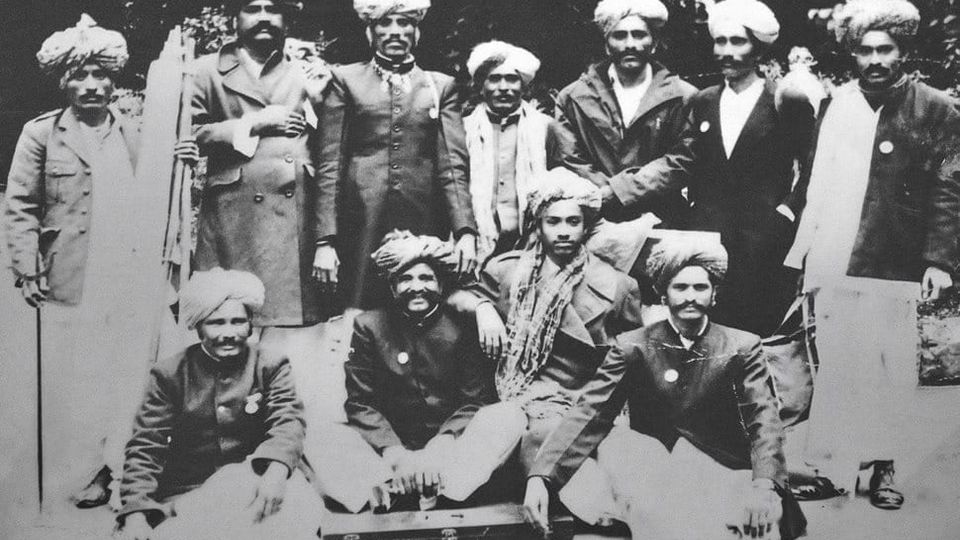 Folk musicKesariya Balam — the songs of the ManganiyarsMaand singing from the Thar, the hum of the kamaicha and the clack of the khartal.5 scenes · with music · ♥ 11
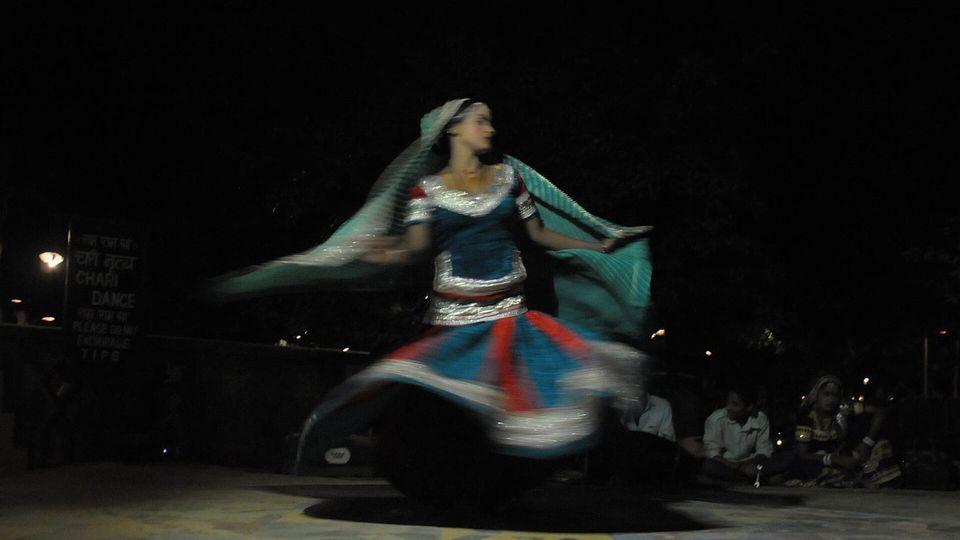 Folk danceGhoomar — the dance of the swirling skirtSwirling ghagras, flowing veils and clapping rhythms at Gangaur, Teej and weddings.3 scenes · with music · ♥ 13
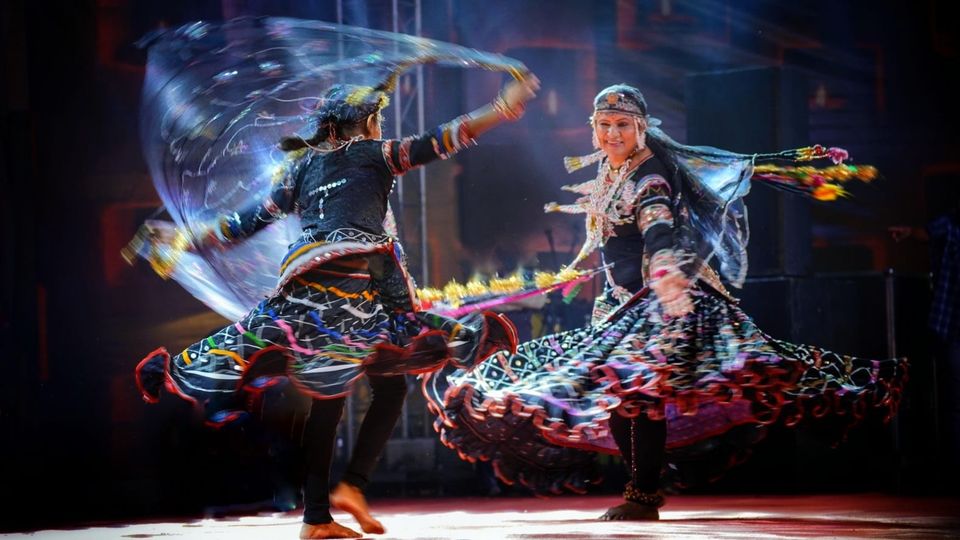 Folk danceKalbeliya — the serpent dance, a UNESCO heritageBodies sway like serpents to the pungi; on UNESCO’s intangible heritage list since 2010.4 scenes · with music · ♥ 1
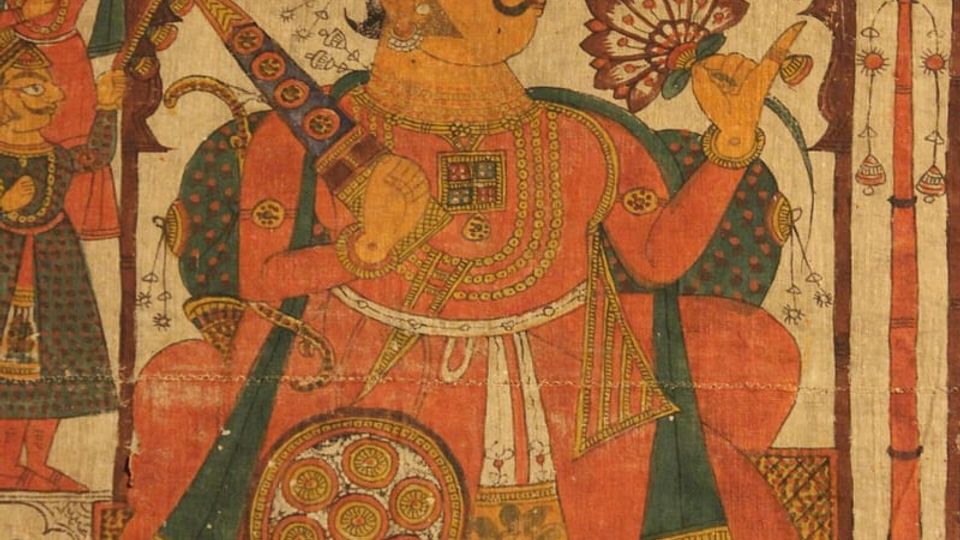 PaintingPhad and Ravanahatha — a story that travelsThrough the night, the bhopa and bhopi sing the epic of folk deities before the phad, to the ravanahatha.4 scenes · with music · ♥ 5