Jaisalmer Fort
Welcome to the visual tale of Jaisalmer Fort and its surroundings.
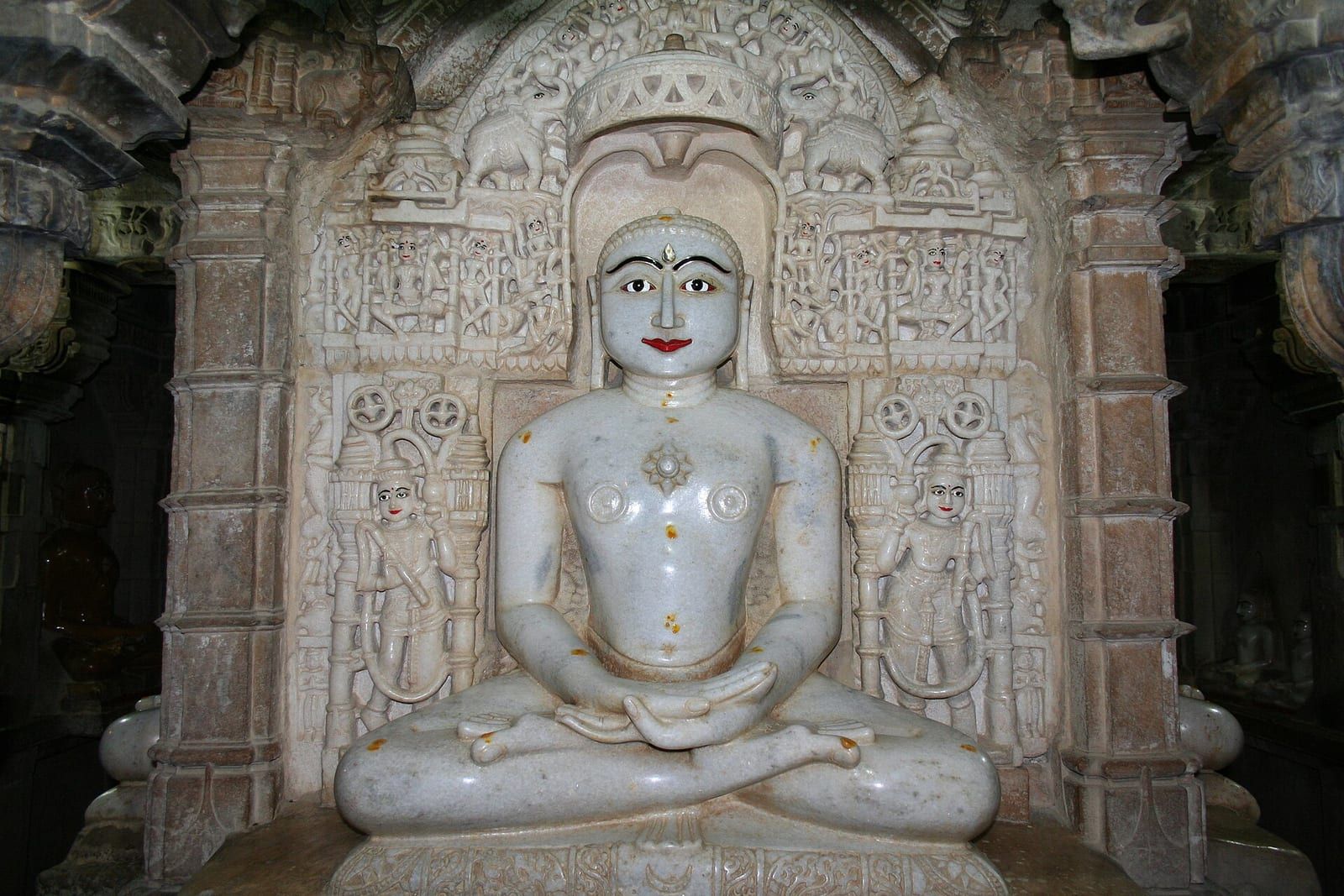
TIMES of RAJASTHAN · DARSHAN
Jaisalmer Fort
Welcome to the visual tale of Jaisalmer Fort and its surroundings.
In detail
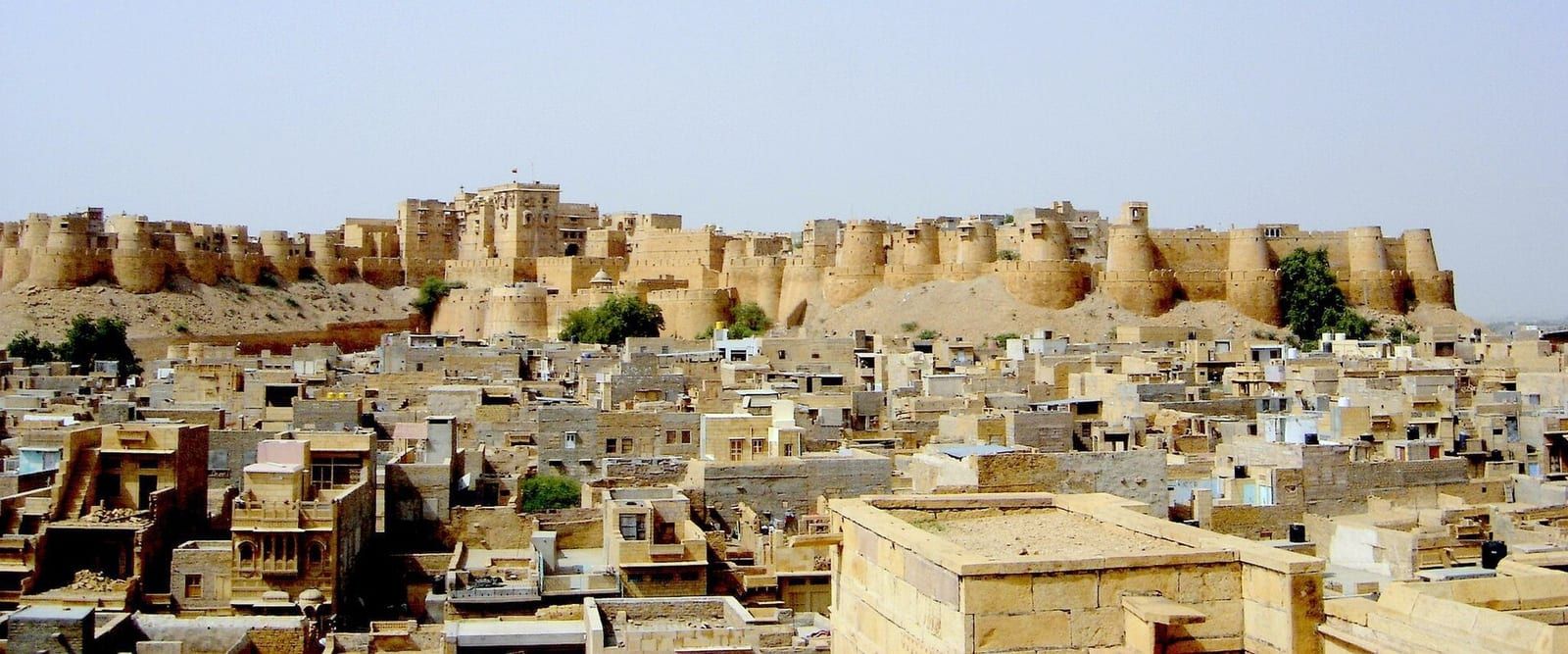
Jaisalmer Fort, located in Rajasthan’s city of Jaisalmer, is a 860‑year‑old living fort where about a quarter of the old city’s residents still live. It was built in 1156 AD by Rawal Jaisal and is the second oldest fort in Rajasthan, now a UNESCO World Heritage Site.
Overview
Jaisalmer Fort is situated in the city of Jaisalmer, in the Indian state of Rajasthan. It is one of the very few "living forts" in the world, as nearly one fourth of the old city's population still resides within the fort. For the better part of its 860‑year history, the fort was the city of Jaisalmer. The first settlements outside the fort walls, to accommodate the growing population of Jaisalmer, are said to have come up in the 17th century.
The fort is the second oldest fort in Rajasthan, built in 1156 AD by the Rawal (ruler) Jaisal from whom it derives its name. It stood at the crossroads of important trade routes, including the ancient Silk Road.
Its massive yellow sandstone walls are a tawny lion colour during the day, fading to honey‑gold as the sun sets, thereby camouflaging the fort in the yellow desert. For this reason it is also known as the Swarn Durg, Sonar Quila or Golden Fort. The name Sonar Kella (Bengali for Golden Fortress) was popularised by tourists after the famous Bengali film of the same name, which was shot in this fort by eminent filmmaker Satyajit Ray.
The fort stands amidst the sandy expanse of the great Thar Desert on Trikuta Hill, hence also known as Trikutgarh. It is today located along the southern edge of the city that bears its name; its dominant hilltop location makes the sprawling towers of its fortifications visible for many miles around.
In 2013, at the 37th session of the World Heritage Committee held in Phnom Penh, Cambodia, Jaisalmer Fort, along with five other forts of Rajasthan, was declared a UNESCO World Heritage Site under the group Hill Forts of Rajasthan.
History and origins
Legend has it that the fort was built by Rawal Jaisal, a Bhati Rajput, in 1156 CE. The story says that it superseded an earlier construction at Lodhruva, with which Jaisal was unsatisfied and thus, a new capital was established when Jaisal founded the city of Jaisalmer.
Around 1299 AD, Rawal Jait Singh I faced a long siege by Alauddin Khalji of Delhi Sultanate, who is said to have been provoked by a Bhati raid on his treasure caravan. By the end of the siege, facing certain defeat, the Bhati Rajput women committed 'Jauhar', and the male warriors under the command of Mularaja met their fatal end in battle with the Sultan's forces. For a few years after the successful siege, the fort remained under the sway of Delhi Sultanate, before being eventually reoccupied by some surviving Bhatis.
During Rawal Lunakaran's reign, around 1530–1551 AD, the fort was attacked by an Afghan chief Amir Ali. When it seemed to the Rawal that he was fighting a losing battle, he slaughtered his womenfolk as there was insufficient time to arrange a jauhar. Tragically, reinforcements arrived immediately after the deed was done and the army of Jaisalmer became victorious in its defence of the fort.
In 1541 AD, Rawal Lunakaran also fought Mughal emperor Humayun when the latter attacked the fort on his way to Ajmer. He also offered his daughter in marriage to Akbar. Mughals controlled the fort until 1762.
The fort remained under the control of Mughals until 1762, when Maharawal Mulraj took control of the fort. The treaty between the East India Company and Mulraj on 12 December 1818 allowed the Mulraj to retain control of the fort and provided for protection from invasion. After the death of Mulraj in 1820, his grandson Gaj Singh inherited control of the fort.
What it is like
The Jaisalmer Fort stretches 1,500 ft (460 m) in length and 750 ft (230 m) in width, perched on a hill that rises 250 ft (76 m) above the surrounding countryside. Its outermost ring is a 15‑ft (4.6 m) tall wall, part of a triple‑ringed defence system. The inner bastions and towers form a defensive perimeter that is about 2.5 mi (4.0 km) long, and the fort now incorporates 99 bastions, of which 92 were built or substantially rebuilt between 1633 and 1647.
Visitors to the fort must pass through four massive gateways that line the main approach to the citadel. Inside the walls are several notable structures: the Raj Mahal Palace, the former residence of the Maharawal of Jaisalmer; Baa Ri Haveli, a 450‑year‑old haveli that now houses a museum displaying artefacts from everyday life; and a group of Jain temples built from yellow sandstone between the 12th and 16th centuries, including the Askaran Chopra temple dedicated to Sambhavanatha, which contains more than 600 idols and old scriptures.
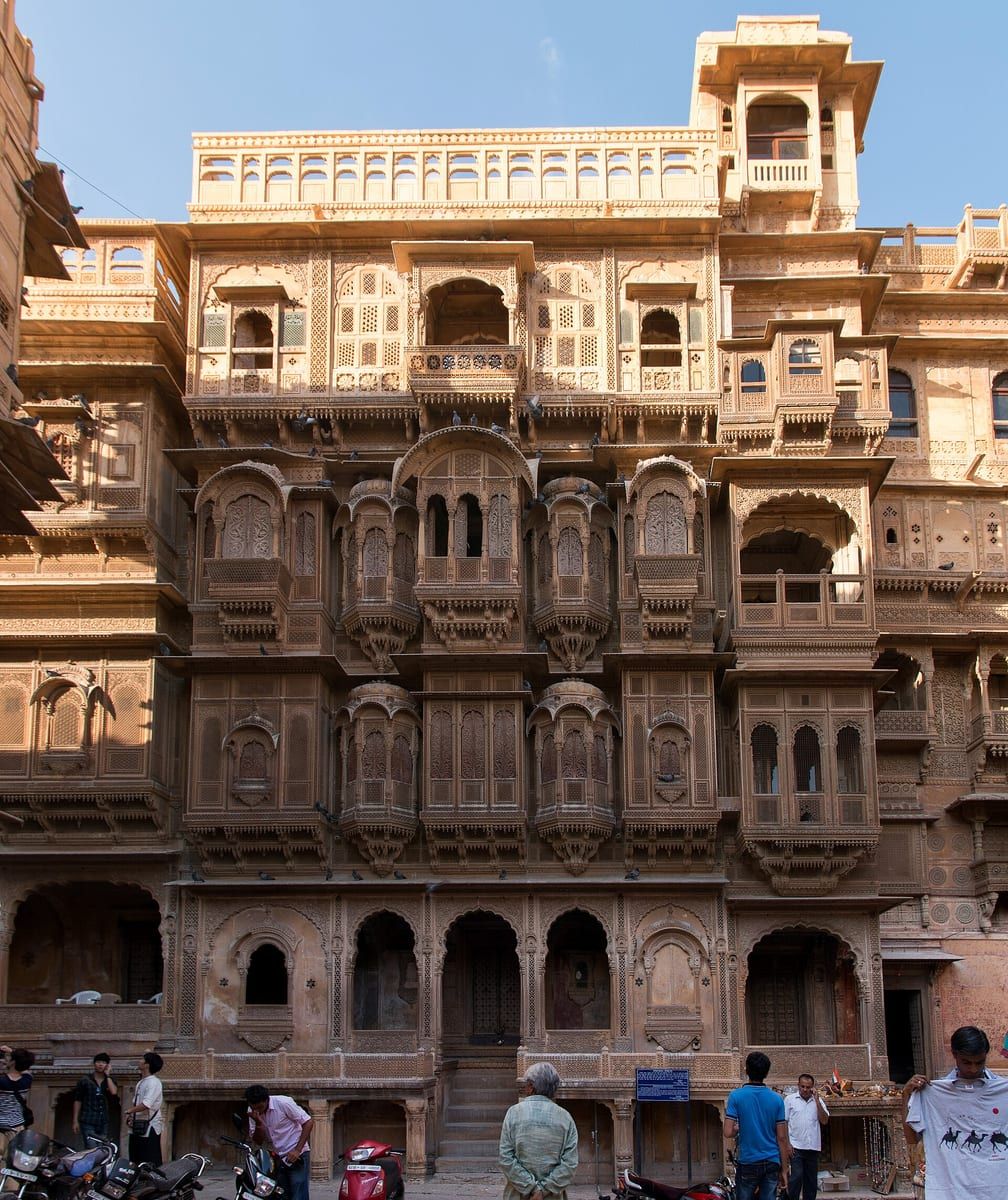
The Laxminath temple, dedicated to Lakshmi and Vishnu, and numerous merchant havelis also lie within the fort. These havelis, often carved from yellow sandstone, were built by wealthy merchants and feature ornate carvings, multiple floors, and many rooms. Some are still inhabited by the families that built them, while others serve as museums.
Among the most iconic monuments is the Nathmal Haveli, built of yellow sandstone that appears golden in sunlight. Constructed by two brothers, Lulu and Hathi, the building lacks symmetry yet showcases a blend of Islamic and Rajputana architectural styles. Its plinth bears a carving of a Rajputana warrior on an elephant, and the structure is flanked by two elephants.
The fort also contains an ingenious drainage system known as the ghut nali, which channels rainwater away from the fort in all four directions. Over time, haphazard construction and new road building have reduced its effectiveness.
Based on: the Wikipedia article (CC BY-SA 4.0) — facts from that source; edited and translated by Times of Rajasthan.
More visual stories
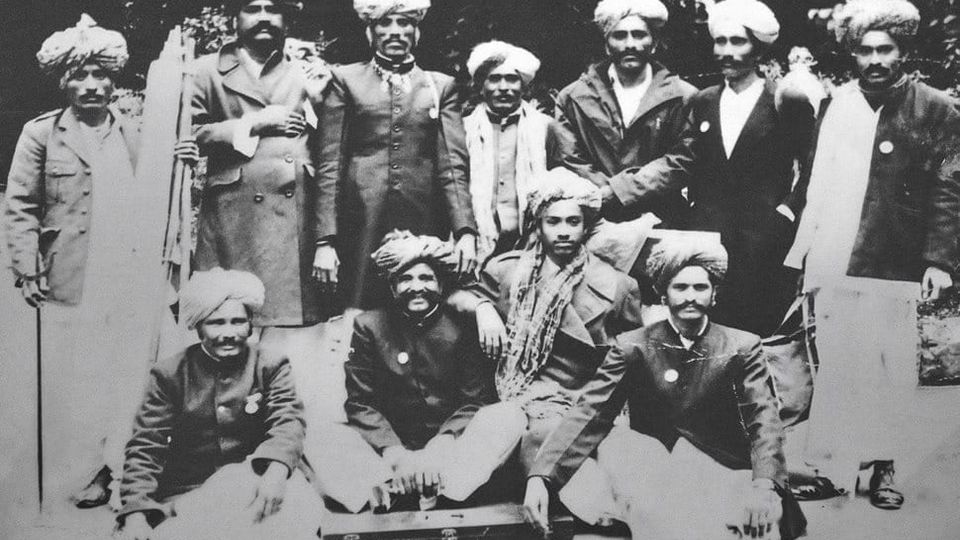 Folk musicKesariya Balam — the songs of the ManganiyarsMaand singing from the Thar, the hum of the kamaicha and the clack of the khartal.5 scenes · with music · ♥ 11
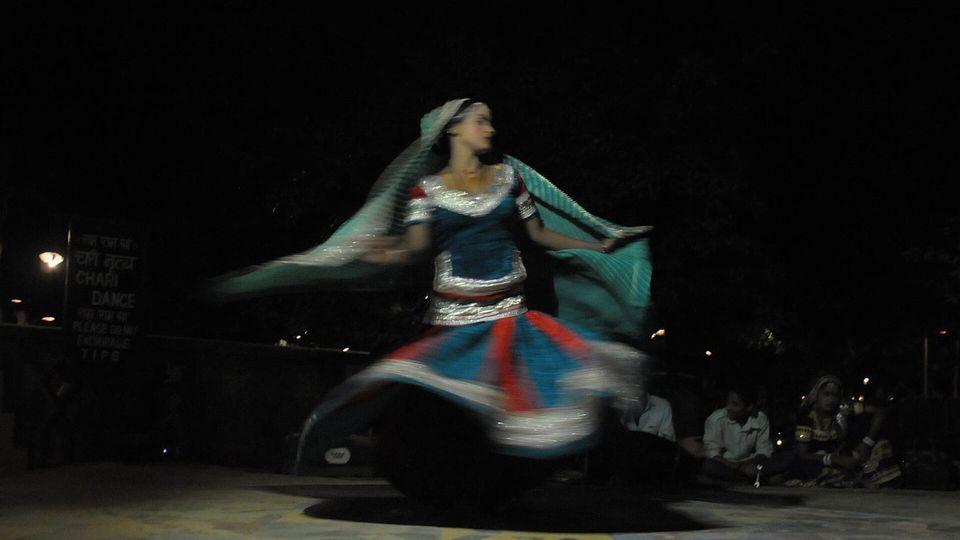 Folk danceGhoomar — the dance of the swirling skirtSwirling ghagras, flowing veils and clapping rhythms at Gangaur, Teej and weddings.3 scenes · with music · ♥ 13
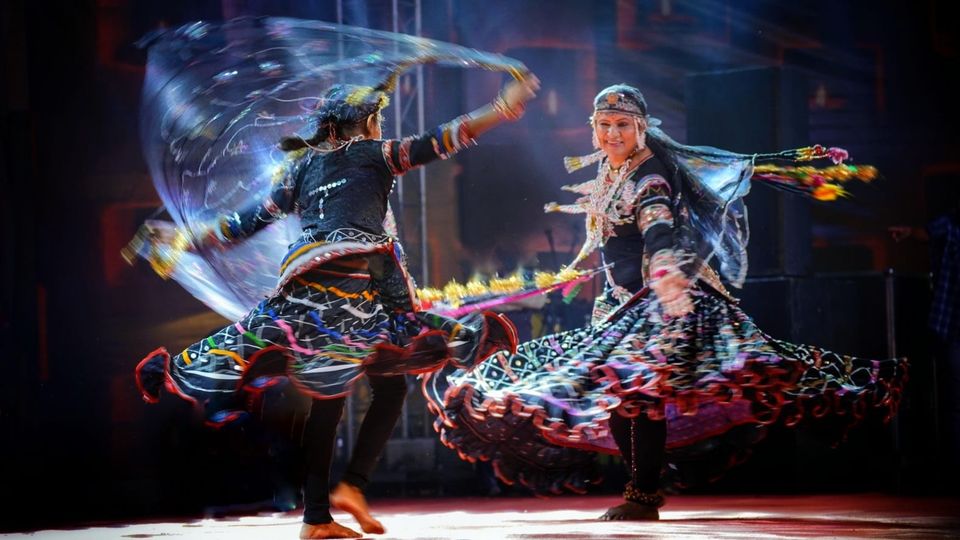 Folk danceKalbeliya — the serpent dance, a UNESCO heritageBodies sway like serpents to the pungi; on UNESCO’s intangible heritage list since 2010.4 scenes · with music · ♥ 1
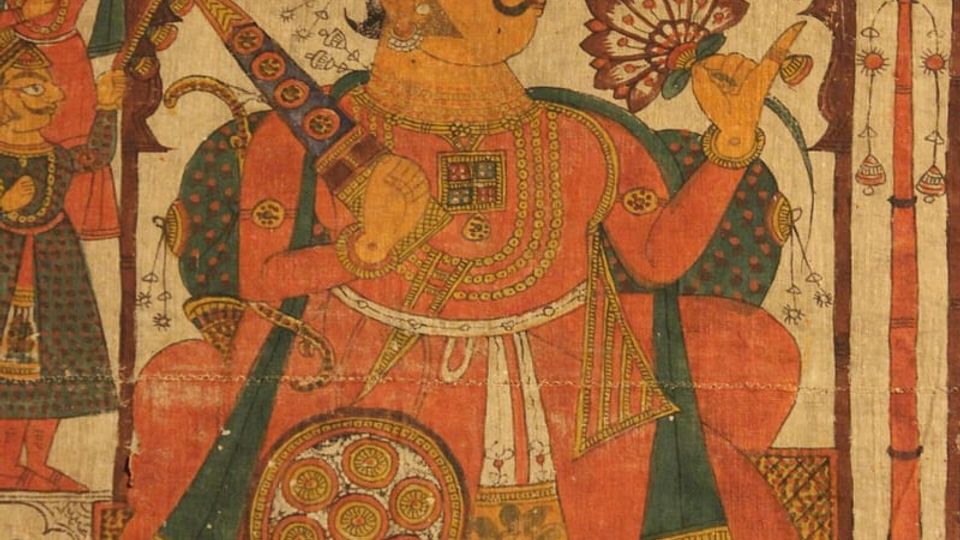 PaintingPhad and Ravanahatha — a story that travelsThrough the night, the bhopa and bhopi sing the epic of folk deities before the phad, to the ravanahatha.4 scenes · with music · ♥ 5
Photos: Gérard Janot / Wikimedia Commons (CC BY-SA 3.0) · Daniel VILLAFRUELA / Wikimedia Commons (CC BY-SA 3.0) · WikiPanti / Wikimedia Commons (CC BY-SA 4.0) · Ingo Mehling / Wikimedia Commons (CC BY-SA 3.0)