Govind Dev Ji, Jaipur
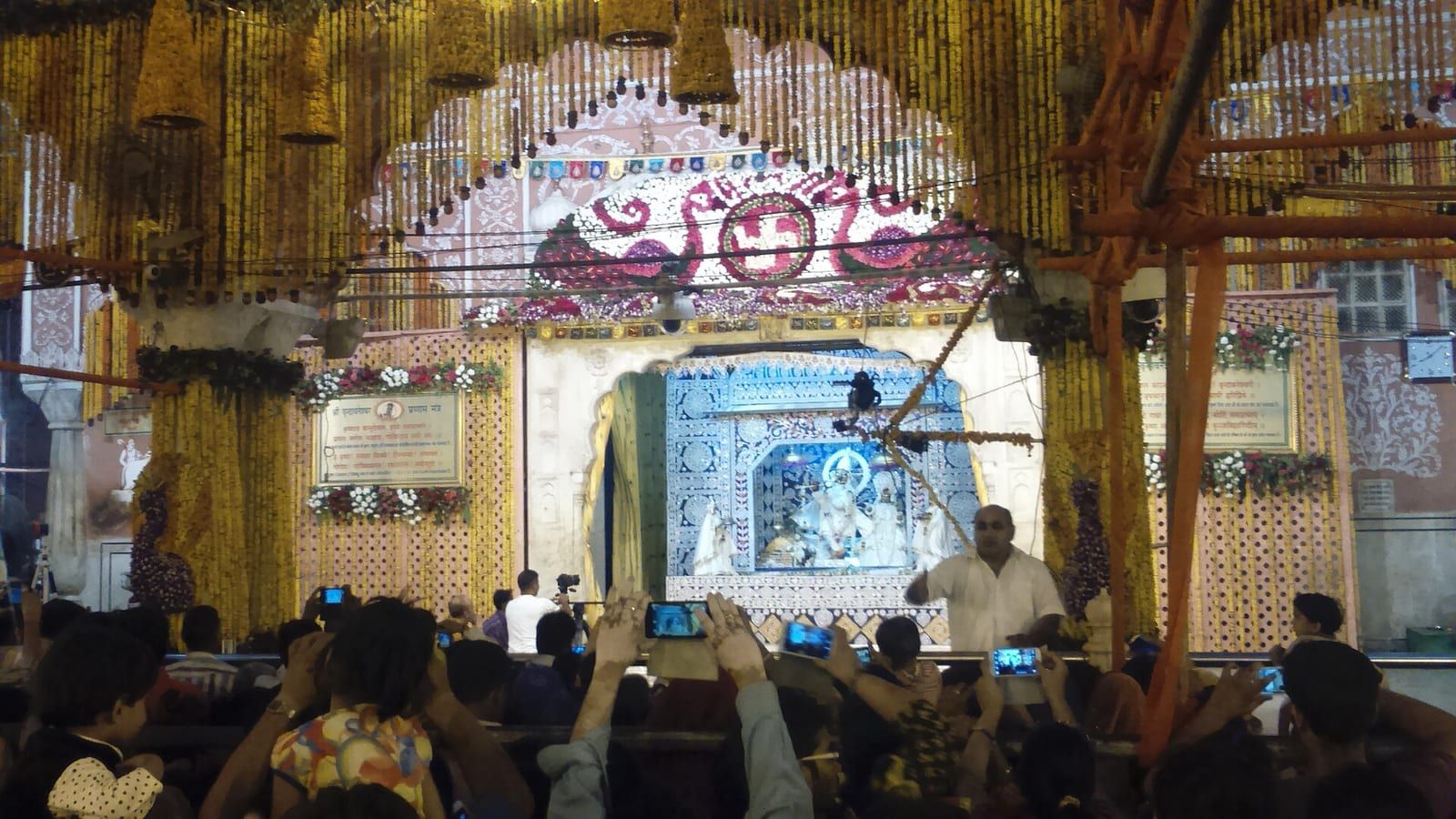
Here is the visual story of Govind Dev Ji Temple in Jaipur.
TIMES of RAJASTHAN · DARSHAN
Govind Dev Ji, Jaipur
Here is the visual story of Govind Dev Ji Temple in Jaipur.
In detail
The Govind Dev Ji Temple, situated within Jaipur’s City Palace complex, is a prominent Hindu shrine dedicated to Radha and Krishna. Established in the 18th century by Maharaja Jai Singh II, the temple houses deities brought from Vrindavan and features the Govind Dev icon, one of Vrindavan’s seven principal Goswami deities linked to Rupa Goswami.
Overview
The Govind Dev Ji Temple is a significant Hindu temple dedicated to Radha and Krishna, located within the City Palace complex, in Jaipur, Rajasthan, India.
The temple was established in the 18th century by Maharaja Jai Singh II, the founder of Jaipur, who brought the deities from Vrindavan.
The Govind Dev icon is counted among the seven principal Goswami deities of Vrindavan and is associated in tradition with Rupa Goswami, one of the Six Goswamis of Vrindavan.
History and origins
The idol of Govind Dev Ji is traditionally believed to have been created by Bajranabh, the great‑grandson of Krishna. According to legend, Bajranabh created three images of Krishna: one representing his feet, one his chest, and one his face. The first image is known as Lord Madan Mohan Ji, the second image is called Gopinath Ji, and the third image is popular with the name of Govind Dev Ji.
The icons were rediscovered by Rupa Goswami. He built the first permanent Govind Dev temple in Vrindavan around 1535 at the yogapitha, the ritual centre of the town understood in Gaudiya theology as the meeting place of Krishna and Radha. According to the custodians' tradition, he had ‘discovered’ the self‑manifested image at a mound called Gomatila in 1525.
A farman of Emperor Akbar dated 6 October 1568 formally recognised Jiva Goswami as manager (adhikar) of the Govind Dev and Madan Mohan temples, indicating that both had come under a single Chaitanya‑sect administration by that date. The temple is historically significant as the site where Baladeva Vidyabhushana, an important philosopher of the Gaudiya Vaishnavism tradition, composed the Govinda Bhashya, a commentary on the Brahma Sutras, after receiving guidance in a dream from the deity Govind Dev Ji.
The idols were originally enshrined at a palatial 7‑storeyed temple in Vrindavan, constructed by Mansingh I of Amber, with red sandstone being donated by the Mughal Emperor Akbar and consecrated by Jiva Goswami in 1570. Man Singh's reconstruction is dated to 1590, a date preserved in an inscription on the temple; the Amber court's patronage of the Chaitanya establishment at Vrindavan is documented from at least 1565.
In 1670, when Vrindavan was sacked on the orders of Aurangzeb, the icons were removed to their current location. Historian Monika Horstmann observes that the sanctuary of Govind Dev temple although not destroyed was dismantled and figures on the doorway of the jagmohan defaced, but the building otherwise survived. An inscription dates the removal of the images to August 1670; the deities were taken first to Kaman in Kachavaha territory, together with the divine consort and the tutelary goddess Vrindadevi.
The relocation to Jaipur was not immediate but unfolded over nearly seven decades of successive halts across Kachavaha territory. In 1713, Sawai Jai Singh II laid out the garden of Kanak vrindavan (Golden Vrindaban) on the shore of the Mansarovar reservoir as the deity's new abode, and regular worship was established there from 1719. The deity was then moved to a building in the newly laid‑out gardens behind his royal palace, where a permanent temple was later built. Jai Singh's own palace was named Chandra Mahala (Moon Palace) and the Govind Dev shrine Surya Mahala (Sun Palace), the two placed in symbolic relation to each other. When Govind Dev was installed at Surya Mahala in 1727, Jai Singh declared the deity to be the sovereign of the state of Amera and Jaipur, and himself only the deity's chief minister — a ritual constitution the Kachhwaha rulers continued to observe until Rajasthan joined the Indian Union.
Based on: the Wikipedia article (CC BY-SA 4.0) — facts from that source; edited and translated by Times of Rajasthan.
More visual stories
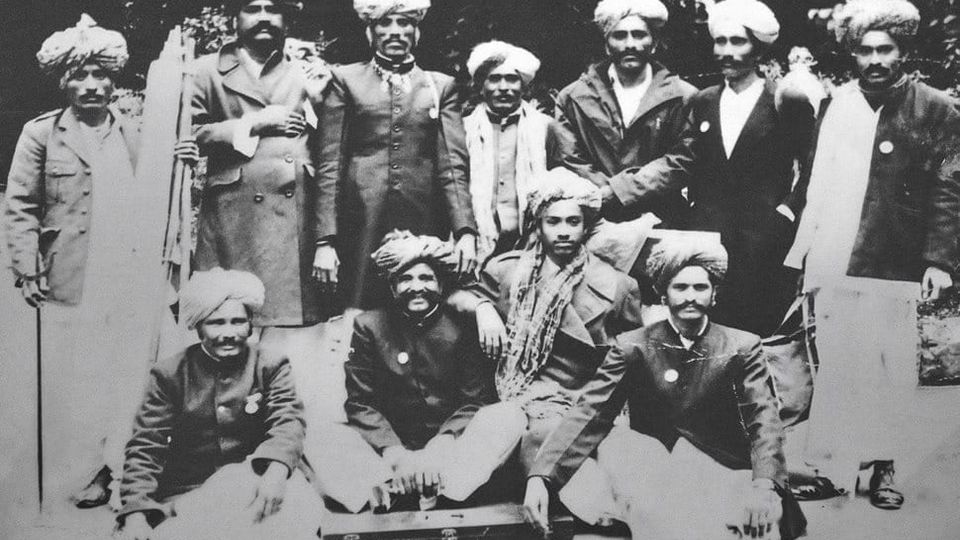 Folk musicKesariya Balam — the songs of the ManganiyarsMaand singing from the Thar, the hum of the kamaicha and the clack of the khartal.5 scenes · with music · ♥ 11
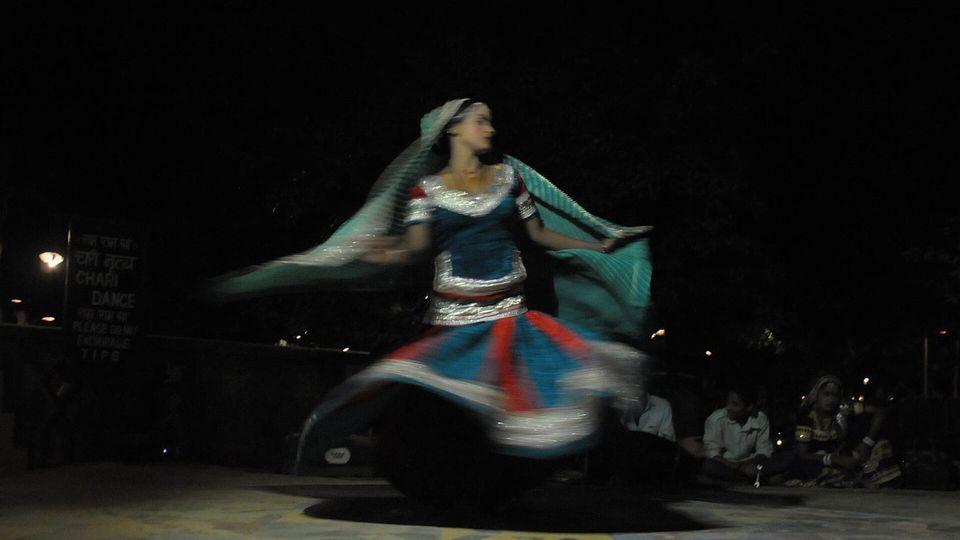 Folk danceGhoomar — the dance of the swirling skirtSwirling ghagras, flowing veils and clapping rhythms at Gangaur, Teej and weddings.3 scenes · with music · ♥ 13
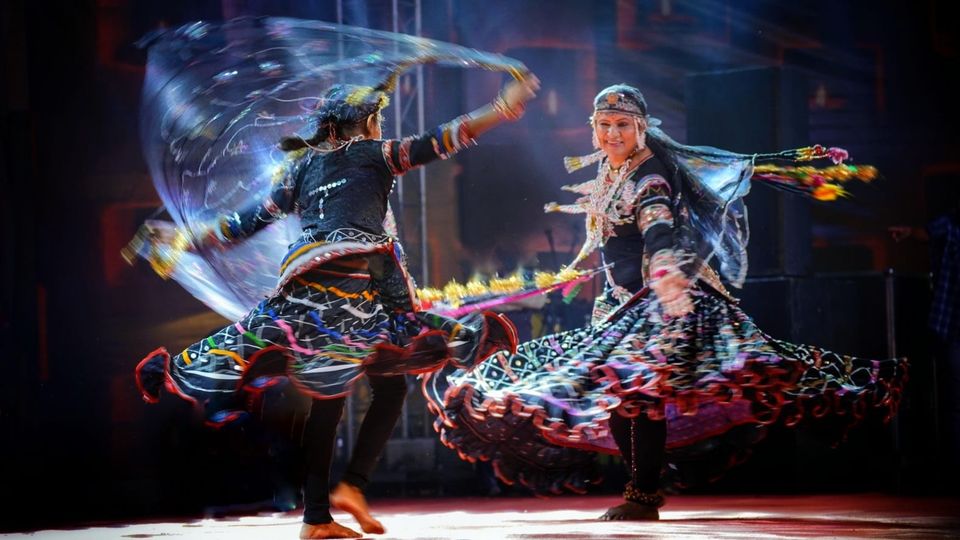 Folk danceKalbeliya — the serpent dance, a UNESCO heritageBodies sway like serpents to the pungi; on UNESCO’s intangible heritage list since 2010.4 scenes · with music · ♥ 1
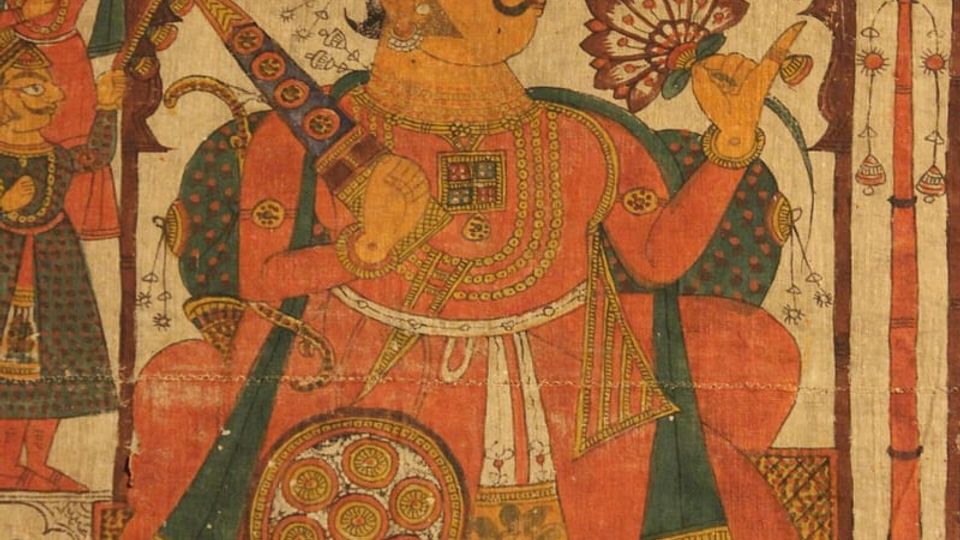 PaintingPhad and Ravanahatha — a story that travelsThrough the night, the bhopa and bhopi sing the epic of folk deities before the phad, to the ravanahatha.4 scenes · with music · ♥ 5