The Great Indian Bustard
The story of the Great Indian Bustard unfolds under Rajasthan's open skies.
TIMES of RAJASTHAN · DARSHAN
The Great Indian Bustard
The story of the Great Indian Bustard unfolds under Rajasthan's open skies.
In detail
The Great Indian Bustard is a large, heavy flying bird native to the Indian subcontinent, once common in dry grasslands and shrublands. Its population has dwindled to about 150 individuals by 2018, making it critically endangered and protected under the Indian Wild Life (Protection) Act, 1972.
Overview
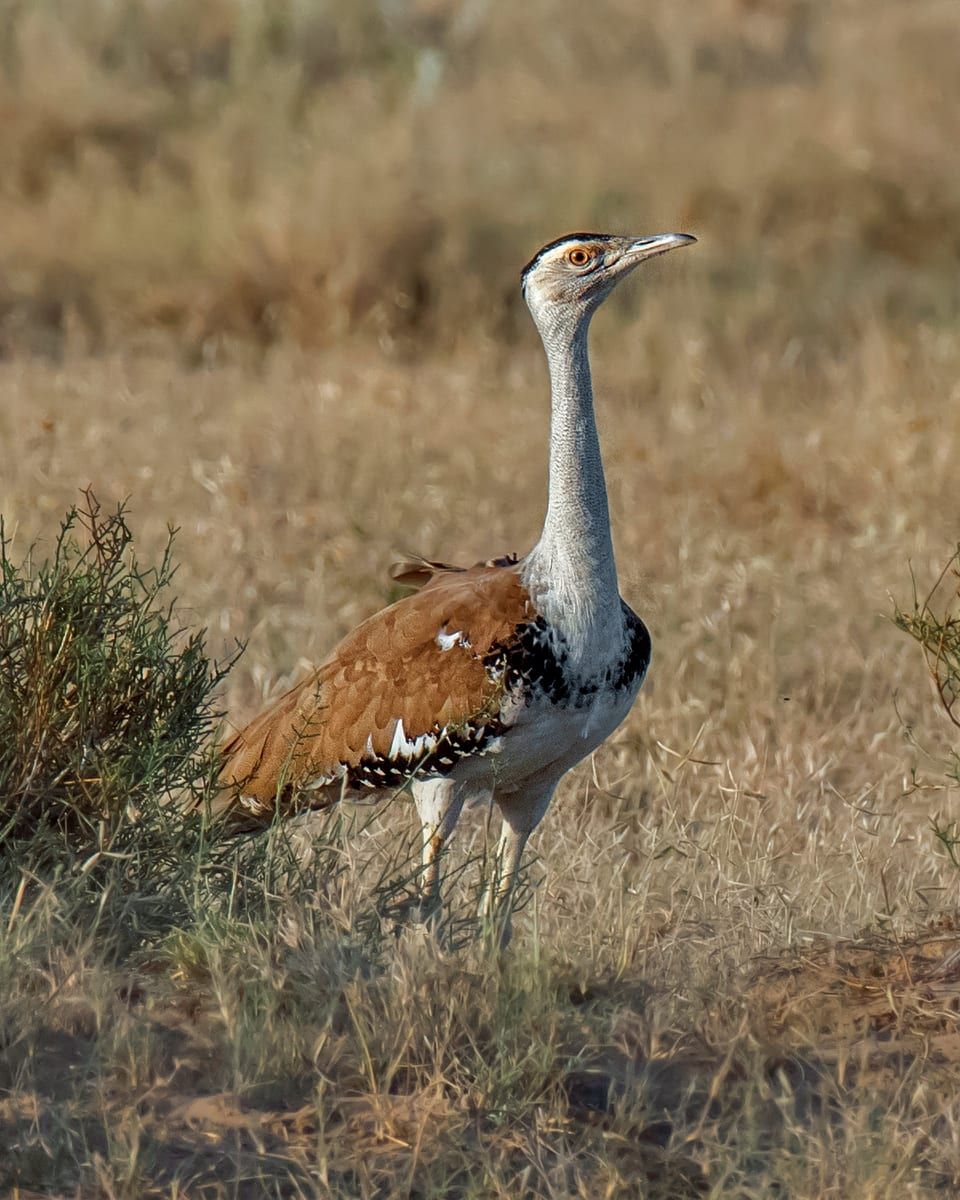
The great Indian bustard, scientifically named Ardeotis nigriceps, is a large bird that inhabits the Indian subcontinent. It is characterized by a horizontal body, long bare legs, and is among the heaviest of the flying birds.
Historically, the species was common across the dry grasslands and shrubland of India. However, its numbers have declined sharply, with estimates indicating that only about 150 individuals remained in 2018, down from an estimated 250 in 2011.
The great Indian bustard is classified as critically endangered, primarily due to hunting and habitat loss. It is protected under the Indian Wild Life (Protection) Act of 1972.
What it is like
The great Indian bustard is a large ground bird that stands about one metre tall, with a somewhat long neck and quite long legs. Its plumage is distinctive: a black cap contrasts with a pale head and neck, while the body is brownish and marked with a black patch spotted in white. Males are deep sandy buff coloured and, during the breeding season, display a black breast band. The male’s crown is black, crested, and puffed up during displays, and it possesses a well‑developed gular pouch that inflates when calling, producing deep resonant calls that can be heard for nearly 500 metres. Females are smaller than males; their head and neck are not pure white and their breast band is either rudimentary, broken or absent.
The species is omnivorous, preferring insects such as Orthoptera and beetles, including Mylabris species. It also consumes grass seeds, berries—particularly of the genera Ziziphus and Eruca—rodents, reptiles, and in Rajasthan, Indian spiny‑tailed lizards (Uromastyx hardwickii). In cultivated areas it feeds on crops such as exposed groundnut, millets and pods of legumes. When water is available it drinks by sitting down or sucking water, sometimes raising its head at an angle.
During the breeding season, which runs from March to September, the male is solitary but forms small flocks in winter. It uses an “exploded or dispersed lek” mating system. Courtship displays involve the male inflating its gular sac, holding its tail cocked up over the body, and producing a resonant deep, booming call. Territorial fights may involve strutting, leaping, and locking opponents’ heads under their necks. The female lays a single egg in an unlined scrape on the ground; only females incubate and care for the young, using distraction displays such as flying zig‑zag with dangling legs to protect the egg from predators.
Young birds are frequently seen dust‑bathe, and hens are said to carry chicks under their wings when threatened. The species makes local movements, though these are not well understood; flocks disperse after the monsoon.
Importance today
The Great Indian bustard has become a symbol of conservation efforts in Rajasthan, reflecting the urgency of protecting a species that once roamed widely across the Indian subcontinent. The state’s launch of Project Great Indian Bustard on World Environment Day 2013 marked a decisive step, with the identification and fencing of breeding grounds within existing protected areas and the creation of secure breeding enclosures outside those zones. This initiative underscores the importance of safeguarding critical habitats and providing controlled environments that support the species’ survival.
A significant milestone in the species’ recovery was the inauguration of a soft‑release centre at Naliya in Gujarat’s Kutch district on 14 September 2026. The centre, opened by Union Minister for Environment, Forest and Climate Change Bhupender Yadav, is equipped with infrastructure to support conservation, monitoring, and the gradual adaptation of the birds to the natural environment. This facility represents a modern approach to species reintroduction, combining scientific monitoring with habitat restoration.
The breeding successes recorded in recent years further highlight the species’ resilience and the effectiveness of targeted conservation measures. In 2020, nine chicks were incubated successfully, setting a world record. The following year, a chick hatched after artificial insemination using sperm collected from a male 200 km away, demonstrating advances in reproductive technology. In March and April 2025, eight chicks hatched at the Sam Bustard conservation and breeding centre and the Ramdevra breeding centre, indicating a growing population within managed settings.
The continued presence of the bustard in the wild is also evident. In October 2026, a male great Indian bustard chick was confirmed at Naliya in Kutch, Gujarat, confirming that the species is not only thriving in captivity but also establishing itself in natural habitats. These developments collectively emphasize the importance of sustained conservation efforts, scientific innovation, and habitat protection in ensuring the long‑term survival of the Great Indian bustard.
Based on: the Wikipedia article (CC BY-SA 4.0) — facts from that source; edited and translated by Times of Rajasthan.
More visual stories
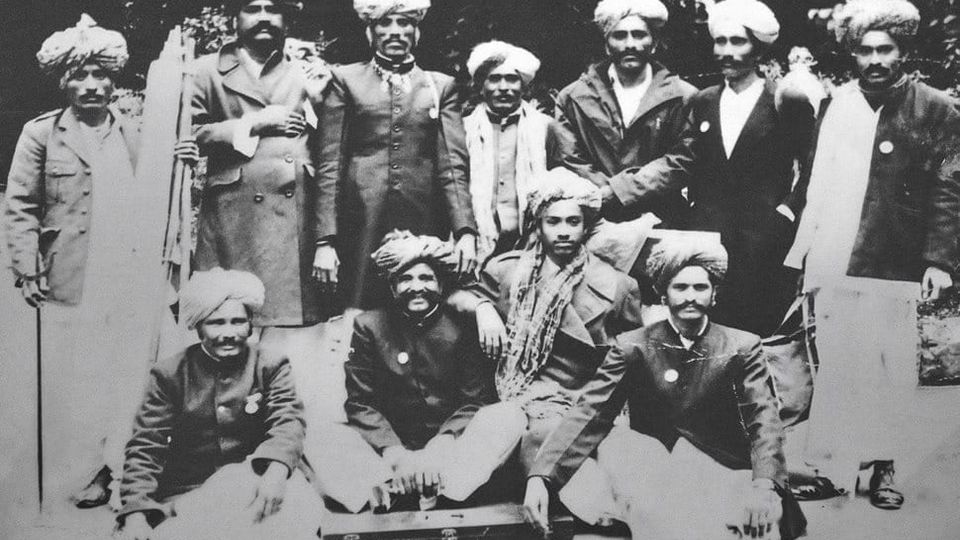 Folk musicKesariya Balam — the songs of the ManganiyarsMaand singing from the Thar, the hum of the kamaicha and the clack of the khartal.5 scenes · with music · ♥ 11
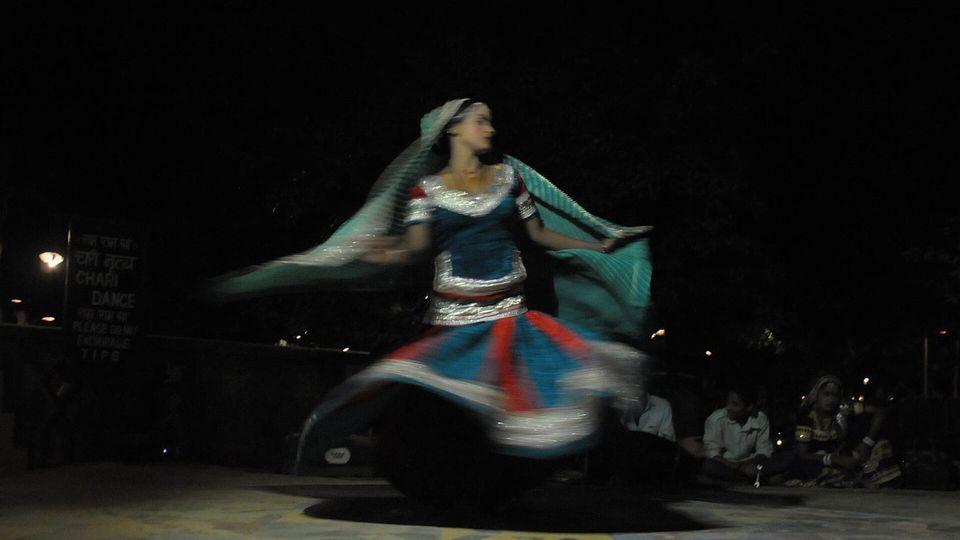 Folk danceGhoomar — the dance of the swirling skirtSwirling ghagras, flowing veils and clapping rhythms at Gangaur, Teej and weddings.3 scenes · with music · ♥ 13
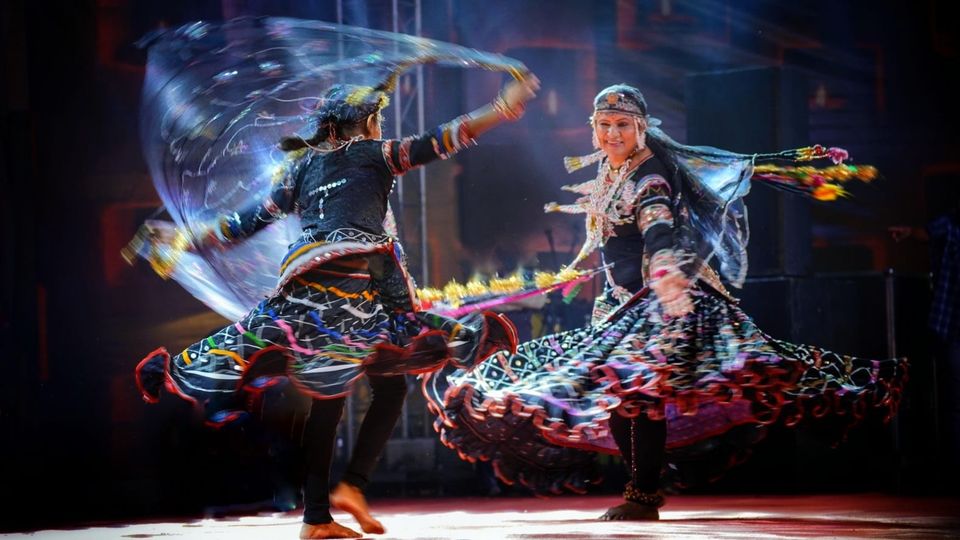 Folk danceKalbeliya — the serpent dance, a UNESCO heritageBodies sway like serpents to the pungi; on UNESCO’s intangible heritage list since 2010.4 scenes · with music · ♥ 1
 PaintingPhad and Ravanahatha — a story that travelsThrough the night, the bhopa and bhopi sing the epic of folk deities before the phad, to the ravanahatha.4 scenes · with music · ♥ 5
Photos: Original: SVKMBFLY ; this edit: MPF / Wikimedia Commons (CC BY-SA 4.0)