Galtaji
Welcome to the visual story of Galtaji, a sacred site in Rajasthan.
TIMES of RAJASTHAN · DARSHAN
Galtaji
Welcome to the visual story of Galtaji, a sacred site in Rajasthan.
In detail
Galtaji is an ancient Hindu pilgrimage site located approximately 10 km east of Jaipur in Rajasthan, featuring temples built into a narrow crevice, a natural spring that fills sacred kunds, and a hilltop temple offering panoramic views of Jaipur.
Overview
Galtaji is an ancient Hindu pilgrimage site located approximately 10 km east of Jaipur, in the Indian state of Rajasthan. The site consists of a series of temples built into a narrow crevice in the ring of hills surrounding Jaipur.
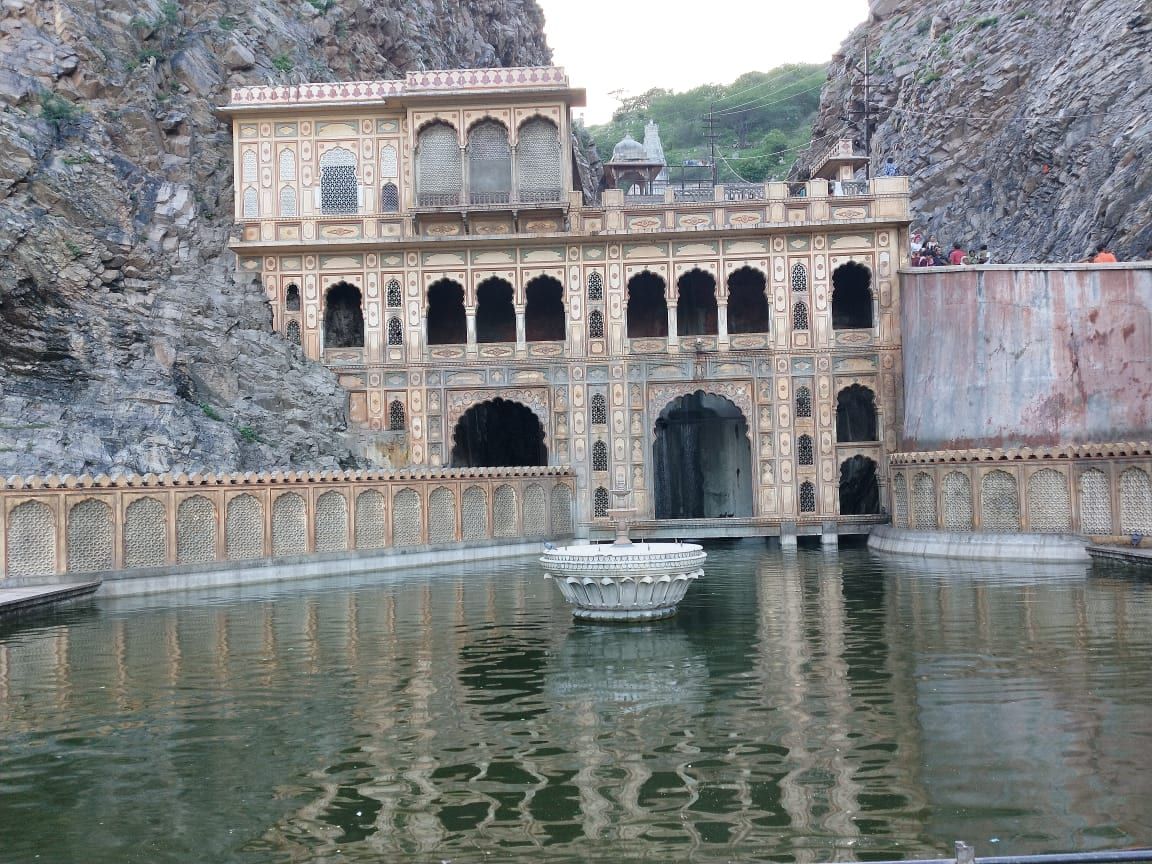
A natural spring emerges high on the hill and flows downward, filling a series of sacred kunds (water tanks) in which pilgrims bathe. Visitors can ascend the crevasse, continuing past the highest water pool to a hilltop temple, where panoramic views of Jaipur and its fortifications can be seen.
It is believed that a saint named Galav lived here, practiced meditation, and performed penance (tapasya).
History and origins
Galtaji is situated in the Aravalli Hills, about 10 km east of Jaipur, Rajasthan. The site is an important pilgrimage destination, not only due to its spiritual significance but also because of its historical and cultural relevance.
Over the centuries, the temple complex has become a hub for asceticism and spiritual practices, particularly for followers of the Vaishnava Ramananda sect.
What it is like
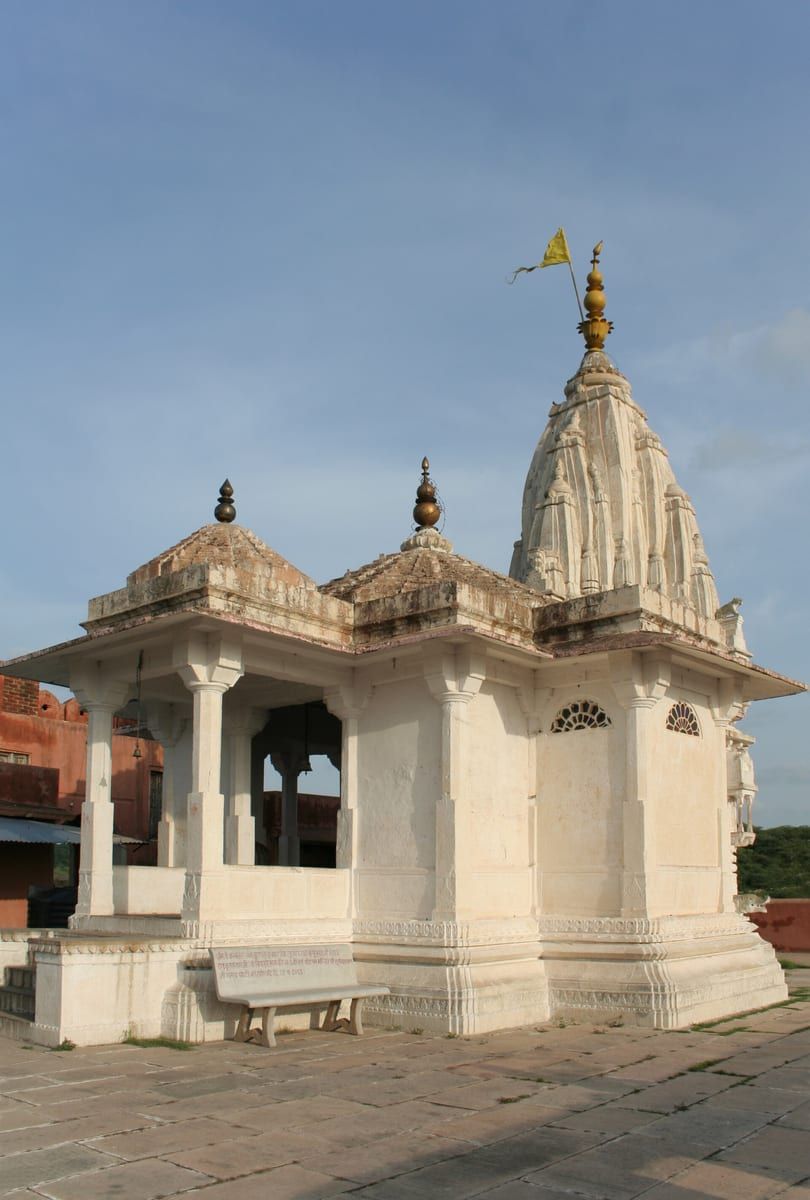
The Galtaji temple complex is built from pink sandstone, giving it a distinctive appearance that has been described as resembling a palace rather than a traditional temple. Its architecture blends traditional Rajasthani and Mughal styles, featuring pavilions topped with rounded roofs, intricately carved stone pillars, and colorful frescoes. The temples are arranged around a natural spring and the sacred kunds, or water tanks, which play a central role in the complex’s design.
The architectural elements of Galtaji are integrated seamlessly into the surrounding landscape. This integration enhances both the spiritual atmosphere and the aesthetic experience for visitors, allowing the natural setting to complement the man‑made structures.
The complex is also known colloquially as Galwar Bagh because of the large population of rhesus macaques that inhabit the area. These monkeys have become an integral part of the temple’s ecosystem and are frequently seen around the temples. Their presence has been highlighted in National Geographic’s "Rebel Monkeys" series and in the "Thar Desert - Sacred Sand" episode of Wildest India.
Based on: the Wikipedia article (CC BY-SA 4.0) — facts from that source; edited and translated by Times of Rajasthan.
More visual stories
 Folk musicKesariya Balam — the songs of the ManganiyarsMaand singing from the Thar, the hum of the kamaicha and the clack of the khartal.5 scenes · with music · ♥ 11
 Folk danceGhoomar — the dance of the swirling skirtSwirling ghagras, flowing veils and clapping rhythms at Gangaur, Teej and weddings.3 scenes · with music · ♥ 13
 Folk danceKalbeliya — the serpent dance, a UNESCO heritageBodies sway like serpents to the pungi; on UNESCO’s intangible heritage list since 2010.4 scenes · with music · ♥ 1
 PaintingPhad and Ravanahatha — a story that travelsThrough the night, the bhopa and bhopi sing the epic of folk deities before the phad, to the ravanahatha.4 scenes · with music · ♥ 5
Photos: Yann Forget , retouched by ApolloWissen / Wikimedia Commons (CC BY-SA 4.0) · Aryanb167 / Wikimedia Commons (CC BY-SA 4.0)