Gagron Fort
Welcome to the visual story of Gagron Fort.
TIMES of RAJASTHAN · DARSHAN
Gagron Fort
Welcome to the visual story of Gagron Fort.
In detail
Gagron Fort is a hill and water fort located 5 km from Jhalawar city in Rajasthan's Hadoti region, founded by Raja Madho Bhil and later controlled by Bijaldev Singh Dod, Sher Shah, and Akbar. It sits at the confluence of the Ahu and Kali Sindh rivers, surrounded by water on three sides, earning it the name Jaladurg, and was declared a UNESCO World Heritage Site in 2013 as part of the Hill Forts of Rajasthan.
Overview
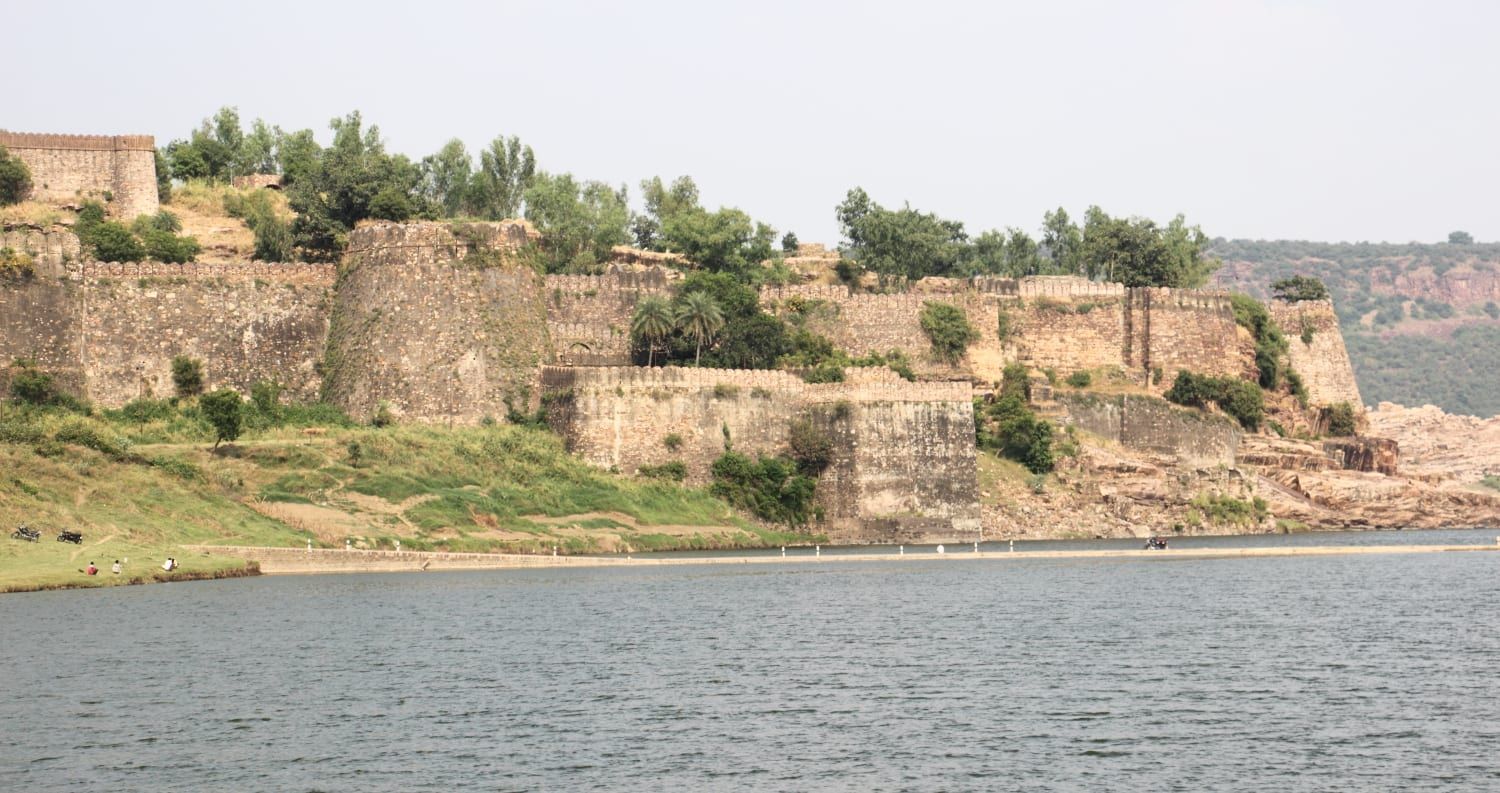
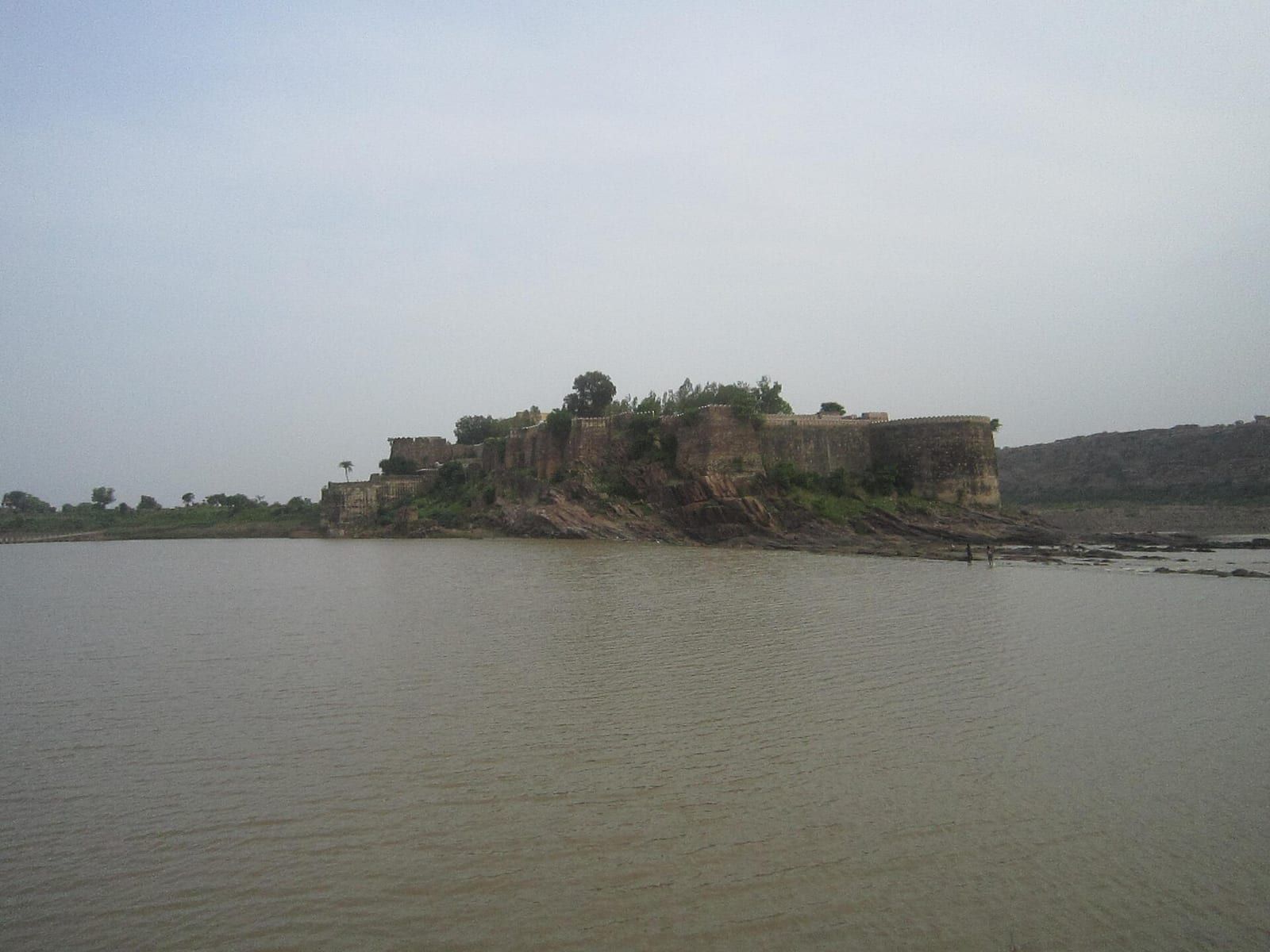
Gagron Fort is a hill and water fort located in Jhalawar district of Rajasthan, in the Hadoti region of India. The fort lies just five kilometres from Jhalawar city, the district headquarters, and is built on the confluence of the Ahu River and the Kali Sindh River.
The foundation of the fort was laid by Raja Madho Bhil. In the twelfth century it came under the control of Bijaldev Singh Dod, a Panwar Rajput king. Subsequently, the fort was also controlled by Sher Shah and Akbar.
The fort’s strategic position is highlighted by its surrounding waters: it is encircled by water on three sides and has a moat on the fourth side, which earned it the name Jaladurg, meaning Water Fort.
In 2013, at the 37th session of the World Heritage Committee in Phnom Penh, Cambodia, Gagron Fort was declared a UNESCO World Heritage Site as part of the Hill Forts in Rajasthan, alongside five other forts in the state.
History and origins
Gagron fort was constructed during the twelfth century by the King Bijaldev Singh Dod a Parmar Rajput. The exact date of construction remains a mystery, but historians estimate that parts of the fort were built between the seventh and fourteenth centuries. The fort was ruled by the Khinchi kingdom for 300 years, with the last ruler reported to be King Achal Das Khinchi.
Over the centuries, the Muslim rulers of Malwa attacked Gagron Fort. Sultan Hoshang Shah attacked the fort in 1423 with an army that included 30,000 horsemen and 84 elephant riders. Achal Das Khinchi, realizing that defeat was inevitable due to the Sultan's superior numbers and higher grade weapons, did not surrender and fought until he lost his life in accordance with the Rajput tradition. Many women committed jauhar, burning themselves alive to avoid capture by the Sultan's forces.
The fort has reportedly seen 14 battles and 2 jauhars of queens. It was also conquered by Sher Shah and Akbar. Akbar reportedly made the fort a headquarters and later gave it to Prathviraj of Bikaner as part of his estate.
What it is like
Gagron Fort is uniquely positioned on the confluence of the Ahu River and the Kali Sindh River, with water surrounding it on three sides and a moat on the fourth. The fort’s foundations are the mountain itself, part of the Mukundara Hills of the Vindhya Range, and its towers blend seamlessly with the surrounding hills.
Unlike many traditional forts that feature two ramparts, Gagron Fort boasts three. It also has two main entrances: one faces the river and the other opens onto the hilly road.
Within the fort complex are several notable structures, including Ganesh Pol, Nakkarkhana, Bhairavi Pol, Kishan Pole, Selekhana, Dewan-i-Aam, Diwan-e-Khas, Janaana Mahal, Madhusudan Mandir, and Rang Mahal.
The fort is the only fort in North India surrounded by water, earning it the name Jaladurga, or Water Fort. Just outside the fort lies a mausoleum of the Sufi Saint Mitthe Shah, which hosts an annual colourful fair during Muharram. Across the confluence, a monastery of Saint Pipaji can also be found.
Based on: the Wikipedia article (CC BY-SA 4.0) — facts from that source; edited and translated by Times of Rajasthan.
More visual stories
 Folk musicKesariya Balam — the songs of the ManganiyarsMaand singing from the Thar, the hum of the kamaicha and the clack of the khartal.5 scenes · with music · ♥ 11
 Folk danceGhoomar — the dance of the swirling skirtSwirling ghagras, flowing veils and clapping rhythms at Gangaur, Teej and weddings.3 scenes · with music · ♥ 13
 Folk danceKalbeliya — the serpent dance, a UNESCO heritageBodies sway like serpents to the pungi; on UNESCO’s intangible heritage list since 2010.4 scenes · with music · ♥ 1
 PaintingPhad and Ravanahatha — a story that travelsThrough the night, the bhopa and bhopi sing the epic of folk deities before the phad, to the ravanahatha.4 scenes · with music · ♥ 5
Photos: Ravikrishnan A K / Wikimedia Commons (CC BY-SA 4.0) · Siddharth 36 / Wikimedia Commons (CC BY-SA 3.0)