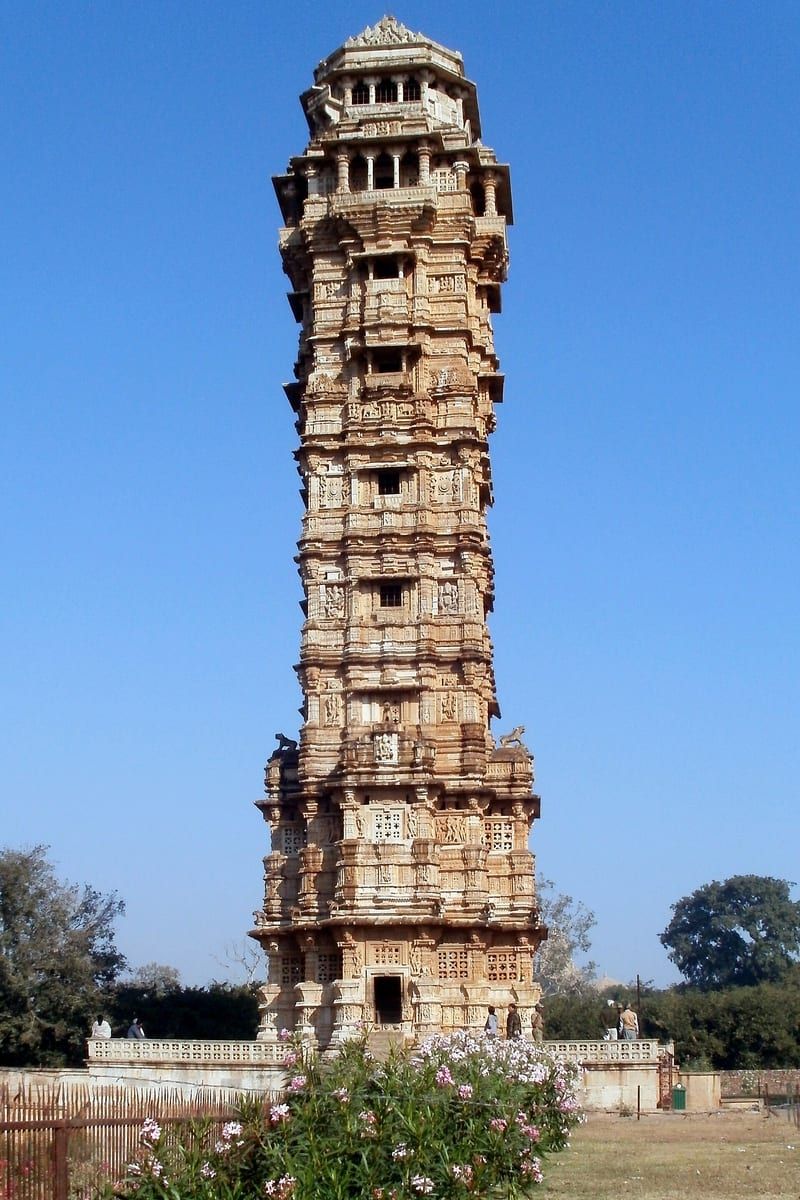
Chittorgarh Darshan — Chittorgarh Fort, Vijay Stambh
Chittorgarh district in Rajasthan is a vibrant blend of history and culture, showcasing forts, pillars and devotional spirit.
TIMES of RAJASTHAN · DARSHAN
Chittorgarh Darshan — Chittorgarh Fort, Vijay Stambh
Chittorgarh district in Rajasthan is a vibrant blend of history and culture, showcasing forts, pillars and devotional spirit.
In detail
Chittorgarh district, established on 1 August 1948, is one of Rajasthan’s 41 districts with its headquarters in the historic city of Chittorgarh. The district is noted for the Chittor Fort and receives development funds under the Backward Regions Grant Fund Programme.
Overview
Chittorgarh district, one of Rajasthan’s 41 districts in western India, was created on 1 August 1948 by merging territories from the former princely states of Mewar, Pratabgarh, Tonk and Jhalawar. Its administrative centre is the historic city of Chittorgarh, which serves as the district’s headquarters.
The city of Chittorgarh lies on the banks of the Berach River, a tributary of the Banas, and also on the Gambhiri River. Historically it was a major stronghold of the Rajput state of Medapata, known today as Mewar, and it has long been a focal point of regional power.
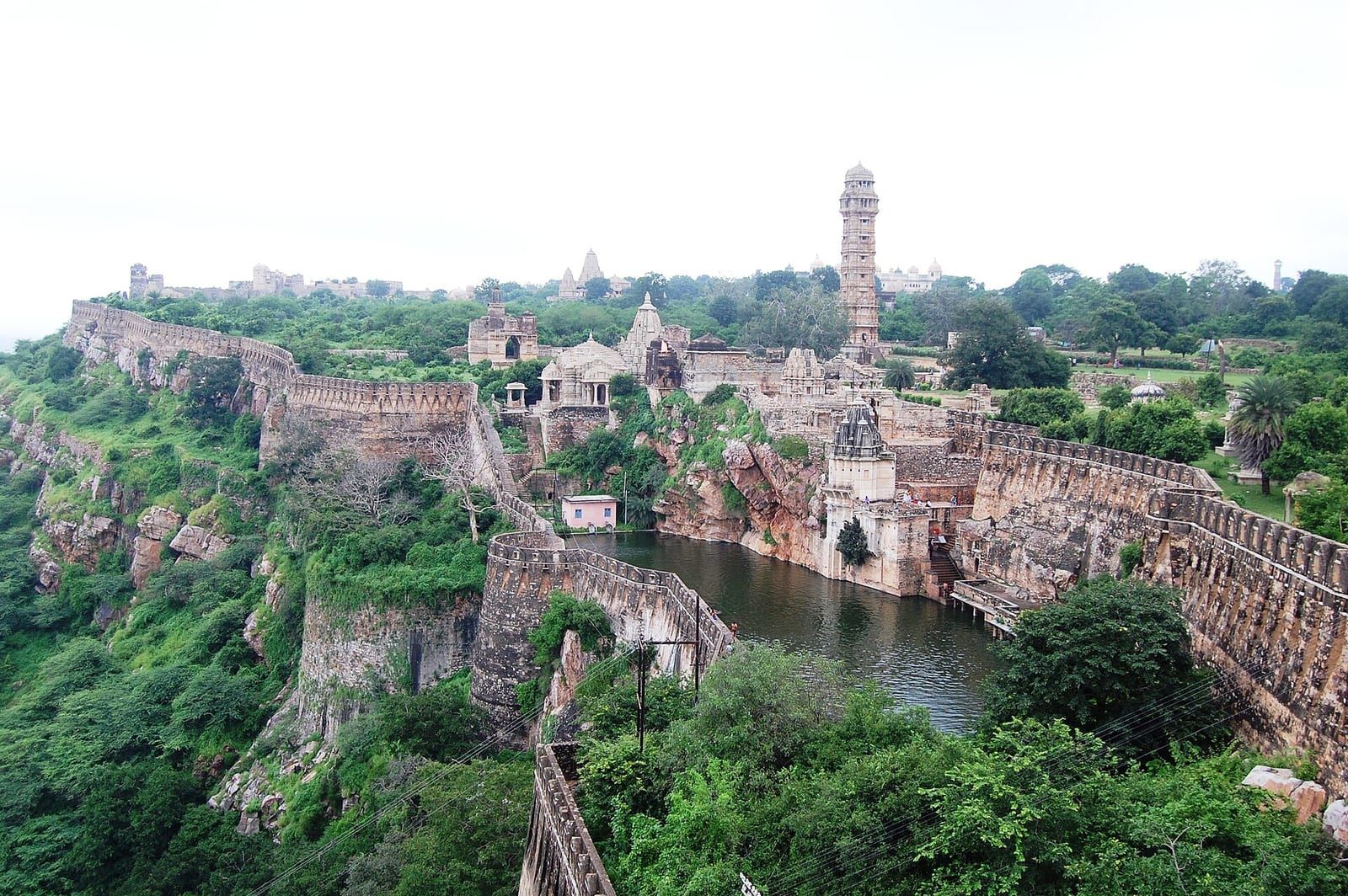
Dominating the landscape, the Chittor Fort is one of the largest forts in India and Asia. The fort endured three major sackings: first by Alauddin Khalji in 1303, then by Bahadur Shah of Gujarat in 1535, and finally by the Mughal emperor Akbar in 1568. The fort’s legacy is intertwined with the cultural memory of the region, including the veneration of the poet‑saint Meera, and the stories of figures such as Panna Dai and Rani Padmini.
History
Chittor has a history going back several centuries. It was an ancient centre of Jain tradition. Chittor is adjacent to the ancient city of Madhyamika. The Jain inscriptions at Mathura from the Kushana period (1st–3rd centuries CE) mention a "Majjhimilla" branch of the "Kottiya" gana, indicating that it was a major Jain centre. The famous Acharya Haribhadra Suri (6th century CE) was born in Chittor and wrote "Dhurtopakhyana" there.
Originally called Chitrakuta, the Chittor Fort is said to have been built in the 7th century by Chitranga, a Mori king. The Guhila (Gahlot) ruler Bappa Rawal is said to have captured the fort in either 728 CE or 734 CE. However, some historians doubt the historicity of this legend, arguing that the Guhilas did not control Chittor before the reign of the later ruler Allata.
Between 1251 and 1258, Balban repeatedly led troops to Chittor fort. Under the orders of Alauddin Khilji, Ulugh Khan laid siege to Ranthambore, Chittor and Bundi forts. In 1303, the Delhi Sultanate ruler Alauddin Khilji defeated the Guhila king Ratnasimha, and captured the fort. The fort was later captured by Hammir Singh, a king of the Sisodia branch of the Guhilas. Chittor gained prominence during the period of his successors, which included Rana Kumbha and Rana Sanga.
In 1535, Bahadur Shah of Gujarat besieged and conquered the fort. However, Bahadur Shah was not able to hold Chittor for long, and the Sisodias captured it within a short time of his departure. In 1567–68, the Mughal emperor Akbar besieged and captured the fort. In 1615, as part of a peace treaty between Akbar's successor Jahangir and the Maharana of Mewar, Amar Singh I, Mewar accepted Mughal suzerainty and the fort as well as the areas surrounding Chittorgarh were given to Mewar. However, due to the military danger presented by the fort, it was never to be fortified or even repaired.
The Maasir-i-Alamgiri, written by Saqi Must'ad Khan under Mughal patronage, chronicles the reign of Aurangzeb and records that on February 22, 1680 (1st Safar, 1091 AH), the emperor ordered the destruction of 63 Hindu temples in and around the city of Chittorgarh.
Geography and climate
Chittorgarh district lies in southern Rajasthan at coordinates 24.88°N 74.63°E and sits at an average elevation of 394 metres. The district covers an area of 350.8 square kilometres, which represents 3.17 per cent of the state’s total area.
The climate of Chittorgarh is classified as a tropical savanna climate (Köppen Aw). It also displays characteristics of a humid subtropical climate (Köppen Cwa). The region is just shy of being classified as semi‑arid (Köppen BSh). Most of the district’s rainfall is concentrated in the summer monsoon season, with very little precipitation during the rest of the year.
People and languages
The 2011 census records a population of 1,544,338 in Chittorgarh district, a figure comparable to the nation of Gabon or the U.S. state of Hawaii, placing the district 323rd in rank among India’s 640 districts. The area supports a density of 193 inhabitants per square kilometre, and the decade from 2001 to 2011 saw a growth rate of 16.09 percent.
The sex ratio stands at 970 females for every 1,000 males, while the overall literacy rate is 62.51 percent. Urban residents account for 18.47 percent of the total population. Scheduled Castes and Scheduled Tribes comprise 16.20 percent and 13.05 percent of the district’s inhabitants, respectively.
Language use in Chittorgarh is predominantly Mewari, spoken as a first language by 67.88 percent of residents. Rajasthani follows as the second most common first language at 15.52 percent, and Hindi is spoken by 13.86 percent of the population. These linguistic figures reflect the cultural diversity present within the district.
Economy and agriculture
Chittorgarh district is classified as one of India’s most backward districts, a status that was formally recognized in 2006 when the Ministry of Panchayati Raj listed it among the 250 most underdeveloped districts out of 640 nationwide. The district therefore receives financial assistance through the Backward Regions Grant Fund Programme, which aims to address regional disparities.
The city’s industrial landscape is diverse and largely concentrated in a few key sectors. In the northern part of the city, the Chanderiya Lead‑Zinc Smelter stands out as one of the world’s largest zinc‑lead smelting complexes. Its production capacity is 610,000 tonnes per annum, split between 525,000 tonnes of zinc and 85,000 tonnes of lead. In the fiscal year ending March 2013, the smelter produced 443,000 MT of zinc and 60,000 MT of lead, supplying special high‑grade zinc, continuous galvanising grade zinc, prime western zinc, and pure lead, along with by‑products such as silver and cadmium.
The southern industrial zone, accessed via Indore road (Nimbahera road), hosts several major cement manufacturers. Companies such as the Aditya Birla group, Ultratech Cement, Wonder Cement by the RK group, JK Lakshmi Cement, and Lafarge Cement operate large plants in this area. Additionally, the Birla Cement Works of the MP Birla group, located in the northern part of the city, is among the country’s biggest cement facilities.
Marble production is another significant pillar of Chittorgarh’s economy. The district is the second largest marble hub in Rajasthan after Kishangarh, with extensive production, finishing, and export operations. RIICO Industrial Areas on the bypass road and in Chanderiya house large marble complexes that process a variety of stones, including onyx, Italian marble, Kota stone, and the renowned white marble of Rajasthan. Manpura mines also contribute to the district’s mining output.
In recent years, the Soniyana textile industrial area has emerged as a new development in the far north of the city, reflecting the district’s ongoing diversification of industrial activities.
Culture, fairs and places to see
The annual celebration of Maharana Pratap Jayanti, observed on the third day of the Jyestha Shukla phase, marks the birth anniversary of Maharana Pratap, who was born on 9 May 1540 in Kumbhalgarh. The festival features special puja and processions, and cultural programmes such as debates are organized in his remembrance.
Rang Teras, a tribal fair of Mewar, is celebrated on the 13th night of the month of Chaitra. Since the 15th century, the fair has gathered tribes to rejoice in the wheat harvest, serving as a thanksgiving festival for farmers who honour Mother Earth for providing food each year.
The Chittor Fort, situated on a 180‑metre hill and covering 700 acres, was constructed by the Mauryans in the 7th century CE, with some belief attributing its construction to Bhima of the Pancha Pandavas. The fort served as the citadel for many Rajput warriors, including Gora, Badal, Rana Kumbha, Maharana Pratap, Jaimal, and Patta.
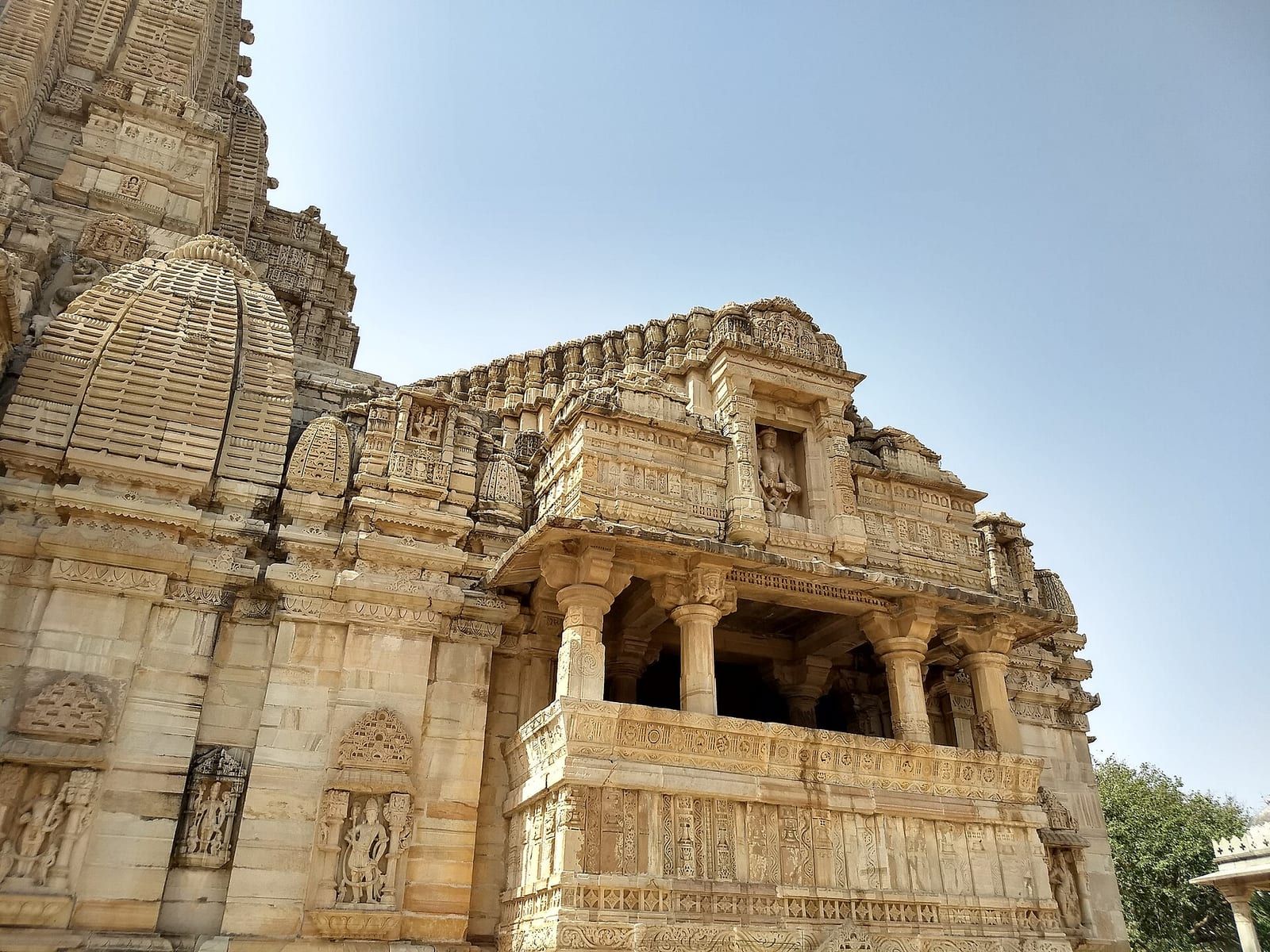
Architectural features of the fort include towers, reservoirs, and other elements that reflect its historical significance.
Kalika Mata Temple, originally built in the 8th century for the Sun God Surya and later converted in the 14th century to a temple for the mother Goddess Kali, hosts fairs during Navaratri. Pilgrims from various places visit the temple during these festival days to pay obeisance.
Education and transport
Mewar University, established in 2009, is the primary higher education institution in Chittorgarh district. The university offers a range of undergraduate and postgraduate programmes across various disciplines, contributing to the intellectual growth of the region.
The district benefits from a robust transport network that facilitates movement of people and goods. The completed Golden Quadrilateral highway system passes through Chittorgarh, linking it to most parts of India. The East‑West Corridor (Express Highway) also crosses the district, and Chittorgarh is situated on National Highway No. 27 and 79. National Highway 27 connects to Kota and Udaipur with a two‑hour drive, while National Highway 48 links to Bhilwara and Ajmer.
Chittorgarh is also connected to Indore via a four‑lane highway that takes about five hours, enabling easy access to the business hub of Indore through NH56 and then SH156. This route provides connections with Neemuch, Mandsaur, and Ratlam. The district hosts Southeast Asia’s largest highway exchange, known as the Diamond crossing or Reethola Chauraha, which further enhances road connectivity.
Rail connectivity is strong, with Chittaurgarh Junction serving as a busy and important junction of the Western Railway of Indian Railways, Ratlam Division. It offers direct rail links to major Indian cities such as Ajmer, Udaipur, Jaipur, Jodhpur, Agra, Delhi, Mumbai, Hyderabad, Kolkata, Pune, Chennai, and many others. Daily trains to Indore (Veerbhumi Express) and new connections to Ahmedabad are significant routes, and the city also enjoys services from the Vande Bharat Express. A second suburban station at Chanderiya helps decongest traffic at the main junction.
The district’s bus network is well developed, with the bus stand located between the old and new cities. Private and state‑owned buses provide services to Delhi, Mumbai, Ahmedabad, Ajmer, Bundi, Kota, Udaipur, and other major cities. Rajasthan Roadways (RSRTC) operates services to surrounding areas, including premier services such as the Pink Line, Silver Line, and Sleeper Coaches (Grey Line).
Air connectivity is available through the nearest airport, Udaipur’s Dabok Airport, situated 70 kilometres from Chittorgarh and offering daily flights from New Delhi, Jaipur, Jodhpur, Ahmedabad, Chennai, and Mumbai. The district also has a small airport at Ondawa, which serves defence and chartered flights, and a helipad at the reserve police lines for emergency and official use.
Based on: the Wikipedia article (CC BY-SA 4.0) — facts from that source; edited and translated by Times of Rajasthan.
More visual stories
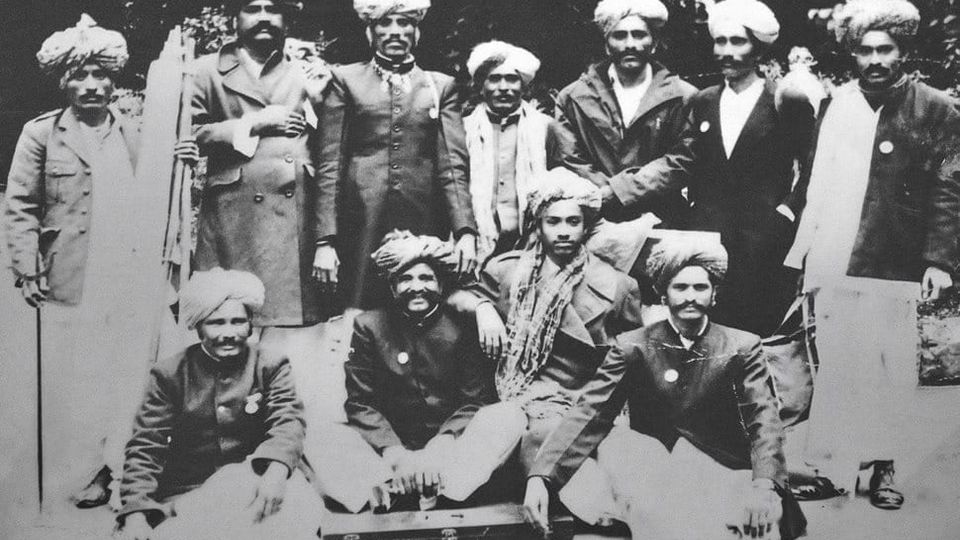 Folk musicKesariya Balam — the songs of the ManganiyarsMaand singing from the Thar, the hum of the kamaicha and the clack of the khartal.5 scenes · with music · ♥ 11
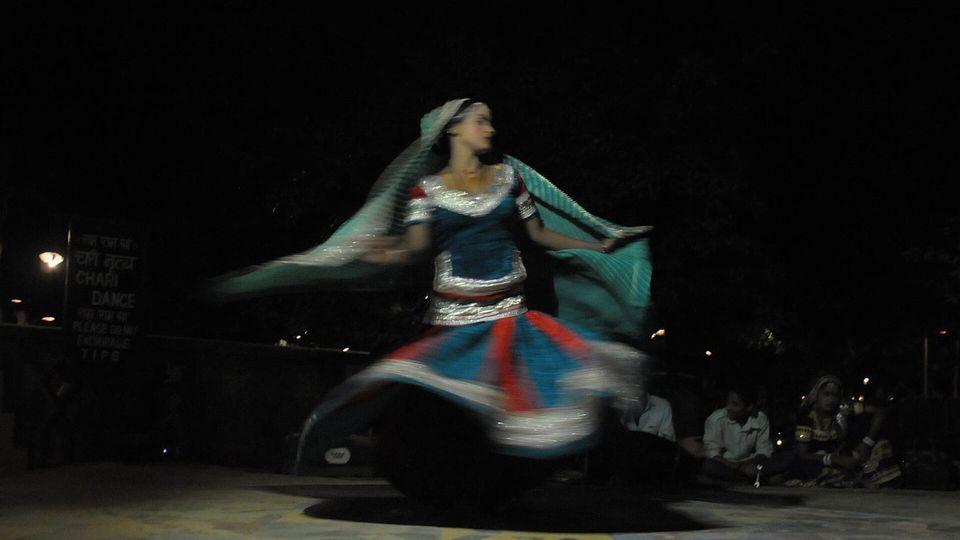 Folk danceGhoomar — the dance of the swirling skirtSwirling ghagras, flowing veils and clapping rhythms at Gangaur, Teej and weddings.3 scenes · with music · ♥ 13
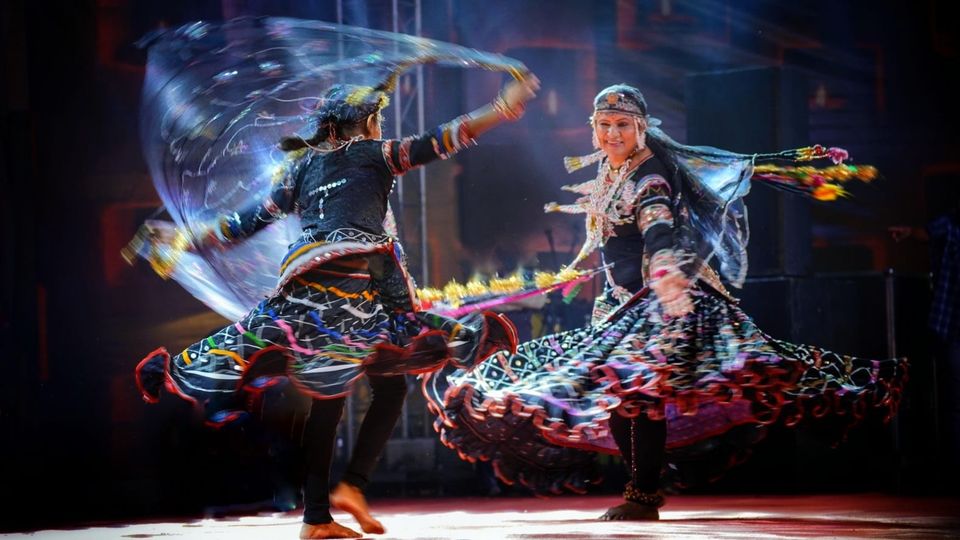 Folk danceKalbeliya — the serpent dance, a UNESCO heritageBodies sway like serpents to the pungi; on UNESCO’s intangible heritage list since 2010.4 scenes · with music · ♥ 1
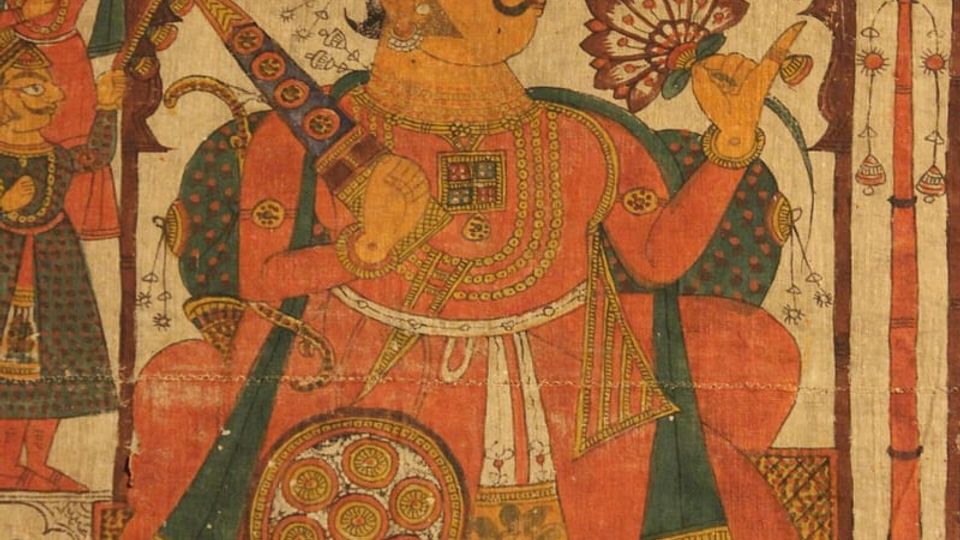 PaintingPhad and Ravanahatha — a story that travelsThrough the night, the bhopa and bhopi sing the epic of folk deities before the phad, to the ravanahatha.4 scenes · with music · ♥ 5
Photos: Ssjoshi111 / Wikimedia Commons (CC BY-SA 3.0) · Ratnesh1948 / Wikimedia Commons (CC BY-SA 4.0) · Hrsh bhardwaj / Wikimedia Commons (CC BY-SA 4.0)