Bhilwara Darshan — Textile city, Phad painting
Bhilwara is a vibrant district in Rajasthan where tradition and industry walk side by side.
TIMES of RAJASTHAN · DARSHAN
Bhilwara Darshan — Textile city, Phad painting
Bhilwara is a vibrant district in Rajasthan where tradition and industry walk side by side.
In detail
Bhilwara district is a district of Rajasthan, India, with its headquarters in the city of Bhilwara. It has an area of 10,455 km² and a population of 2,408,523 as of the 2011 census.
History
Stone Age tools dating from roughly five thousand to two hundred thousand years ago have been discovered in the Bhilwala district, indicating very early human activity in the region. The earliest settlement that later became Bhilwara city is said to have originated in the mid‑11th century with the construction of a Krishna‑Radha temple, still standing today as the Bada Mandir, around which the area known as Purana Bhilwara (including Patwari Mohalla, Junawas, Manikya Nagar and Malikhera) developed.
Local tradition holds that the district’s name derives from a mint that once produced coins called “Bhiladi,” linking the name to the Bheel Adivasi tribe that, according to folklore, assisted Maharana Pratap in his struggle against the Mughal emperor Akbar. A further legend connects the region to the Mahabharata, claiming that the hero Arjuna fought there.
During the Mughal period, a nearby settlement called Mandal functioned as a military camp for Mughal forces after they captured Chittaurgarh. The remnants of this camp remain visible, and a watchtower erected on a small mound in Mandal has been converted into a Devi temple.
In more recent times Bhilwara has grown into a major urban centre of Rajasthan and is now widely recognised for its textile industry, earning it the nickname “textile city".
Geography and climate
Bhilwara district covers an area of 10,455 square kilometres and lies at a latitude of 25.359854° N and longitude of 74.652791° E. The district is situated at an average elevation of 421 metres (1,381 feet) above sea level and is bounded by Ajmer district to the north, Bundi district to the east, Chittorgarh district to the south and Rajsamand district to the west.
The region is traversed by several rivers, including the Banas, Bedach, Kothari, Khari, Mansi, Menali, Chandrabhaga and Nagdi, which contribute to its status as the most irrigated district in Rajasthan. Although there are no natural lakes, a number of ponds and dams have been constructed; the man‑made Mansarovar Jheel near Azad Nagar is a notable local attraction that draws visitors on weekends.
Transportation infrastructure includes the Jaipur‑Udaipur state highway and an 84‑kilometre broad‑gauge railway line linking Ajmer with Khandwa in Madhya Pradesh. The nearest airport is located in Udaipur, 171 kilometres away. While the source does not provide specific climate data, the district’s geography, elevation and extensive irrigation suggest a semi‑arid environment typical of the broader Rajasthan region.
People and languages
The 2011 census recorded a population of 2,408,523 for Bhilwana district, with a sex ratio of 969 females per 1,000 males and a literacy rate of 62.71 per cent. Urban residents comprised 21.28 per cent of the total, while Scheduled Castes and Scheduled Tribes accounted for 16.94 and 9.52 per cent respectively.\n\nLanguage use in the district reflects its cultural diversity. Over half of the population, 53.08 per cent, reported Rajasthani as their mother tongue, while 27.50 per cent spoke Mewari. Hindi was the first language for 15.00 per cent of residents and Marwari for 1.82 per cent.\n\nIn the municipal area of Bhilwara, the 2011 census listed 359,483 inhabitants across 74,184 households. The city’s literacy rate for people aged seven and above was 82.20 per cent, and the sex ratio stood at 922 females per 1,000 males. Scheduled Castes and Scheduled Tribes formed 13.27 and 1.25 per cent of the urban population respectively.\n\nLanguage preferences in the municipal corporation differed slightly from the district as a whole. Here, 52.58 per cent of respondents identified Hindi as their primary language, followed by 21.37 per cent for Mewari, 18.13 per cent for Rajasthani, 2.99 per cent for Marwari, 2.14 per cent for Urdu and 1.39 per cent for Sindhi.
Administration
The district of Bhilwara is divided into seven sub‑divisions: Bhilwara, Shahpura, Gangapur, Gulabpura, Asind, Mandalgarh and Jahazpur. These sub‑divisions form the primary administrative units for local governance.
Within the sub‑divisions there are twelve tehsils, as recorded in the Census of India 2011. The tehsils are Bhilwara, Banera, Mandal, Mandalgarh, Beejoliya, Kotri, Hurda, Shahpura, Jahazpur, Sahada, Asind and Raipur. Four sub‑tehsils are attached to specific tehsils: Bagor under Mandal, Badnor under Asind, Hamirgarh and Puliakalan under Shahpura.
According to the 2001 census, the district comprises 1,783 villages, which are administered through the tehsil and sub‑tehsil structure described above.
Economy and agriculture
Bhilwara district’s economy is dominated by its textile industry, which has earned the city the reputation of being the textile city of India. The sector comprises more than 850 manufacturing units in the town, and its primary product is synthetic fabric used in trousers. The industry traces its origins to 1938 when Mewar Textile Mills, a spinning and knitting company owned by industrialist Shri Sampatmal Lodha, was established. In 1961 Shri Laxmi Niwas Jhunjhunwala launched his first synthetic textile unit in Bhilwara, further expanding the local production capacity.
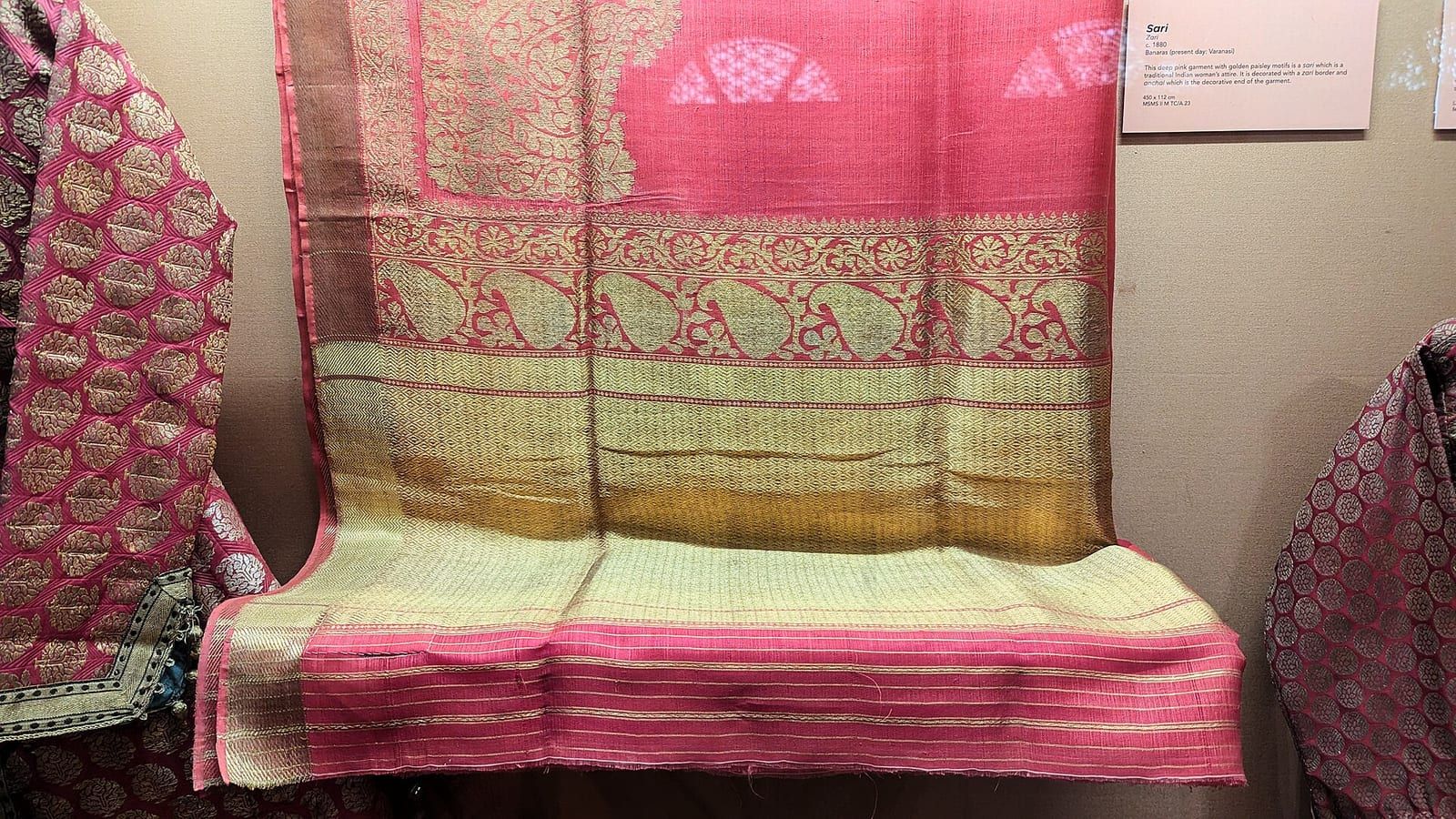
The textiles produced in Bhilwara are known for high quality and are exported to many countries worldwide. In addition to synthetic fabrics, the city also produces cotton, silk, and woolen fabrics, contributing to its diversified textile output and reinforcing its status as a major exporter of Indian textiles.
Beyond textiles, Bhilwara’s economy includes notable mining and agriculture activities. While the source does not detail the scale of these sectors, it acknowledges their presence alongside the dominant textile industry, indicating a broader economic base for the district.
Culture, fairs and places to see
Bhilwara district is noted for its contribution to Indian miniature art, highlighted by the work of Badri Lal Chitrakar, a great Indian miniature artist who has brought the city to international attention. His achievements have been recognised with several awards, including the Shilp Guru (Master Craftsperson) award presented by the vice‑president of India on 9 September 2006.
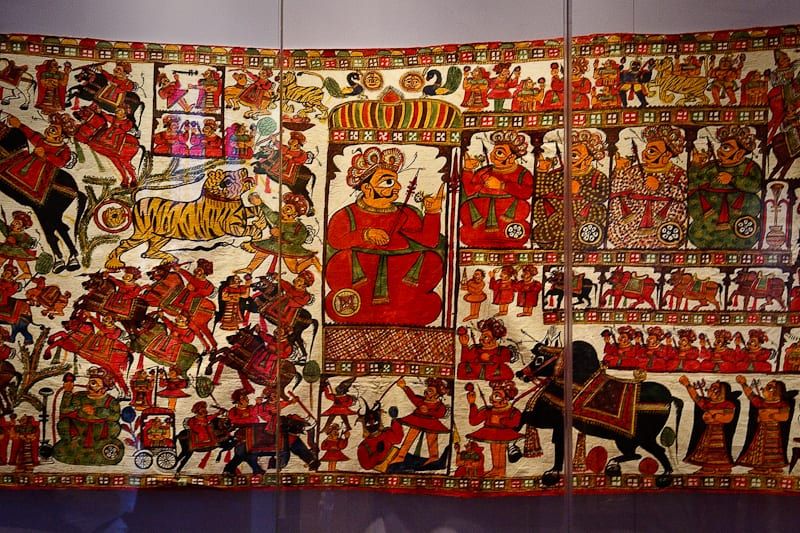
The district is also renowned for its traditional "Fad Paintings," a form of cloth art that depicts classic stories using naturally derived colours. The preservation and promotion of this art form have been significantly advanced by the Phad artist Shree Lal Joshi, whose efforts have helped bring Phad painting to a wider audience across India.
Among the notable attractions in Bhilwara are several historic and religious sites. The Badnore Fort and Sanganer Fort stand as reminders of the region’s architectural heritage, while the Harni Mahadev Temple and Joganiya Mata Temple serve as important places of worship. The Kyara Ke Balaji shrine and the Pur Udan Chatri also draw visitors seeking cultural and spiritual experiences.
Natural and recreational sites add to the district’s appeal. The Smriti Van and Mansarovar Lake provide green spaces for leisure, and the Meja Dam offers a scenic spot for visitors. Together, these cultural, religious, and natural landmarks illustrate the diverse attractions that Bhilwara district offers to residents and tourists alike.
Education and transport
Bhilwara district enjoys extensive road connectivity, with National Highway 48, part of the six‑lane Golden Quadrilateral, and National Highway 76, part of the four‑lane East‑West Corridor, traversing the area for a combined length of about 120 km. Additional highways such as NH 758 (Kota‑Ladpura‑Bhilwara‑Gangapur‑Rajsamand‑Udaipur) covering 146 km and NH 148D (Bhim‑Gulabpura‑Uniara) further link the district, while the total road network measured 3,883 km as of March 2000. A government bus depot in the city centre and numerous private operators provide regular services to major Rajasthan cities, including a 253‑km road link to the state capital Jaipur.
Rail transport is anchored by Bhilwara railway station, situated on a broad‑gauge line that connects the district to a wide array of destinations such as Ajmer, Jodhpur, Jaipur, Kota, Indore, Delhi, Kolkata, Mumbai and Hyderabad. Nearby junctions at Kota (160 km) and Ajmer (130 km) offer further connectivity to southern states and major northern cities like Delhi and Ahmedabad.
Air travel for Bhilwara residents relies on nearby airports: Dabok‑Udaipur airport lies 165 km away, roughly a 2.5‑hour drive, while Jaipur airport is 251 km distant, about four hours by road. A newer facility, Kishangarh Airport near Ajmer, is also accessible within approximately two hours.
In the field of education, Bhilwara hosts the autonomous MLV Textile and Engineering College, a government‑run institution offering engineering programmes including textile engineering, alongside the private Sangam University. The district also features Rajmata Vijaya Raje Scindia Medical College, providing medical education. Numerous schools, colleges, and coaching centres in the city prepare students for competitive examinations such as IIT‑JEE, NEET, and professional courses like CA, CS and CMA.
Based on: the Wikipedia article (CC BY-SA 4.0) — facts from that source; edited and translated by Times of Rajasthan.
More visual stories
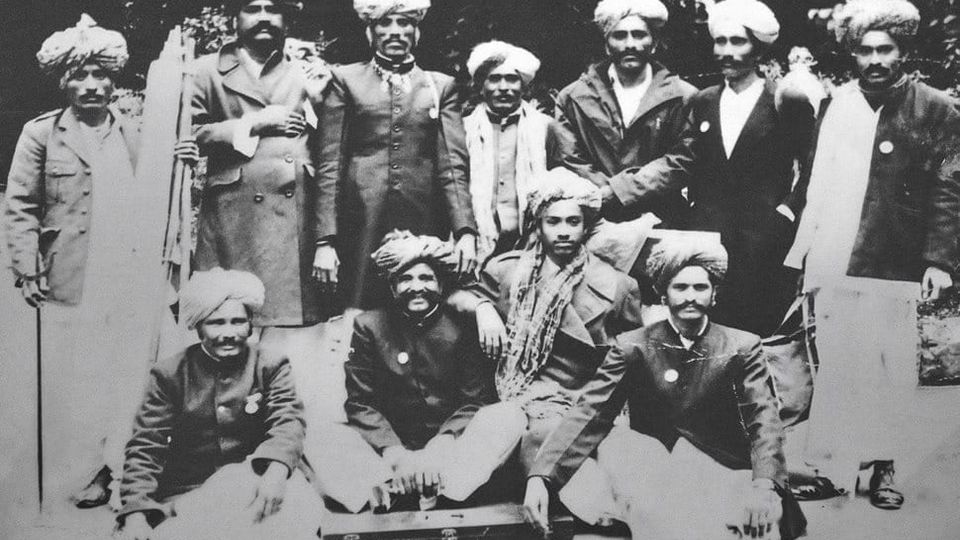 Folk musicKesariya Balam — the songs of the ManganiyarsMaand singing from the Thar, the hum of the kamaicha and the clack of the khartal.5 scenes · with music · ♥ 11
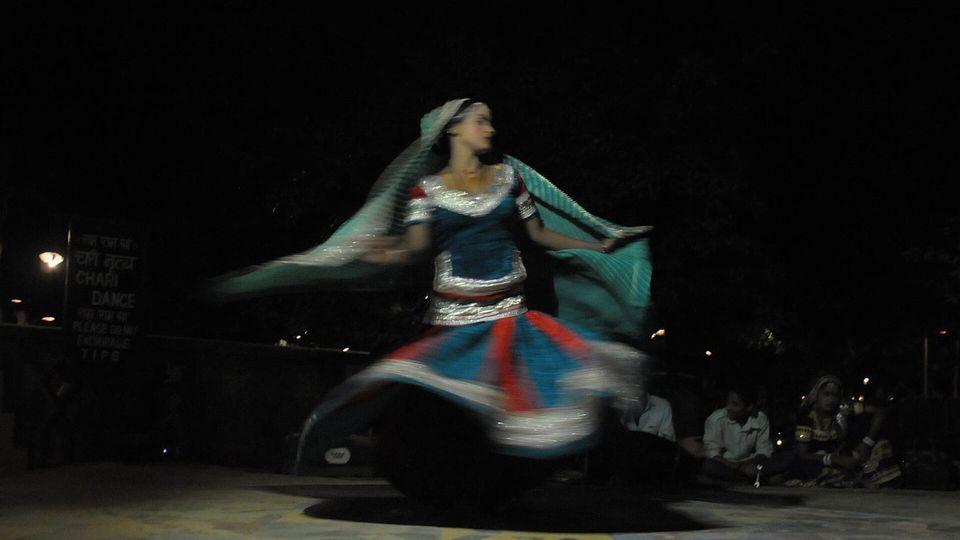 Folk danceGhoomar — the dance of the swirling skirtSwirling ghagras, flowing veils and clapping rhythms at Gangaur, Teej and weddings.3 scenes · with music · ♥ 13
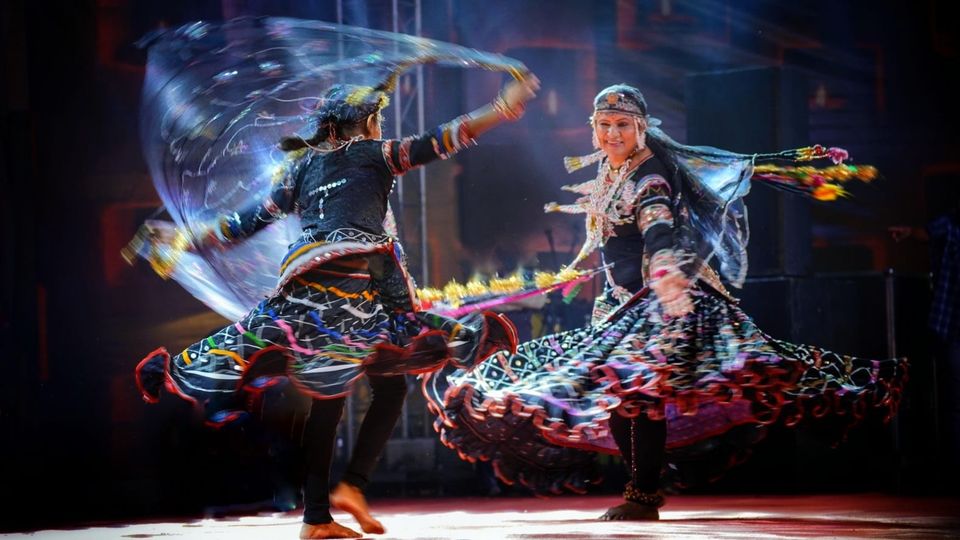 Folk danceKalbeliya — the serpent dance, a UNESCO heritageBodies sway like serpents to the pungi; on UNESCO’s intangible heritage list since 2010.4 scenes · with music · ♥ 1
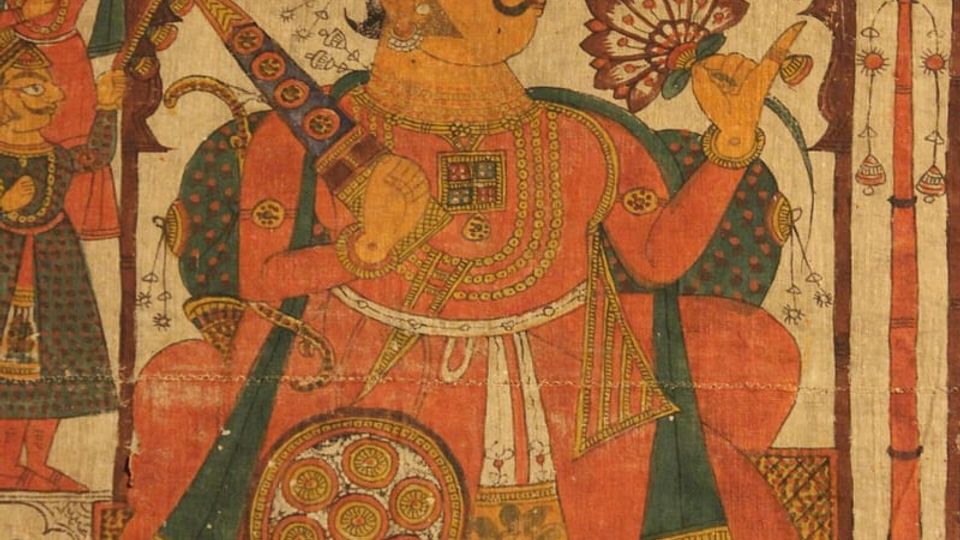 PaintingPhad and Ravanahatha — a story that travelsThrough the night, the bhopa and bhopi sing the epic of folk deities before the phad, to the ravanahatha.4 scenes · with music · ♥ 5
Photos: Sourabh.biswas003 / Wikimedia Commons (CC BY-SA 4.0) · MicheleLovesArt / Wikimedia Commons (CC BY-SA 2.0) · Ramlal jat / Wikimedia Commons (CC BY-SA 4.0)