Bandhej, Leheriya and block print — the craft of colour
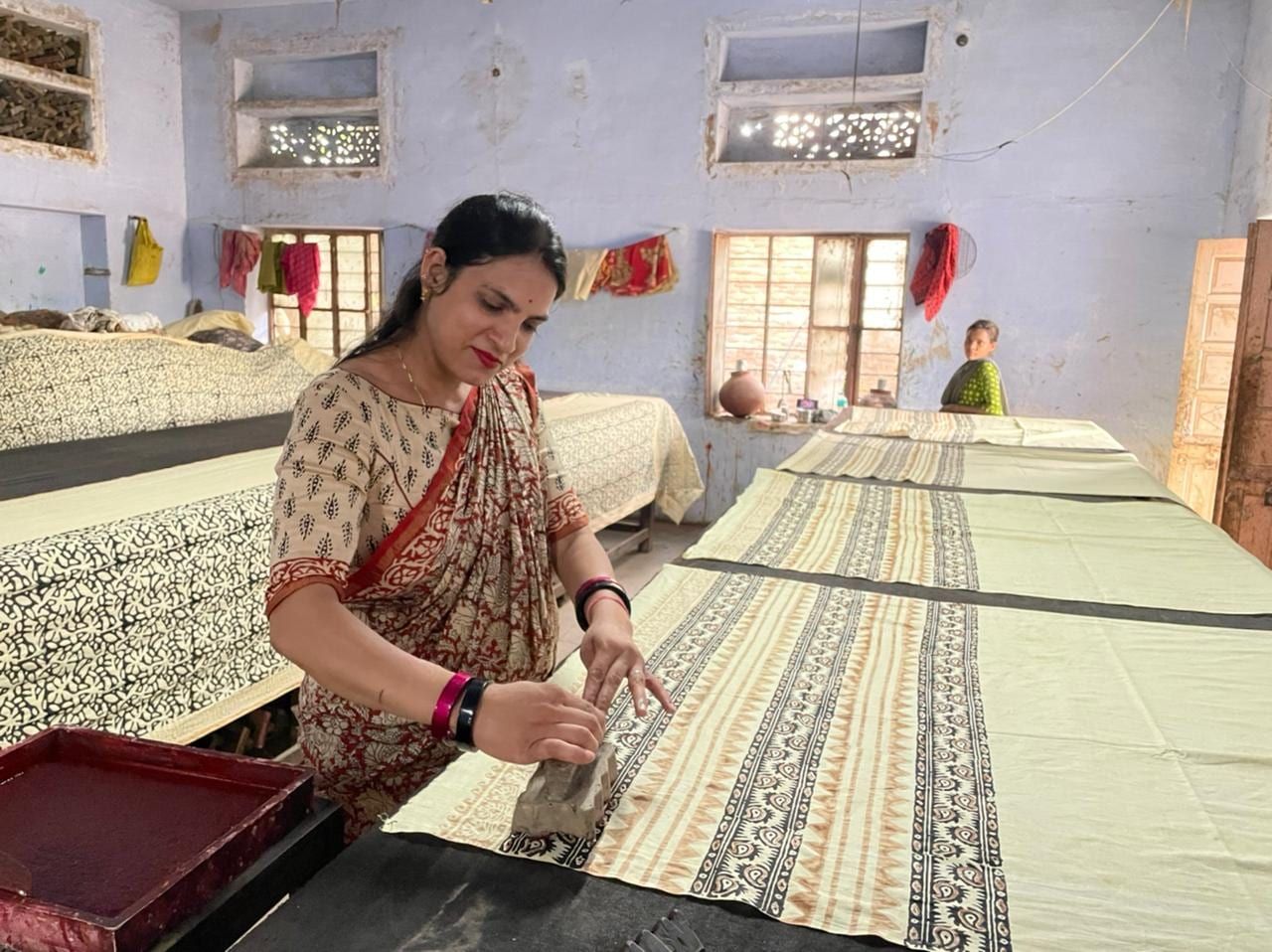
Bandhej patterns from thousands of knots, wave-like leheriya and the blocks of Sanganer and Bagru.
TIMES of RAJASTHAN · DARSHAN
Bandhej, Leheriya and block print — the craft of colour
Bandhej patterns from thousands of knots, wave-like leheriya and the blocks of Sanganer and Bagru.
In detail
Bandhej, also known as bandhani, is a traditional Indian tie‑dye textile crafted by pinching and tying tiny cloth portions to create intricate dot patterns before dyeing. It is predominantly produced in Rajasthan and Gujarat, with centers also in Sindh and Tamil Nadu, and uses various tying techniques and product names.
Overview
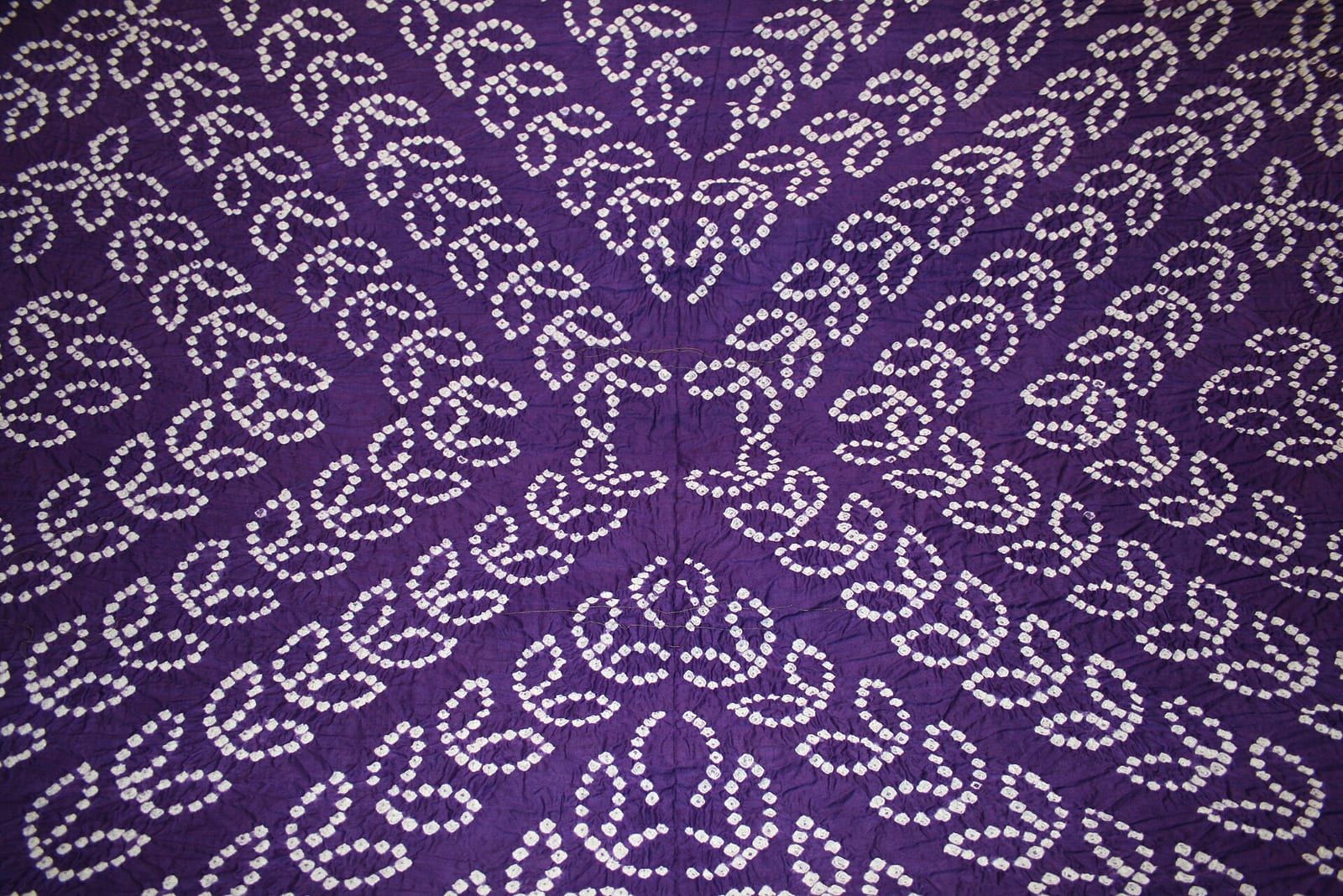
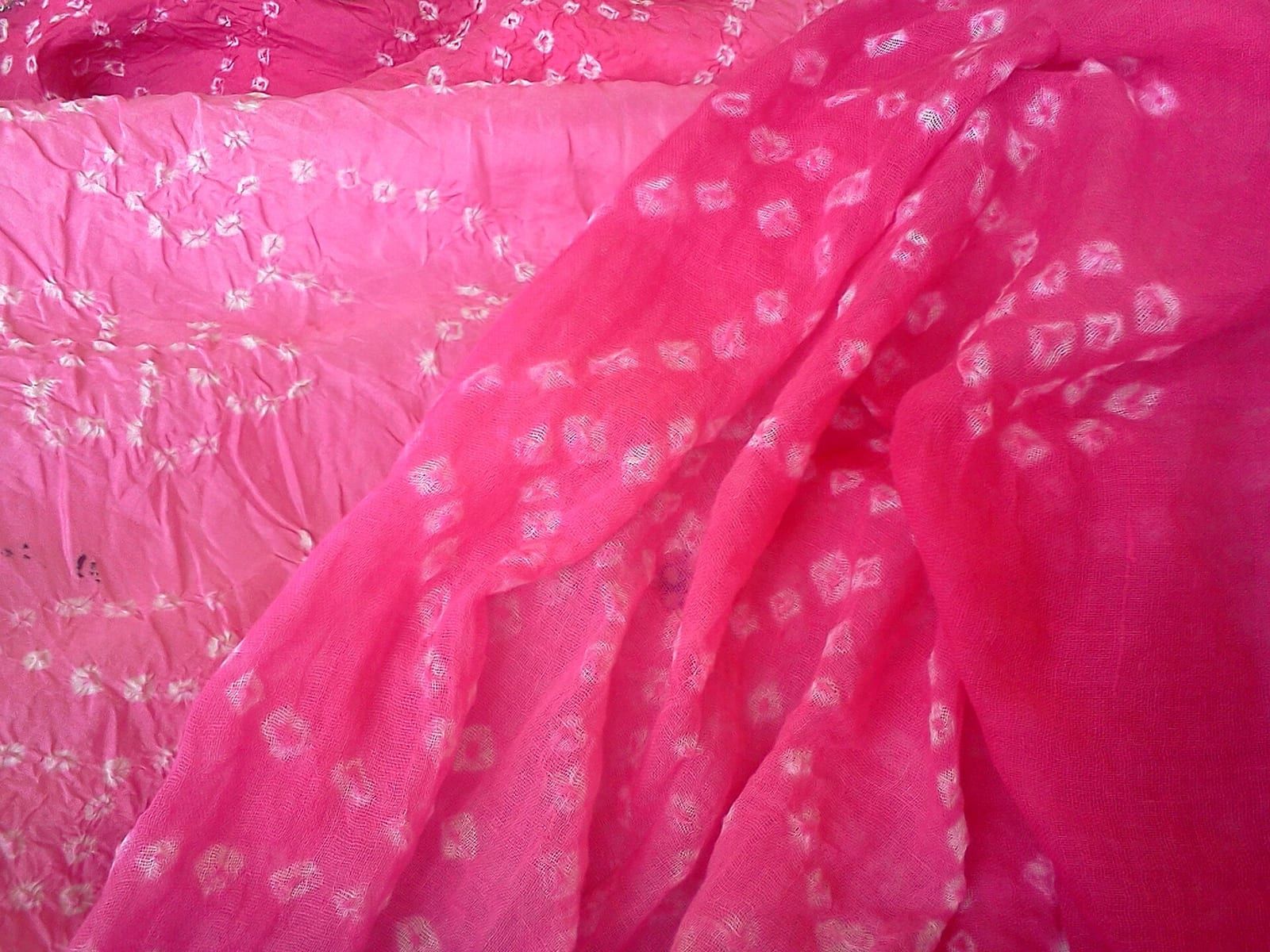
Bandhani, also called bandhej, bandhni, piliya, and chungidi, is a form of Indian tie‑dyed textile. The technique involves pinching very small sections of cloth and tying them by plucking the fabric with fingernails, creating many tiny bindings that form a figurative design of dots. After the cloth is tied, it is immersed in different dye vats to produce its characteristic patterns.
The craft is predominantly practiced in Rajasthan and Gujarat, with additional centers in Sindh and Tamil Nadu, where it is known as sungudi. In these regions, artisans use a variety of tying methods such as mothra, ekdali, and shikari, each differing in the manner the cloth is tied.
The finished products of bandhani work are marketed under several names, including khombi, ghar chola, patori, and chandrakhani. These items reflect the intricate patterns and vibrant colors achieved through the tie‑dying process.
History and origins
The term bandhani is derived from the Sanskrit verbal root bandh, meaning "to bind, to tie." This etymology reflects the core technique of the craft, in which cloth is tied in patterns before dyeing.
Earliest evidence of dyeing in the region dates back to the Indus Valley civilization, with indications that such work may have been practiced as early as 4000 B.C. The ancient city of Mohenjo‑daro is cited as a possible site where early traces of bandhani art were found.
The most pervasive type of bandhani dots is perhaps first seen in 6th‑century paintings depicting the life of Buddha on the walls of the Ajanta Caves. These murals provide a visual record of the technique’s early use.
Texts from the era of Alexander the Great mention the beautiful printed cottons of India, indicating that the craft was known and valued during that period.
The first explicit mention of a bandhani sari appears in Bāṇabhaṭṭa's *Harshacharita* at a royal wedding. The text also notes that wearing a bandhani sari is believed to bring good fortune to a bride.
For centuries, dyers have experimented with both natural and man‑made elements, as well as with different binding and tying techniques, to create patterns on cloth immersed in dye containers. Various types of tie and dyes have been practiced across India, demonstrating the craft’s long history of innovation.
What it is like
Bandhani is a method of binding small knots and dyeing them in different colours to produce beautiful patterns. The tying is normally done with fingernails, but in some places of Rajasthan craftsmen wear a metal ring with a pointy nail to help plucking the cloth easily.
The process of making a bandhani textile is not very difficult, but it is very time‑consuming. The fabric used for making bandhani saris and dupattas are loosely woven silk called georgette, or cotton known as malmal. The knots are tightly tied, and the rest of the fabric is dyed in multiple stages. This leaves the knots undyed and hence a beautiful flower‑like pattern appears all over the cloth as a design.
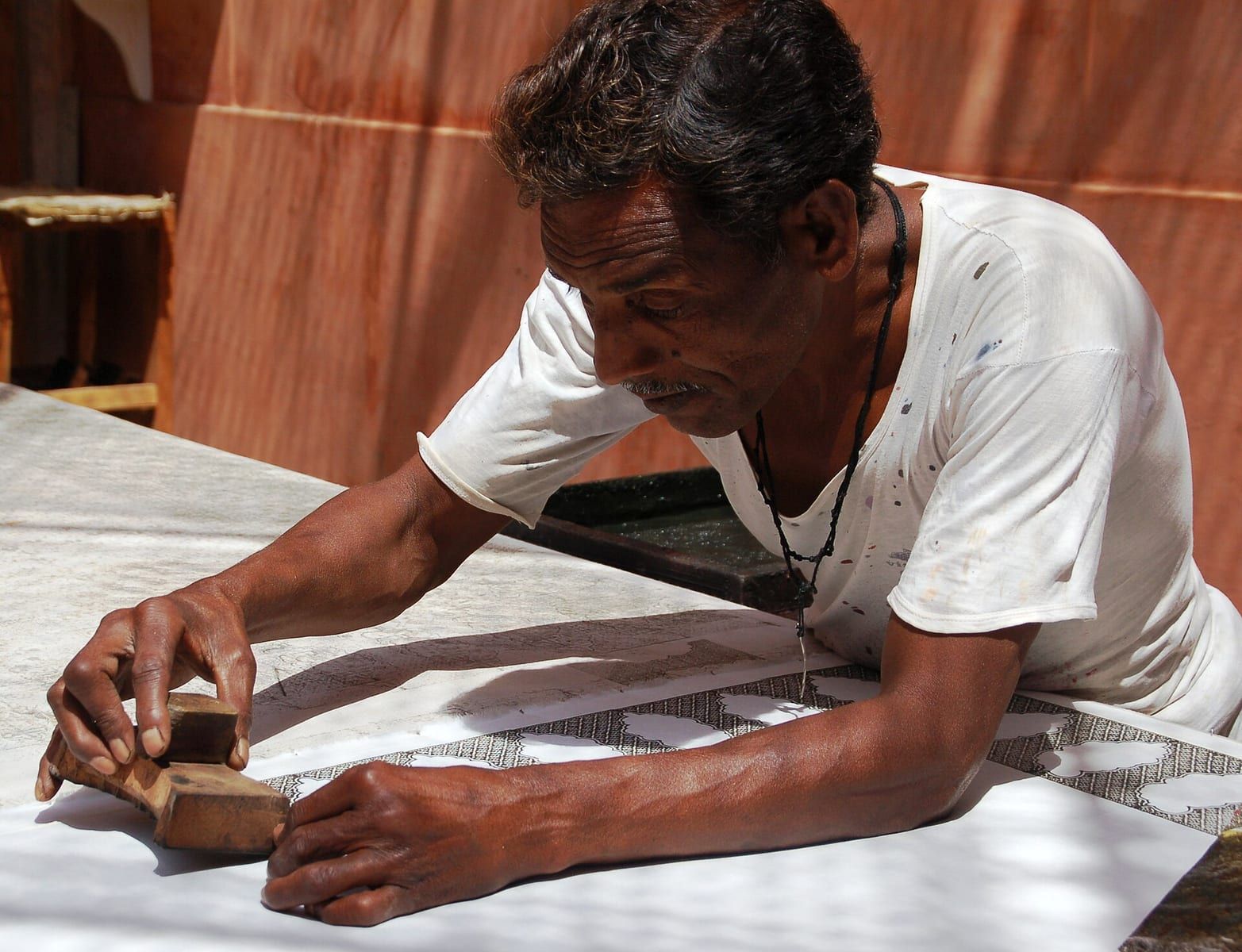
Malmal (fine muslin), handloom or silk cloth were the traditional choices but now chiffon, georgette and crepe are also being used as base fabrics for bandhani. The cloth is washed to remove traces of starch, and then bleached to attain a clear base. It is then folded into two or four layers depending on the thickness of the cloth. A designer marks the layout of the pattern on the material using wooden blocks dipped in geru, a natural clay earth pigment mixed with water.
The cloth is tied from the areas not to be dyed. The process requires patience, expertise and meticulousness on the part of the artist. The folds of the material within the small motif have to be lifted and tied together. The material with the first set of ties is dyed yellow. The material is again tied and dyed into red or green. The artist moves from lighter to darker shades and the use of more and varied colours makes the process complicated. If the border has to be darker all the lighter parts are tied and covered with plastic foil and the edges are dyed with the required colours. Repeated tying and dyeing produces elaborate designs. The designs may run into a single motif and or a combination of large and small motif alternating in some order.
Based on: the Wikipedia article (CC BY-SA 4.0) — facts from that source; edited and translated by Times of Rajasthan.
More visual stories
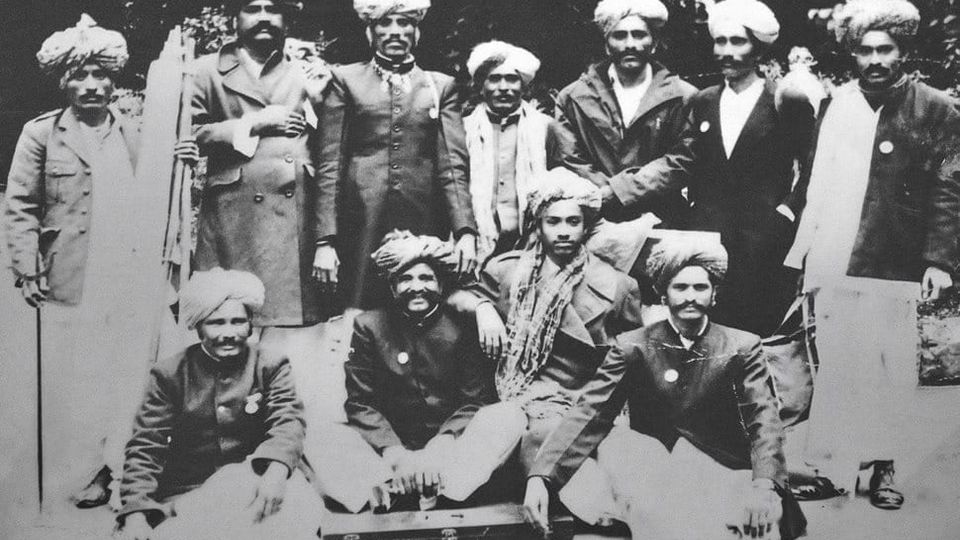 Folk musicKesariya Balam — the songs of the ManganiyarsMaand singing from the Thar, the hum of the kamaicha and the clack of the khartal.5 scenes · with music · ♥ 11
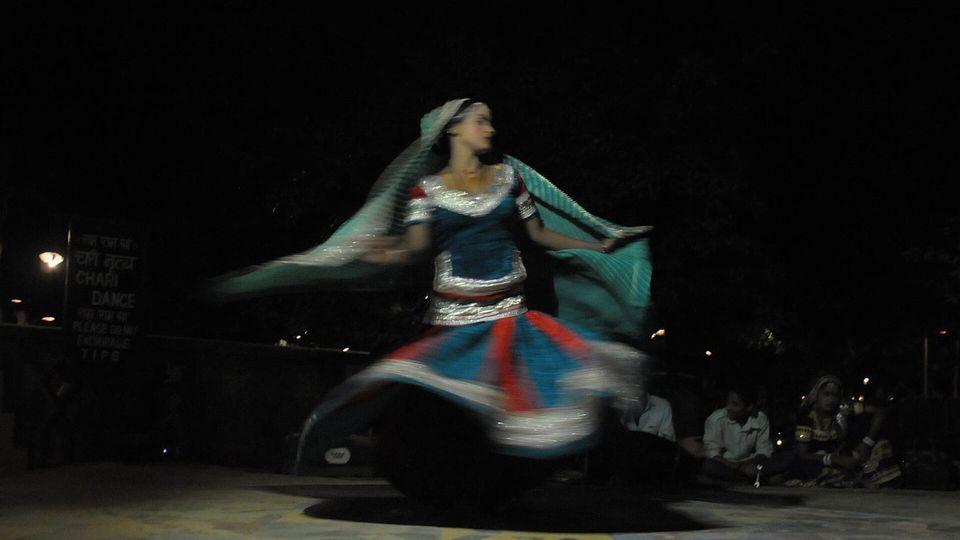 Folk danceGhoomar — the dance of the swirling skirtSwirling ghagras, flowing veils and clapping rhythms at Gangaur, Teej and weddings.3 scenes · with music · ♥ 13
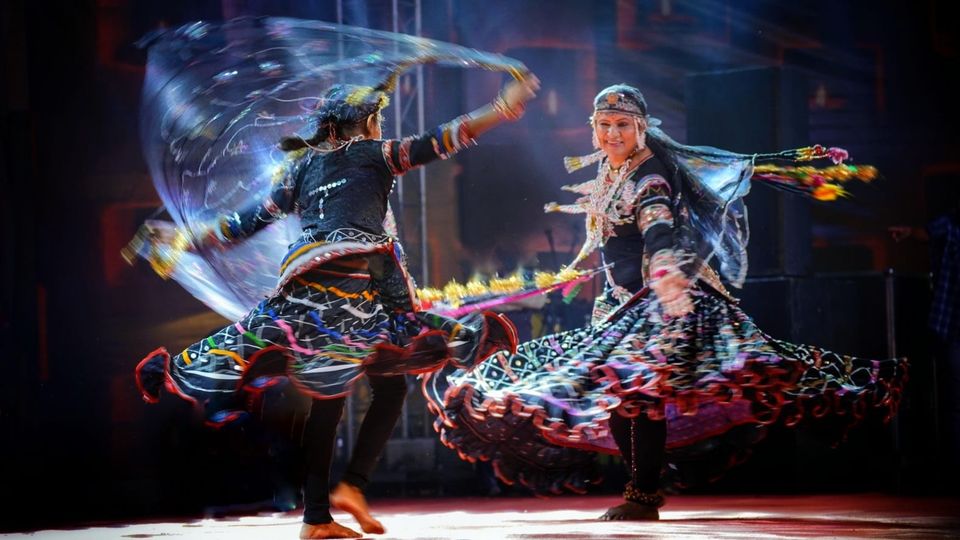 Folk danceKalbeliya — the serpent dance, a UNESCO heritageBodies sway like serpents to the pungi; on UNESCO’s intangible heritage list since 2010.4 scenes · with music · ♥ 1
 PaintingPhad and Ravanahatha — a story that travelsThrough the night, the bhopa and bhopi sing the epic of folk deities before the phad, to the ravanahatha.4 scenes · with music · ♥ 5
Photos: Mandayamr / Wikimedia Commons (Public domain) · goblinbox_(queen_of_ad_hoc_bento) / Wikimedia Commons (CC BY 2.0) · Anildiggiwal / Wikimedia Commons (CC0) · Ketayun, Katz / Wikimedia Commons (CC BY-SA 4.0)