Ajmer Sharif Dargah
Welcome to the visual story of Ajmer's iconic sites.

TIMES of RAJASTHAN · DARSHAN
Ajmer Sharif Dargah
Welcome to the visual story of Ajmer's iconic sites.
In detail
The Ajmer Sharif Dargah, also called the Shrine of Mu'in al‑Din Chishti, is a Sufi complex in Ajmer, Rajasthan, comprising the saint’s shrine, several tombs and a mosque. It is one of the most visited Sunni Muslim sites in the Indian subcontinent, drawing up to 20,000 pilgrims daily and hundreds of thousands during the saint’s urs.
Overview
The Ajmer Dargah Shareef, formally known as the Shrine of Mu'in al‑Din Chishti, is a Sufi dargah complex situated in Ajmer, Rajasthan, India. It houses the tomb of the revered saint Mu'in al‑Din Chishti along with several other tombs and a mosque, forming a single religious precinct.
The shrine holds a prominent place in the devotional landscape of Sunni Islam across the Indian subcontinent. It is recognised as one of the most frequented sites of religious visitation, drawing large numbers of pilgrims who come to pay respects to the saint.
On ordinary days the complex can receive up to twenty thousand visitors, while the annual commemoration of Chishti’s death, known as his urs, sees the flow swell to hundreds of thousands of devotees, underscoring its status as a major centre of Sufi worship and pilgrimage.
History and origins
Mu'in al-Din Chishti was universally revered as a great saint after his death in March 1236, and his tomb quickly became a deeply venerated site. Within a century the dargāh attracted devotees from all social strata and earned the respect of the era’s most important Sunni rulers. The 13th‑century Sultan of Delhi, Iltutmish, visited the tomb in 1232 to commemorate the saint, establishing an early tradition of royal patronage.
The shrine continued to draw imperial attention in later centuries. The Mughal emperor Akbar visited the dargah at least fourteen times, including a pilgrimage in 1566 with his Hindu consort Mariam‑uz‑Zamani, who walked barefoot in hopes of bearing sons. Akbar also rebuilt the sanctum sanctorum in 1579. Subsequent Mughal rulers Jahangir, Shah Jahan and the princess Jahanara undertook further renovations, while the Scindia family added residential structures, believing the khwaja had blessed them with a son. Maharani Baiza Bai Scindia contributed constructions in the 18th century, and Ajit Singh of Jodhpur added works in 1709. An elegant covering over the dargah was erected in 1800 by the Maharaja of Baroda.
Over the centuries the dargah attracted a long list of notable visitors, including Razia Sultana, Nasiruddin Mahmud, Muhammad bin Tughluq, Sher Shah Suri, and successive Mughal emperors and their family members such as Aurangzeb, Dara Shikoh and Jahanara Begum. This continuous patronage helped the shrine expand in both popularity and physical size.
In contemporary times the tomb remains one of the most frequented pilgrimage sites for Sunni Muslims across the Indian subcontinent, drawing hundreds of thousands of devotees for the saint’s death anniversary. The shrine also continues to attract many Hindus, who have venerated the saint since medieval times, although recent Hindutva‑aligned groups have contested its Islamic identity, exemplified by a 2024 legal challenge by the Hindu Sena claiming the site was built over a Shiva temple.
In 2019, Hindustan Zinc Limited undertook a renovation of the complex under the Swachh Bharat Abhiyan, focusing on improving sanitation and hygiene at the historic site.
What it is like
The shrine’s white‑marble dome, erected in 1532, dominates the skyline of the complex and is set in the Ihaata Noorani, or “Quarter of Light.” Its surface is crowned with a gold lotus and a gold crown that was a gift from the Nawab of Rampur, giving the dome a luminous finish that can be seen from the surrounding streets. The dome rests on a structure of marble, brick and sandstone, and the inscription of its construction date in golden letters on the northern wall marks the moment of its completion.
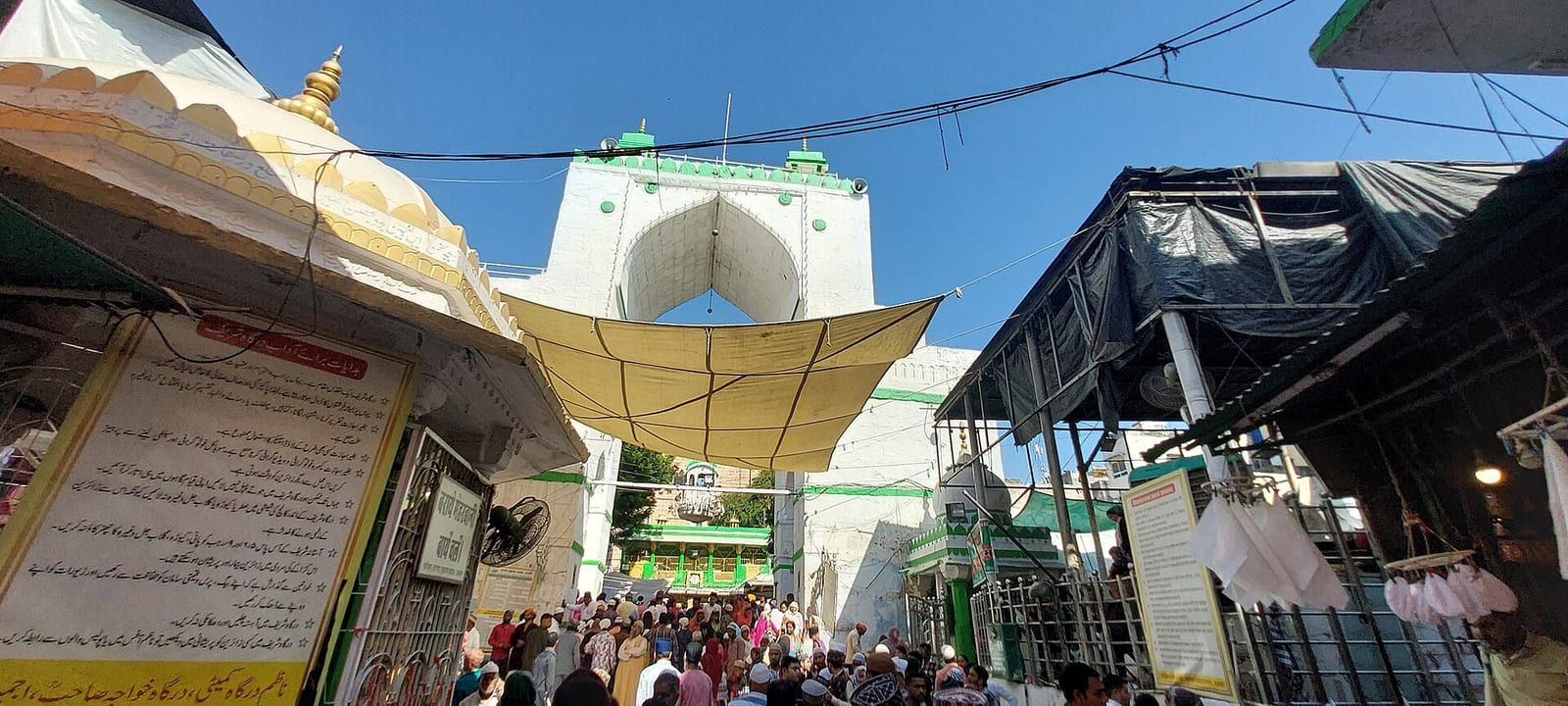
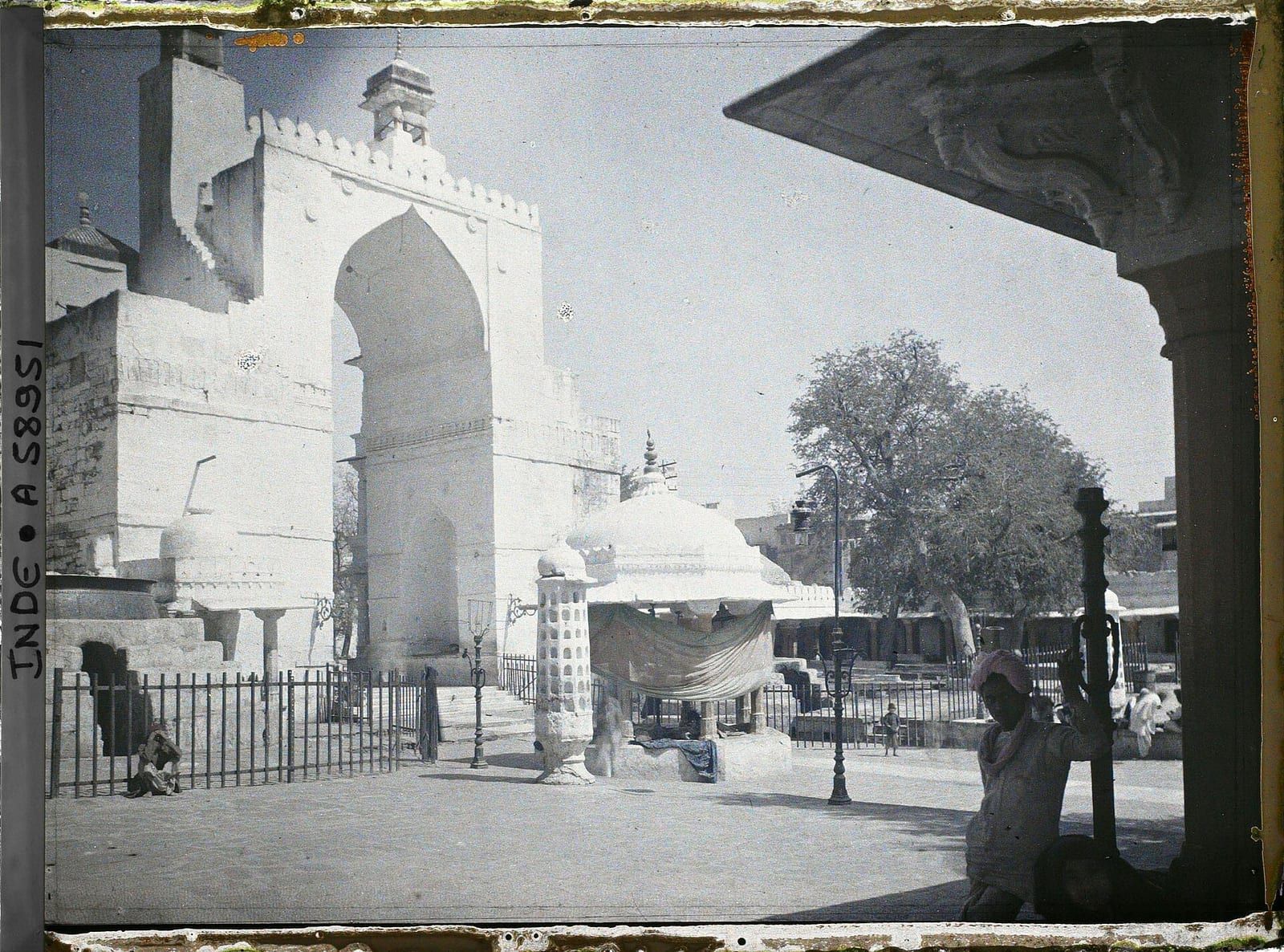
Approaching the dargah, visitors pass through a series of historic gates, though only three are regularly used. The main entrance, the yellow‑hued Nizam Gate with its floral motifs, was presented by the seventh Nizam of Hyderabad in 1911. Adjacent to it stands the older Shahjahani Gate, a relic of the Mughal emperor Shah Jahan’s expansion of the complex beyond the Buland Darwaza built by Sultan Mahmud Khalji. A silver‑covered Jannati Darwaza, known as the Bihisti Darwaza, is opened only on rare occasions, adding to the sense of reverence.
Inside, the sanctum features two doors and a canopy of mother‑of‑pearl and silver commissioned by Emperor Jahangir, visible from the four silver posts that support the cenotaph. The ceiling, etched with gold, and the gilded walls (a 1888 renovation) create a richly ornamented interior. A royal darbar, the Mehfil Khana, built in 1888, offers a square hall with a patterned ceiling, while the Begumi Dalaan, donated by Jahanara Begum, includes a railing and a small platform known as the Begumi Chabutra.
The surrounding courtyard, the Ahaat‑e‑Noor, is a large open space where religious gatherings and qawwalis take place, its atmosphere amplified by historic musical elements such as the Naqqar Khana near the Nizam Gate and a massive chandelier, the Sahn Chirag, commissioned by Akbar. The complex also houses several mosques: the red‑sandstone Akbari Mosque, likely ordered by Akbar; the white‑marble Jami Masjid, a Shah Jahan commission of 1637; and the Sandali Masjid built by Aurangzeb. To the west of the dargah lies the Jami Masjid, while a large marble courtyard stretches to its east.
Women have a dedicated enclosure, the Arhat‑i‑Noor, on the southern side, which contains the tombs of the saint’s daughter and granddaughter. Beyond the main structures, the site includes eight additional tombs of family members, a natural water tank called the Jhalara used by pilgrims, and other tanks donated over the centuries, including one by Queen Mary in 1911. The overall effect is a layered blend of Indo‑Islamic architecture, royal patronage, and living devotional practice, making the Ajmer Sharif Dargah a vivid embodiment of its historic and spiritual legacy.
Where and when
The Ajmer Sharif Dargah sits at the foot of the Taragarh hill, about two kilometres from the main central Ajmer Railway station and roughly five hundred metres from the Central Jail. Its proximity to these landmarks makes it easily reachable for the large numbers of pilgrims who gather there each year.
The annual Urs Sharif festival marks the death anniversary of Muʿin al‑Din Chishti and is celebrated rather than mourned. The festivities begin at the end of the Islamic month of Jumada al‑Thani and run for six days, concluding on the sixth day of Rajab. The opening ceremony features the Gori family of Bhilwara marching to the Nizam gate and hoisting a flag on the Buland Darwaza, after which the moon sighting triggers the start of the rituals, including the Aser ki Namaz.
During the six‑day period, nightly mehfil‑i‑sama gatherings are held in the Mahfil Khana, where women are permitted to attend—a rarity for dargahs. Pilgrims strive to enter the shrine repeatedly, offering prayers and washing the silver Bihisti Darwaza with rose water in the afternoons. The roses used are traditionally sourced from nearby Pushkar.
The festival draws roughly five lakh visitors, matching the city's population, and sees about 2,700 buses entering Ajmer. Indian Railways runs special Garib Nawaz trains to accommodate travelers from across the country, while temporary accommodations such as Vishram Sthali in the Kayad locality become fully occupied. In March 2020, plans were announced for a large guest house, Rubath, to further support the influx of devotees.
The state's involvement in the Urs has been upheld by the judiciary; in January 2026, India's Supreme Court rejected a petition seeking to end official participation and recognition of the shrine, noting that government support for the festival has been a time‑honoured tradition since independence in 1947, including the practice of successive prime ministers offering a chadar.
Based on: the Wikipedia article (CC BY-SA 4.0) — facts from that source; edited and translated by Times of Rajasthan.
More visual stories
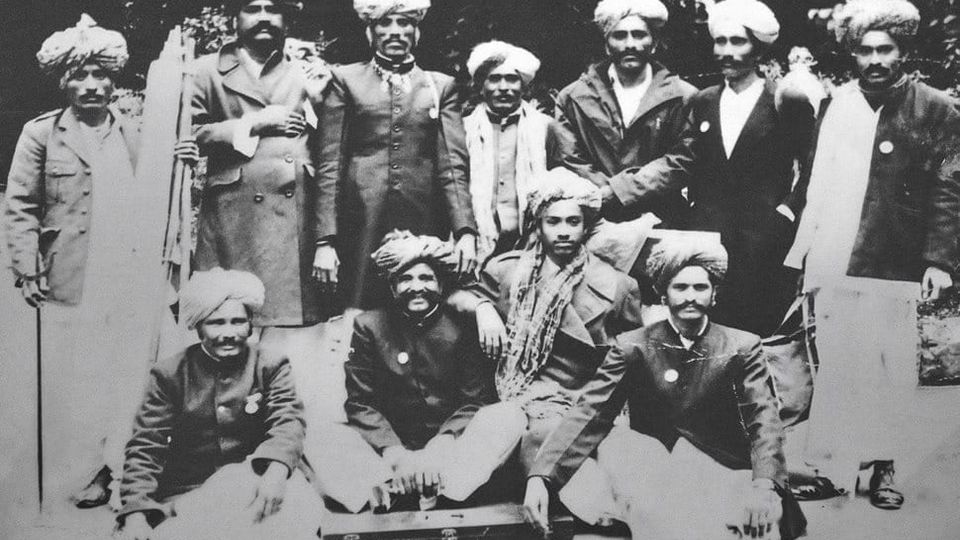 Folk musicKesariya Balam — the songs of the ManganiyarsMaand singing from the Thar, the hum of the kamaicha and the clack of the khartal.5 scenes · with music · ♥ 11
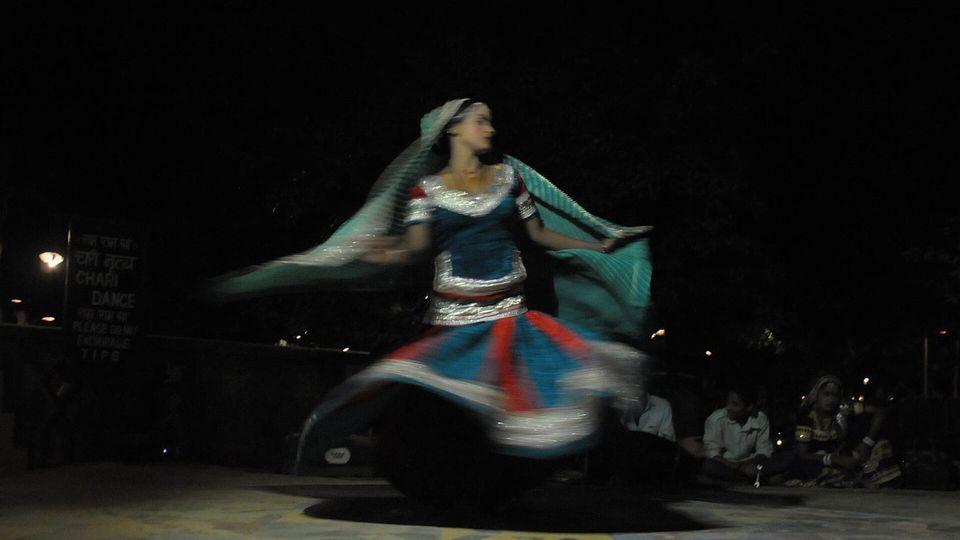 Folk danceGhoomar — the dance of the swirling skirtSwirling ghagras, flowing veils and clapping rhythms at Gangaur, Teej and weddings.3 scenes · with music · ♥ 13
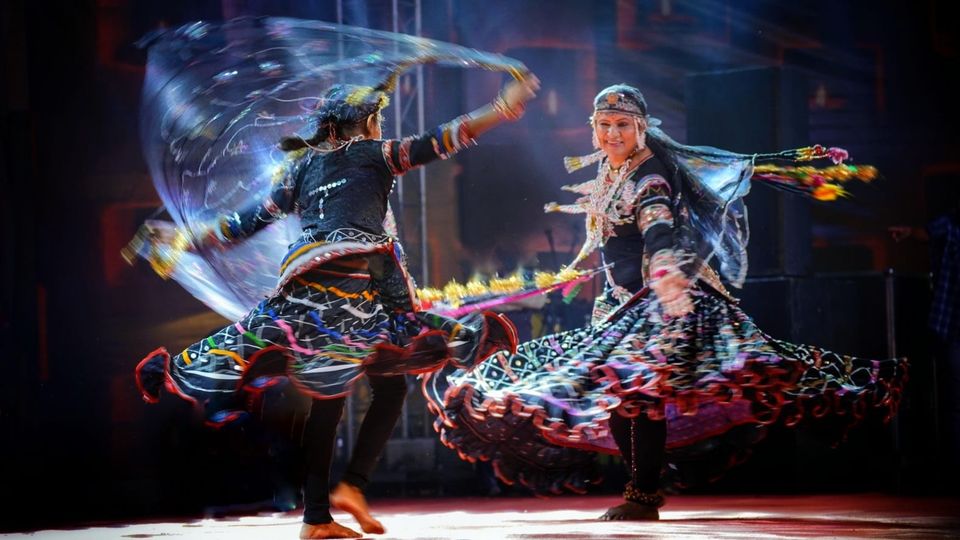 Folk danceKalbeliya — the serpent dance, a UNESCO heritageBodies sway like serpents to the pungi; on UNESCO’s intangible heritage list since 2010.4 scenes · with music · ♥ 1
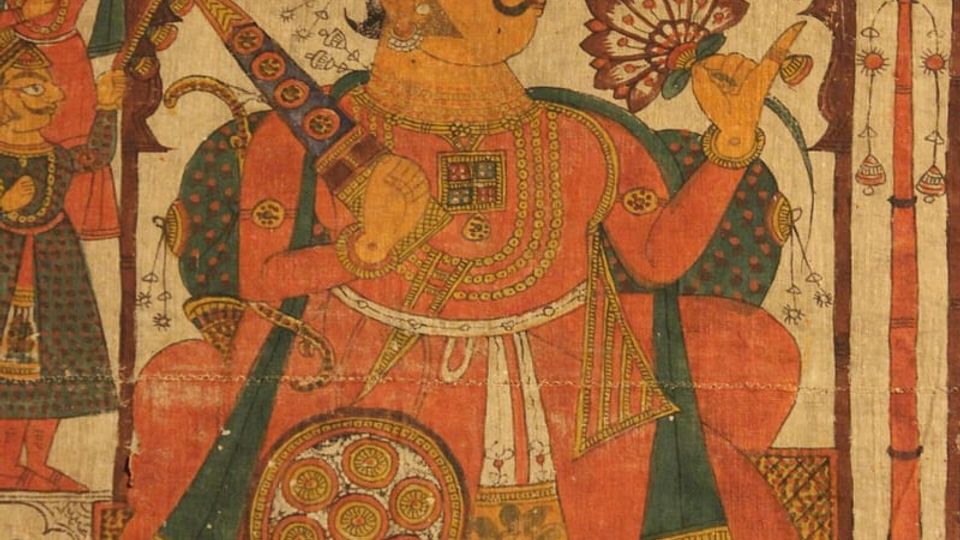 PaintingPhad and Ravanahatha — a story that travelsThrough the night, the bhopa and bhopi sing the epic of folk deities before the phad, to the ravanahatha.4 scenes · with music · ♥ 5
Photos: Pinakpani / Wikimedia Commons (CC BY 4.0) · Dumas Roger / Wikimedia Commons (CC BY-SA 4.0) · Jakub Hałun / Wikimedia Commons (CC BY-SA 4.0) · Jakub Hałun / Wikimedia Commons (CC BY-SA 4.0)