

Panchayati Raj Institutions General Elections 2026
Public notice to be issued on 31 October for election of members of four Panchayat Samitis in the district under Phase 4
District · Bharatpur division
Politics, administration, crime, education, farming and every local story from Sawai Madhopur district (Bharatpur division).
Public notice to be issued on 31 October for election of members of four Panchayat Samitis in the district under Phase 4

In Sawai Madhopur district council's 31 wards, 90 candidates are in the fray; the final list was issued after withdrawals.

Returning Officer Shivraj Meena on Monday inspected water, electricity, toilet and security facilities at polling stations in the gram panchayats of Sherpur, Ranwal, Uliyana etc in Sawai Madhopur.

Under the State District Mental Health Programme (NMHP), a free mental health and de‑addiction camp will be organised on 27 October at the Government Community Health Centre in Khirni, where specialist doctor Anshul Yadav will provide consultations.

Strong rains continue in Sawai Madhopur due to winds from the Arabian Sea, while storm‑rain alerts are also in effect in 25 districts of Madhya Pradesh and the four sacred sites of Uttarakhand.
Sawai Madhopur district is a district in south‑eastern Rajasthan, known for the Ranthambore National Park and its semi‑arid climate. Its economy relies on agriculture, animal husbandry, hospitality, tourism and small‑scale industries.
Sawai Madhopur district is one of the 41 districts of Rajasthan, situated in the state’s south‑eastern region and forming part of the Bharatpur Division. The district spans an area of about 5,051.9 square kilometres and is bounded by Dausa and Karauli districts to the north, the state of Madhya Pradesh to the east, Kota and Bundi districts to the south, and Tonk district to the west. Its administrative headquarters is the city of Sawai Madhopur, which also serves as the district’s central hub for governance and services.
The geography of the district is varied, comprising plains, plateaus, and sections of the Aravalli hill ranges. Several rivers, including the Dheel, Banas, Chambal, and Morel, traverse the region, contributing to its agricultural potential and shaping the local landscape.
Economically, the district relies on a mix of agriculture, animal husbandry, hospitality, tourism, and small‑scale industries. The presence of Ranthambore National Park, a major tiger reserve and UNESCO World Heritage site, drives significant tourism activity, supporting hospitality and related services throughout the district.
According to the 2011 Census of India, Sawai Madhopur district had a population of approximately 1.33 million people, resulting in a population density of around 265 inhabitants per square kilometre. This demographic profile reflects a largely rural population with urban concentrations around the district headquarters.
The city of Sawai Madhopur, located about 13 kilometres from Ranthambore National Park, is noted for its historical and cultural significance. It lies close to the Ranthambore Fort, another UNESCO World Heritage Site, underscoring the district’s blend of ecological importance and heritage architecture.
Sawai Madhopur’s origins are closely linked to the historic Ranthambore Fort, whose earliest construction is attributed to the Chauhan Rajput king Sapaldaksha in the 8th century. The fort’s hill‑top position gave it strategic importance, and over the centuries it was repeatedly modified and expanded by successive rulers, reflecting the region’s complex political landscape. By 1296 CE the fort was under the control of Rao Hammir Deva, and its notable architectural elements include the Toran Dwar, Mahadeo Chhatri, Sameton Ki Haveli, the 32‑Pillared Chhatri, a mosque, and the Trinetra Ganesh Temple.
The city of Sawai Madhopur itself was founded much later, in 1763 CE, by Maharaja Sawai Madho Singh I, the ruler of Amer. The name combines the Maharaja’s title “Sawai” with “Madhopur,” the Sanskrit suffix “pur” meaning city, thus signifying “the city of Sawai Madho.” This naming served as a tribute to the Maharaja, who reigned from around 1750 to 1768.
In contemporary times, Sawi Madhopur has added cultural institutions such as the Rajiv Gandhi Regional Museum of Natural History. The museum’s foundation stone was laid on 23 December 2007 by Hamid Ansari, then Vice President of India. The museum is dedicated to showcasing the wildlife, ecology, geology, zoology, biodiversity, and environmental aspects of India’s western arid region.
Sawai Madhopur district covers roughly 4,498 square kilometres in southeastern Rajasthan, bounded by Dausa to the north, Karauli to the northeast, Madhya Pradesh’s Sheopur district to the southeast, and the Rajasthan districts of Kota, Bundi and Tonk to the south and west. The district lies between 25°‑45’ and 26°‑41’ north latitude and 75°‑59’ and 77°‑0’ east longitude, and its terrain is a blend of plains, undulating hills and the Aravalli ranges, with the Ranthambore Tiger Reserve forming a prominent wildlife sanctuary within those hills.
The landscape includes the Chambal River along the southeastern edge, separating the district from Madhya Pradesh, while the Dheel, Banas and Morel rivers add to its riverine network. Elevations vary from about 450 to 600 metres above sea level, the highest point in the north‑western Aravalli of Bamanwas Tehsil reaching 527 metres. The southern and southeastern parts are rugged, featuring ravines of the Chambal Valley, whereas the Gangapur subdivision is largely flat with isolated hills. The area is not classified as a desert and lacks perennial natural springs, though seasonal waterfalls such as Amareshwar Mahadev, Sita Mata Temple and Jhojheshwar appear during the rains.
The district experiences a semi‑arid climate with hot summers, a monsoon season and mild winters. Summer temperatures can climb to a maximum of about 45 °C, while winter lows may drop to around 4 °C. Annual rainfall averages between 600 and 800 mm, most of which falls during the monsoon months of June to September. Humidity is low in summer, rising markedly during the rainy period.
Overall, the combination of varied topography—from flat plains to the Aravalli hills and the rugged Chambal Valley—and a climate marked by extreme summer heat, moderate winter chill and a concentrated monsoon, shapes the district’s ecology and influences human activities such as agriculture and tourism, especially around the Ranthambore Tiger Reserve.
The district’s linguistic profile is dominated by Hindi, which is spoken as a first language by roughly 89 percent of residents according to the 2011 census. Rajasthani languages account for a smaller share, with about 5 percent of the population listing Rajasthani as their mother tongue and just under 1 percent speaking the local Dhundhari dialect, which is identified as the main dialect of the area. Urdu is the first language for around 3.7 percent of inhabitants, reflecting the presence of a Muslim community in the district.
These language figures correspond with the broader demographic composition of Sawai Madhopur district. The 2011 census recorded a total district population of 1,335,551, with a literacy rate of 66.19 percent and a sex ratio of 894 females per 1,000 males. Urban residents made up just under 20 percent of the total, while Scheduled Castes and Scheduled Tribes together comprised about 42 percent of the population, indicating a diverse social fabric that underpins the linguistic landscape.
Religious affiliation further shapes the district’s cultural mosaic. Hindus constitute the majority at 74.71 percent, followed by Muslims at 20.11 percent, and Jains at 4.38 percent. Smaller communities include Sikhs, Christians, and Buddhists, each representing less than half a percent of the population. This religious diversity aligns with the multilingual environment, where Hindi serves as a lingua franca across different faith groups, while Urdu is more closely associated with the Muslim population and Dhundhari reflects local Rajasthani heritage.
The economy of Sawai Madhopur district is anchored in agriculture, horticulture, tourism and hospitality, with limited large‑scale industry because of strict environmental regulations protecting the region’s forests and wildlife. The district was identified in 2006 by the Ministry of Panchayati Raj as one of India’s 250 most backward districts, and it receives assistance under the Backward Regions Grant Fund Programme.
Agriculture remains the primary livelihood, and the area is especially noted for its guava cultivation. Starting from a modest five‑hectare farm in Karmoda village in 1985, guava production has expanded dramatically, with about five thousand hectares under cultivation by 2015. The guava trade generates substantial revenue, estimated at three to five billion rupees annually, and local nurseries even supply seedlings to other states such as Uttar Pradesh.
Tourism and hospitality also play a vital role, driven by the district’s wildlife attractions, while ancillary crafts such as wooden toys, handcrafted items, poppy‑seed perfumes, essential oils and traditional medicines contribute to the local economy. Large‑scale manufacturing is virtually absent; the only major industrial operation, a cement plant run by Jaipur Udyog Limited, ceased operations in 1987, reflecting the district’s focus on preserving its ecological assets.
The district’s cultural life revolves around a vibrant calendar of fairs that draw visitors from across Rajasthan and beyond. The Ganesh Chaturthi Fair, held at the Ganesh Temple inside Ranthambhore Fort on Bhadav Shukla Chaturthi, is the largest, attracting three to four hundred thousand devotees over three days. Another major gathering is the Chauth Mata Fair at the hill‑top Chauth Mata Temple in Chauth Ka Barwara, celebrated on Magh Krishna Chaturthi and visited by lacs of people from Rajasthan and other states. Shiv Ratri sees an annual fair near the Ghushmeshwar Mahadev temple, while the Besakh Shukla Puranmasi fair in Gangapur City runs for seven days, and a Sharad Purnima fair is held at Chamatkar Ji.
Sawai Madhopur’s cultural fabric is woven with languages such as Hindi, English and Rajasthani dialects including Dhundari and Hadoti. The local cuisine features hearty dishes like Dal Baati Choorma, Gatte Ki Sabzi, Bajre Ki Roti and Dal Bade, with sweet treats such as Kharbuja Laddu. Traditional dance forms, notably the Ghoomar and the Kalbelia, are performed during festivals and community celebrations.
The historic Ranthambore Fort, perched within the district, is a focal point for tourists and history enthusiasts. Recent conservation work aims to preserve its architectural integrity, and its inclusion on UNESCO’s tentative World Heritage list highlights its global importance. The fort’s ancient walls set against the verdant backdrop of Ranthambore National Park create a striking visual contrast.
Religious sites dot the landscape, each offering distinct experiences. The Chauth Mata Temple serves as the Kuldevi of the Meena community and lies near the luxury Six Senses Fort Barwara resort. The Chamatkar Ji Jain temple in Alanpur, dating to the early medieval period, showcases Pancharatha architecture and houses an idol of Shri Rishabhanatha Ji. The nine‑storey Kala‑Gora Bhairav Temple, built by Maharaja Madho Singh I in 1763, is renowned for its tantric heritage and stands near the Bhairo Gate of the old city.
Additional temples enrich the district’s spiritual tourism. Galta Ji, a historic Shri Ram‑Sita shrine, mirrors Jaipur’s Galta Ji temple, while Ghatila Balaji offers panoramic city views from the northern hills. Sita Mata Temple, nestled in the Ranthambore hills, combines worship with natural attractions like waterfalls that swell during monsoons. Amareshwar Mahadev Temple, situated on the route between Ranthambore and Sawai Madhopur, is both a major pilgrimage site and a popular picnic spot, drawing visitors to its lush green surroundings.
Based on: the Wikipedia article (CC BY-SA 4.0) — facts from that source; edited and translated by Times of Rajasthan.
Farm advisory
Sat
31° 19°
0% · 0mm
Sun
31° 19°
0% · 0mm
Mon
30° 18°
0% · 0mm
Tue
30° 19°
0% · 0mm
Weather: Open-Meteo forecast. General advice — ask your Krishi Vigyan Kendra or agriculture supervisor for doses.
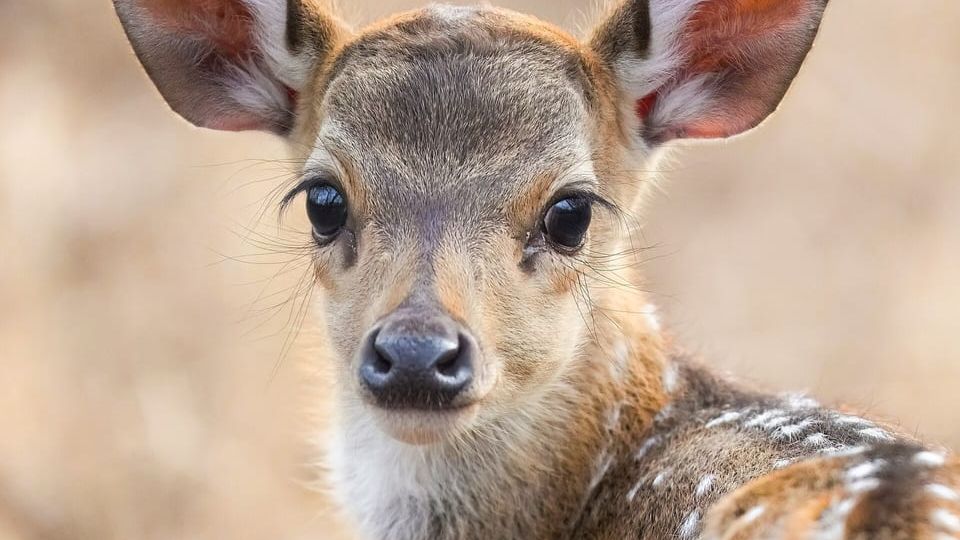 VISUAL STORY · WITH MUSICSawai Madhopur Darshan▶ Watch & listen
READERS’ POLL
Vote to see the results
A proverb, a word and a district from the land of dunes — every day
PROVERB OF THE DAY
“पाणी पीजे छाण कर, गुरु कीजे जाण कर”
Strain water before you drink it; know a teacher before you follow one.
MARWARI WORD
मनवार
Lovingly insisting a guest eats and drinks a little more
DISTRICT OF THE DAY
Chittorgarh
FAIRS & FESTIVALS
This month: Pushkar Fair, Bundi Utsav
Kumbhalgarh Festival
Rajsamand · December
Discover Rajasthan →

